Fans of immersive visuals and HDR
If you mainly play atmospheric adventure games, you’ll probably pay particular attention to how dark areas and bright highlights are rendered. The panel type and reviews of the specific model can help you choose.


For expansive, detailed game worlds, a 32-inch 4K monitor in the classic 16:9 format is an obvious place to start. If you play on PC, consider what frame rate your setup can actually achieve at 4K. If a particularly wide field of view matters more to you, ultrawide is another option – provided your games and available space suit the format. For dark and bright scenes, the panel type and the picture quality of the specific model matter; a high refresh rate alone won’t tell you how good its HDR is.
If you mainly play atmospheric adventure games, you’ll probably pay particular attention to how dark areas and bright highlights are rendered. The panel type and reviews of the specific model can help you choose.
You want to see fine details on a large 16:9 screen, while also checking the frame rate your PC can achieve in your games at 4K. RTINGS notes that high frame rates at this resolution are more demanding for PCs.
If a particularly wide picture matters to you on PC, check before buying that your favourite games support the aspect ratio you want and that the monitor will fit on your desk.
First decide whether picture quality, 4K detail or an especially wide format matters most to you. Then check that your device, games and available space meet the requirements.
A good fit if: you prioritise fine details on a large screen and want OLED as a key picture feature.
Things to consider: High frame rates at 4K can put more demand on your PC. With OLED, you should also read the warranty terms for the exact model.
A good fit if: you’re considering local dimming and OLED isn’t your first choice.
Things to consider: Assess the curvature and HDR picture quality from your seating position, and consult independent reviews of the specific model.
A good fit if: a particularly wide picture matters more to you on PC than the classic 16:9 format.
Things to consider: Check game support, screen height and desk space. The screen diagonal alone won’t tell you whether the format is right for you.
| What matters to you | What to look for | Who should pay particular attention |
|---|---|---|
| HDR and contrast | Compare the panel type, HDR capabilities and independent reviews of the specific model; treat advertised peak figures as manufacturer claims. | If you pay attention to dark areas and bright highlights in atmospheric scenes, you’ll want to assess the picture quality of the specific model. Around 33% of consumers put HDR and contrast first. |
| 4K on a large screen | Check that the resolution and connections match the output your PC or console can actually deliver. | If you want to see fine details on a large 16:9 screen, make sure 4K is a good match for your setup’s performance and connections. Around 27% of consumers put 4K detail first. |
| Wide field of view | Check the aspect ratio, physical dimensions and support in the games you play. | If a wide picture matters more to you on PC than the classic format, check game support and desk space. Around 20% of consumers prioritise this. |
| Warranty and usage | Before buying, compare the warranty terms for the exact model number and check that it has the connections you need. | If you use your monitor regularly or for more than just gaming, you’ll want to check the warranty terms and seller in advance. Around 20% of consumers put protection and running costs first. |
Samsung’s specifications for the Odyssey Neo G7 describe its features, but they’re no substitute for an independent assessment under clearly stated test conditions.
If HDR matters to you, also read reviews of the exact model and check the conditions under which it was tested.
The diagonal alone doesn’t tell you how tall the screen is or whether your games support the format you want.
Compare the aspect ratio and actual dimensions, and check how your favourite games look before ordering.
Protection features and warranty cover vary. A claim for one specific model doesn’t automatically apply to other OLED monitors.
Check the warranty terms for the exact model number and the seller you’re buying from.
The PG32UCDM3 is one example of a large 4K OLED monitor.
The range includes a variety of large formats and panel types; features depend on the model.
GameStar includes LG in its gaming monitor buying guide, in connection with a 5K Mini-LED recommendation.
GameStar mentions the TCL 34R83Q in connection with ultrawide monitors.
This selection features large 4K OLED monitors for detailed gaming on a big screen.
 No image available
For a large OLED gaming screen with 4K resolution.
The product name lists 4K UHD at 3840 × 2160 pixels, 240 Hz and 480 Hz in FHD mode.
 No image available
For a large 4K gaming screen with a QD-OLED panel.
The product name lists a 32-inch screen, 4K UHD, 240 Hz, HDMI 2.1 and DP 2.1a.
 No image available
For a large 4K gaming screen with an OLED panel.
The product name lists a 32-inch screen, 3840 × 2160 pixels, 240 Hz and 90 W USB-C.
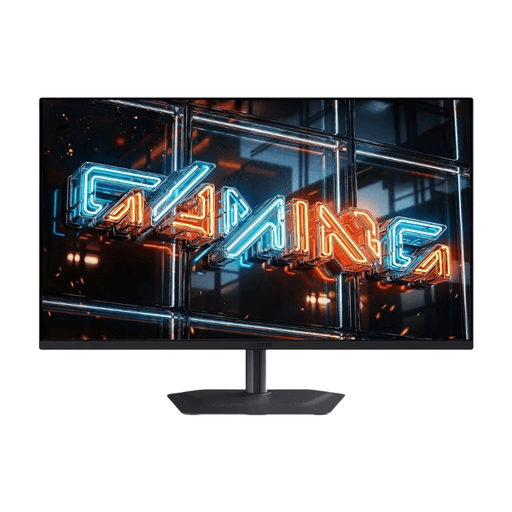 No image available
For a large UHD gaming screen with an OLED panel.
The product name lists a 32-inch screen and 3840 × 2160 pixels. The product description also specifies QD-OLED and 240 Hz.
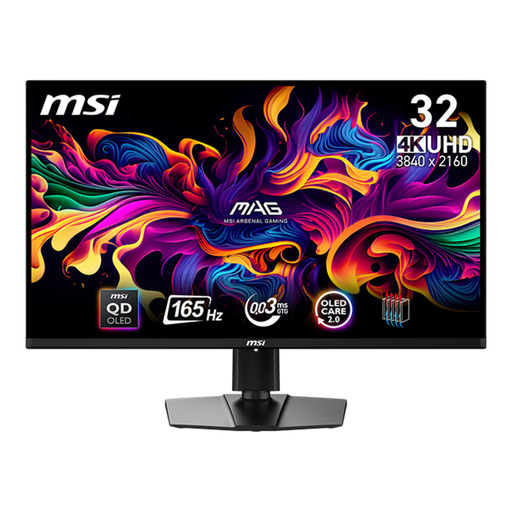 No image available
For detail-focused gaming on a large QD-OLED screen.
The product name lists a 31.5-inch screen and 4K Ultra HD at 3840 × 2160 pixels.
No. 240 Hz isn’t a general requirement for cinematic 4K games. RTINGS notes that high frame rates at 4K are more demanding for PCs. Check the frame rate your device and games can actually output.
Compare the dimensions of the specific monitor and your seating position with the space available, then check that its connections match your source device. ASUS publishes dimensions and connection details for the PG32UCDM3; these don’t automatically apply to other models.
No. Your statutory rights for faulty goods are against the seller; a warranty is an additional voluntary service with its own terms. The Verbraucherzentrale distinguishes between these rights. ASUS lists a three-year warranty for the PG32UCDM3, including panel burn-in; you can’t use this to infer the warranty terms for other models.