Which monitor is right for you?

Adventurers who love every detail

You want to see landscapes, text and equipment clearly on a large screen, and you’re weighing up 4K against the frame rate your PC can achieve in-game. PRAD and RTINGS treat resolution and PC performance as closely linked factors when choosing a monitor.

PC gamers looking for a panoramic view

You want to see more of the game world to either side, so check whether your PC games support an ultrawide display. RTINGS points out that consoles do not support ultrawide aspect ratios.

Gamers with a PC and console

You want to use the same monitor with several devices, so compare the resolutions, frame rates and VRR they support with the monitor’s connections. PlayStation Support explains which video output options you can check on a PS5.

What to consider when buying

Large 16:9 display with 4K

A good fit if: You value fine detail or switch between PC and console.

The trade-off: 4K can make it harder for a PC to achieve high frame rates. The monitor’s refresh rate alone doesn’t tell you what your PC and game can actually output.

Ultrawide for PC gaming

A good fit if: A wider view of the game world matters more to you, and your games support the aspect ratio.

The trade-off: Check how your games display on an ultrawide screen. According to RTINGS, it isn’t a suitable standard choice for consoles.

What to consider What to check before buying Who it matters most to
Clarity on a large screen Compare screen size and native resolution together, then check the gaming performance you want from your PC. If I want to see landscapes and text in as much detail as possible, pixel density is key. Around 28% of consumers put clarity on a large screen first.
Panoramic view Check the aspect ratio and how your games display before choosing based on screen size alone. If a wider view of the game world matters more to me, I check how ultrawide works with my PC games. Around 22% of consumers prioritise a panoramic view.
Dark scenes and HDR Compare image tests and HDR performance. With OLED, also consider static HUDs, care features and warranty terms. If dark, high-contrast scenes are my priority, I compare the picture quality of specific models. Around 22% of consumers prioritise contrast and HDR.
Devices and motion Check the connections, supported resolution and frame rate, and VRR for your monitor, PC or console. If I switch between PC and console, I want to know what my particular setup can actually output. Around 17% of consumers put device compatibility first.
Long-term use Check the energy label and warranty terms for the specific model. Consider your statutory rights and any voluntary warranty separately. If I want to weigh up the purchase price, running costs and long-term use together, I check these details before choosing. Around 11% of consumers prioritise cost and lifespan.

Avoiding common buying pitfalls

  • Comparing screen sizes without considering resolution or aspect ratio

    A large 16:9 monitor and an ultrawide display suit different preferences. Resolution also affects how sharp the picture looks at a particular screen size.

    First decide whether sharpness or a wider field of view matters more to you, then check what your games and devices can output.

  • Assuming the monitor’s maximum refresh rate is the same as your in-game frame rate

    Your monitor, connection, game and connected device all need to support the resolution and frame rate you want.

    Compare the monitor’s modes and connections with what your PC or console can actually output.

  • Assuming OLED care features rule out burn-in

    Game displays and desktop elements that stay on screen unchanged for long periods are still a consideration with OLED. Care features do not guarantee protection against burn-in.

    Think about how you use your screen and read the warranty terms for the exact model.

  • Confusing a manufacturer’s warranty with your statutory rights

    Your statutory rights are against the retailer; a manufacturer’s warranty is a voluntary promise with its own terms. Germany’s Verbraucherzentrale explains the difference for German consumers.

    Check the two separately, and pay particular attention to what a voluntary warranty covers.

Brands and models to help you choose

MSI

The MPG 322UR QD-OLED X24 and MAG 322URD16 ranges showcase different panel technologies in large gaming monitors.

  • MSI lists the MPG model as 31.5 inches, 4K and 240 Hz; according to MSI, the MAG model uses a Rapid-IPS panel.
  • These specifications apply to the individual models and do not prove general superiority or identical features.

ASUS ROG

The ROG Swift OLED PG34WCDN is a curved ultrawide monitor for PC gaming.

  • ASUS lists this model as 34 inches, 1800R and 360 Hz.
  • Manufacturer claims about scratch resistance and improved black levels are not independently verified measurements.

Samsung Odyssey

The Odyssey OLED G8 G81SF is a 32-inch 4K model with a QD-OLED panel.

  • Samsung lists this model as 240 Hz with an anti-reflective surface.
  • When comparing offers, check the full model number and the specifications for the exact version.

Alienware

The AW3225QF adds a curved 32-inch 4K QD-OLED monitor to the range of options.

  • Dell lists this model as 240 Hz with Dolby Vision.
  • Whether you prefer a curved screen and the additional HDR features is a personal choice. These specifications do not apply to all Alienware monitors.

LG UltraGear

The 32GS95UE-B is an example of a 32-inch OLED monitor with switchable resolution and refresh rate modes.

  • LG lists 4K at 240 Hz and Full HD at 480 Hz as separate modes.
  • LG marks the model as no longer available on its German product page. This does not indicate the availability of other LG models.

Joybuy products for expansive game worlds

This selection includes large 4K monitors for detailed game worlds, including OLED models and a curved 4K model.

TCL 32x3A 32-inch OLED monitor

TCL 32x3A 32-inch OLED monitor

For detailed adventures on a large screen: the product title lists a 32-inch OLED display with 4K UHD.

4K UHD at 240 Hz; separate Full HD mode at 480 Hz. The title also lists Burn-in Protection; care features cannot rule out the risk of burn-in.

View at Joybuy

CRUA CR320QB 32-inch curved 4K monitor

CRUA CR320QB 32-inch 4K monitor

For a large, curved 4K screen: this model is described as a gaming monitor with Adaptive Sync.

3840 × 2160, VA display, 3000R curvature, HDR10 and Adaptive Sync.

View at Joybuy

MSI MPG 322URXDE QD-OLED, 32 inches

MSI MPG 322URXDE QD-OLED, 32 inches

For expansive 4K game worlds on an OLED panel: the product title lists QD-OLED and a 240 Hz refresh rate.

3840 × 2160, 240 Hz, DisplayHDR True Black 400, HDMI 2.1, DP 2.1a and USB-C with 98 W PD. With OLED, HUDs that stay on screen unchanged for long periods are still a factor when considering burn-in risk.

View at Joybuy

ASUS ROG Swift OLED PG32UCDMR, 32 inches

ASUS ROG Swift OLED PG32UCDMR, 32 inches

For detailed adventures on a large screen: the product title lists a 32-inch 4K OLED display.

3840 × 2160, 240 Hz, DisplayHDR 400, HDMI 2.1, DP 2.1 and USB-C with 90 W. With OLED, HUDs that stay on screen unchanged for long periods are a factor when considering burn-in risk.

View at Joybuy
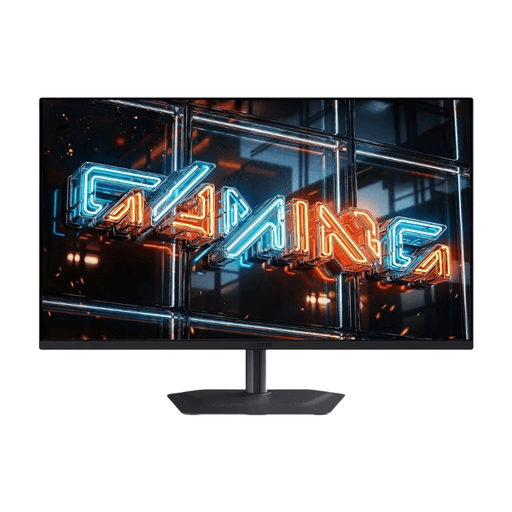
GIGABYTE MO32U24, 32-inch QD-OLED monitor

GIGABYTE MO32U24, 32 inches

For detailed game worlds: the product title and description list a flat 32-inch display with 4K UHD and QD-OLED.

3840 × 2160, 240 Hz, DisplayHDR True Black 500 and Adaptive Sync. With OLED, HUDs that stay on screen unchanged for long periods are a factor when considering burn-in risk.

View at Joybuy

Frequently asked questions

Is a 32-inch 4K monitor better than a 32-inch WQHD monitor for detailed adventures?

If fine detail is your main priority, 4K has the edge thanks to its higher pixel density: PRAD puts a 32-inch 4K screen at around 138 ppi, compared with 92 ppi for WQHD. You’ll also need to consider your PC’s performance if you want high frame rates.

What should I check after connecting a PlayStation 5?

Go to ‘Settings > Screen and Video > Video Output’ and check the detected HDMI signal, resolution, VRR and 120 Hz output. According to PlayStation Support, using 120 Hz and VRR depends on having a compatible display and supported games.

How should I handle menus that stay visible for a long time on an OLED monitor?

Consider how long HUDs or desktop elements remain unchanged on screen, and check the care features and warranty terms for the specific model. Permanent burn-in is different from temporary image retention; protective features cannot rule out the risk.

What are my rights if a monitor bought online in Germany is faulty?

Your statutory rights are against the retailer and are separate from any voluntary warranty. If a product is faulty, the first step may be to request a repair or replacement. According to Verbraucherzentrale, distance purchases are also generally covered by a 14-day cancellation period, although exceptions may apply.

Does a monitor sold in Germany need to have an EU energy label?

The European Commission generally includes electronic displays under EU energy labelling rules, although product-specific exceptions may apply. Check the energy label and product information sheet for the exact model. The label does not set a blanket requirement to buy a particular energy efficiency class.