If you game and read for long periods at the same desk, a QHD IPS monitor that you can position easily is a sensible starting point – provided your PC and chosen connection support the resolution and refresh rate you want. OLED or an extra-wide display may suit different priorities. Check how it looks in the game you play, how much space it needs and, with OLED, how to manage static content for work.
Which monitor is right for you?
Gamers who also use their monitor for work
If you use the same screen for farming simulators and extended periods of desk work, its positioning, readability and gaming performance all need to work together. The German Federal Institute for Occupational Safety and Health covers screen-based workstations in ASR A6; LG and Dell list different stand adjustments for specific models.
Gamers with a less powerful PC
If you want to match the resolution and refresh rate to your existing PC, don’t assume the monitor’s specifications reflect the frame rate you’ll actually get in a game. GIANTS Software lists the requirements for Farming Simulator 25; Dell gives different refresh rates for each connection on a specific model.
Gamers who prioritise screen size
If you want a particularly large or high-contrast display, consider the space it will take up and how you’ll use it with static content for work. COMPUTER BILD lists various large-format and OLED models; MSI explains the general risk of OLED burn-in.
Which buying criteria matter most?
QHD IPS for gaming and work
A good fit if: you want to use games and work applications at the same desk and position the screen to suit you.
The trade-off: QHD requires more processing power than Full HD; stand adjustments vary by model.
OLED for visual impact
A good fit if: gaming visuals are your priority and you check the care guidance and warranty terms for the specific model.
The trade-off: MSI describes a risk of burn-in from static content displayed for long periods; this doesn’t mean every model is likely to fail.
Large format for more screen space
A good fit if: you specifically want a wider or larger display and have checked the available space and how it looks in the game you play.
The trade-off: there’s no blanket guarantee that every farming simulator supports an ultrawide display.
| What matters |
What to check before buying |
Who will particularly value it |
| Sharpness and screen space |
Consider the screen size, native resolution, desk space and gaming PC requirements together. |
If I want to use games and work windows on one screen, I need a sharp, sufficiently large display without losing sight of my PC’s capabilities. Around 40% of consumers put sharpness and screen space first. |
| Positioning for desk work |
Check the stand’s adjustment options, the space available and whether you need a suitable mount. |
If I spend long hours at my desk, I want to position the screen to suit me rather than adapt to a fixed stand. Around 30% of consumers prioritise adjustability for desk work. |
| PC, refresh rate and connections |
Check that your graphics hardware, output, cable and the resolutions and refresh rates supported by each monitor input are compatible. |
If I want to keep using my current gaming PC, I want to avoid a mismatch between the resolution, input or refresh rate. Around 20% of consumers put compatibility and performance first. |
| OLED or large format |
For OLED, check the care guidance and model warranty; for large displays, consider the space required and how the screen looks in the game you play. |
If striking visuals or a very large gaming display matter more to me than a compact all-round screen, I’ll factor in care requirements or space when choosing. Around 10% of consumers prioritise this experience. |
Which mistakes should you avoid?
-
Assuming the maximum refresh rate is the frame rate you’ll get in a game
A monitor’s stated maximum refresh rate doesn’t guarantee the same frame rate in a game, or that every input supports it. Dell lists different maximum rates for the G2725D depending on whether you use DisplayPort or HDMI; GIANTS Software doesn’t specify a guaranteed QHD frame rate on the game’s website.
First check your PC, cable and chosen input against your target resolution, then prioritise the refresh rate.
-
Choosing OLED without considering static content for work
MSI describes a possible risk of burn-in when content remains on screen unchanged for long periods. COMPUTER BILD also notes that one OLED model it tested has slightly less sharp text.
If you often work at your screen for long periods, check text clarity, care guidance and the warranty terms for the exact model.
If you work with static content for long periods, following the care guidance becomes an extra part of your routine.
-
Buying a large display just for a bigger view of the game
A monitor’s position in a ranking doesn’t prove that it will fit on your desk or that the game you play supports the format you want.
Measure the space available and check how the game you actually play looks on the screen; a smaller QHD monitor is still a worthwhile option in its own right.
An extra-wide display takes up more desk space and may make it harder to position other work equipment.
Key brands to consider
LG
The 27GR75Q-B is a specific example of a QHD gaming monitor with adjustments for desk use.
- For the 27GR75Q-B, LG lists a 27-inch screen, QHD, 165 Hz, tilt, height adjustment and swivel.
- These specifications apply to the model named and shouldn’t be assumed to apply to the entire UltraGear range.
ASUS
The TUF Gaming VG27AQ3A is a specific 27-inch QHD IPS model for gamers considering variable refresh rates.
- ASUS lists 180 Hz for the VG27AQ3A, along with support for several Adaptive-Sync technologies.
- The monitor’s specifications don’t tell you what frame rate your PC will achieve in a particular game.
Dell
The G2725D shows why you should check the connections and stand for each model.
- Dell lists QHD for the G2725D, with up to 180 Hz over DisplayPort and up to 144 Hz over HDMI.
- The stand is listed as tilt-adjustable; the stated maximum refresh rates vary by connection.
MSI
The MPG 271QRXDE QD-OLED is a specific OLED example for those who place a high priority on gaming visuals.
- COMPUTER BILD lists a high refresh rate and 90 W USB-C for this model.
- COMPUTER BILD notes that text is slightly less sharp. MSI explains the risk of burn-in and the protective features; this isn’t an independent durability test and doesn’t confirm the warranty terms for the German version.
LC-Power
The LC-M32UCO and LC-M49QCO offer different size and connection options; they don’t support a general claim about the brand as a whole.
- For the LC-M32UCO, COMPUTER BILD lists USB-C with DisplayPort; for the LC-M49QCO, it also lists USB-C with DisplayPort.
- COMPUTER BILD notes that the LC-M32UCO has slightly low maximum brightness; these assessments apply only to the models concerned.
Joybuy monitors for OLED and large displays
The Joybuy models below include OLED monitors and particularly wide gaming displays. For OLED, check the care guidance for working with static content for long periods; for large-format screens, consider the space required and how the display looks in the game you play.
 No image available
TCL 32x3A OLED monitor, 32 inches
For OLED gaming on a large display. If you work with static content for long periods, check the care guidance and warranty for the specific model.
OLED, 4K UHD with 3840 × 2160 pixels, 240 Hz and AMD FreeSync Premium. The title also lists 480 Hz at FHD.
View at Joybuy
 No image available
Gawfolk GF340C-H curved gaming monitor, 34 inches
For a wide gaming display, once you’ve checked the available space and how it looks in the farming game you play.
UWQHD with 3440 × 1440 pixels, 165 Hz, 1500R curvature, VA panel and DisplayPort; VESA 75 × 75 mm is also listed.
View at Joybuy
 No image available
CRUA 49-inch DQHD curved gaming monitor
For an extra-wide gaming display and multiple work windows, provided your desk and the way the game you play is displayed suit the format.
DQHD with 5120 × 1440 pixels, 165 Hz, 32:9 format and 1500R curvature. The title lists a height-adjustable stand, as well as HDMI 2.1 and DisplayPort 1.4.
View at Joybuy
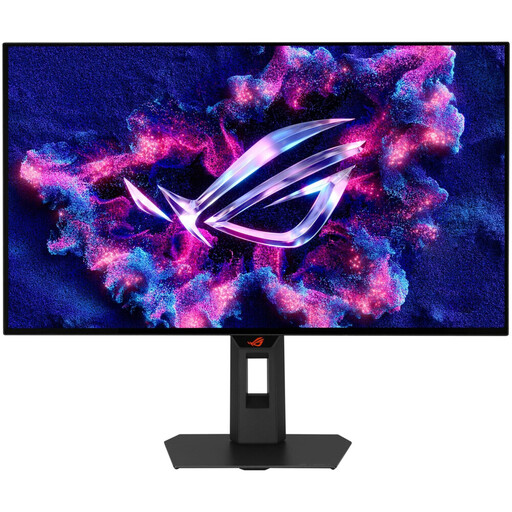 No image available
ASUS ROG Strix WOLED XG27AQWMG, 27 inches
For QHD gaming with OLED and adjustable positioning at your desk. For static content displayed for long periods, check the care guidance and model warranty.
WOLED, 2560 × 1440 pixels and 280 Hz. Adaptive-Sync, DisplayPort 1.4 DSC, HDMI 2.1 and an ergonomic stand are also listed.
View at Joybuy
 No image available
INNOCN E34A1R curved gaming monitor, 34 inches
For gaming on a wide display with adjustable positioning at your desk. Check the space available and the format in the game you play before buying.
UWQHD with 3440 × 1440 pixels, 200 Hz, VA panel, 21:9 format and 1500R curvature. The title lists FreeSync and a height-adjustable stand.
View at Joybuy
Frequently asked questions
Do the minimum requirements for Farming Simulator 25 guarantee QHD at a high refresh rate?
No. GIANTS Software lists the minimum PC requirements, but doesn’t guarantee a frame rate for QHD or 4K. Check your PC’s performance and the monitor input you’re using separately.
How should I set up my monitor for gaming and desk work?
Before buying, check that the stand or a suitable mount lets you position the screen at your desk. LG lists height, tilt and swivel adjustment for the 27GR75Q-B; Dell lists tilt adjustment for the G2725D. The German Federal Institute for Occupational Safety and Health explains the scope of ASR A6 for screen-based workstations and teleworking; it doesn’t apply generally to private leisure use.
What should I bear in mind when using an OLED monitor for work?
MSI describes a risk from static content displayed for long periods and recommends following the care features and guidance for the specific model. Check its exact warranty terms before buying, too.
How can I compare monitor energy consumption?
For monitors sold in the EU, you can compare the EU energy label or the specific EPREL entry. The European Commission advises checking the separate figures for SDR and HDR, too.
What rights apply when buying a monitor online in Germany?
Consumers buying online generally have a 14-day right to cancel. The Verbraucherzentrale distinguishes this right from the statutory guarantee against the seller and a voluntary manufacturer’s guarantee.


