When choosing a monitor for oval racing in a shared bedroom, start with your desk width, viewing distance and gaming device. A compact 16:9 screen takes up less space, while a 34-inch ultrawide offers more horizontal screen space, provided your game supports the format. For iRacing, you’ll also need to consider a field of view that suits your seating position, as well as the spotter. A wider screen doesn’t replace these settings.
Which monitor size is right for you?
Oval racers short on desk space
If you practise on a single screen, choose a monitor whose width, stand and viewing position suit the space available. When setting the field of view for a single monitor, iRacing recommends taking the distance between your eyes and the screen, as well as the monitor’s width, into account.
Racers who want a wider view
An ultrawide could be a good option if your PC and racing game support the format, and you have enough room for the monitor and viewing distance. A spotter remains a separate source of guidance alongside the screen.
Racers sharing a room
In a shared bedroom, a suitable headphone socket, a practical set-up and adjustable picture settings are all important things to consider. Also check whether you want audio to come through the monitor or directly from your gaming device.
What to look for when buying
Compact 23.8-inch monitor
A good fit if: you have limited desk width and want a single adjustable display.
Trade-off: The 16:9 format offers less horizontal screen space than 21:9.
27-inch 16:9 monitor
A good fit if: you want QHD but don’t have room for a 34-inch ultrawide.
Trade-off: ASUS lists different maximum refresh rates for the ROG Strix XG27ACS, depending on the connection.
34-inch 21:9 ultrawide
A good fit if: you have enough space and your racing game supports 21:9.
Trade-off: The larger screen and higher resolution place greater demands on your space and graphics hardware.
| Priority |
What to check when buying |
Who it matters to |
| Field of view and seating position |
Does the game support 21:9? Measure the monitor width and viewing distance; for iRacing, these figures are used to set the field of view for a single monitor. |
If having a clear view of the race is especially important to me when oval racing, I choose a format that suits the game’s support and my seating position. Around 25% of consumers put field of view first. |
| Space and set-up |
Check the monitor and stand widths, as well as height adjustment, against your desk and seating position. Check for a VESA specification if you want to use a mount. |
If my desk in a shared bedroom has limited space, I mainly check whether the screen and stand will actually fit. Around 25% of consumers prioritise desk space and set-up above all else. |
| Motion and connections |
Check that your desired resolution and refresh rate are compatible with the monitor’s input and your gaming device’s outputs. |
If I’m aiming for a particular combination of resolution and refresh rate, I want to know whether my gaming device supports it through the connection I plan to use. Around 19% of consumers put motion performance and connection compatibility first. |
| Using the monitor in a shared room |
Check the headphone socket, your gaming device’s audio output and the picture adjustment options on the specific monitor. |
If I’m practising while someone else is using the bedroom, I want to be able to listen through suitable headphones. Around 19% of consumers prioritise being considerate when sharing a room. |
| Panel care and running costs |
For OLED, check the guidance on static images and the warranty terms for the specific model. To compare power consumption, look at like-for-like figures and, where relevant, compare SDR and HDR separately. |
If panel care and ongoing power consumption matter more to me than the other selection criteria, I’ll take these details into account before buying. Around 12% of consumers consider care and running costs their top priority. |
Buying decisions to check carefully
-
Choosing a monitor solely for its highest refresh rate
The refresh rate you can achieve may vary depending on the connection. The resolution also needs to be suitable for your gaming device.
Before buying, compare the specifications for the input you plan to use with the outputs on your gaming device. ASUS lists up to 180 Hz via DisplayPort and up to 144 Hz via HDMI for the ROG Strix XG27ACS.
-
Choosing a 34-inch monitor without checking the space it needs
The screen size alone doesn’t tell you whether the monitor and stand will fit on your desk. LG lists the 34-inch 34GS95QE-W as 784,1 mm wide with its stand; the BenQ EX240 is 540 mm wide.
Measure your desk width and depth, as well as your viewing distance, then check the dimensions of the specific stand against the space available.
If the stand doesn’t suit your seating position, you may need a suitable mount. Check the mounting options on the monitor you choose.
-
Relying on a wider screen for complete awareness
iRacing treats the field-of-view setting for a single monitor and the spotter as separate aids to awareness.
Check whether your racing game supports 21:9 and set the field of view to suit your seating position. If you play iRacing, use the spotter as an additional aid when needed.
-
Overlooking static images and OLED terms
LG notes that burn-in from static images displayed for long periods cannot be completely ruled out, even with proper use.
Before buying, read the care guidance and warranty terms for the specific OLED model on offer.
Brands and models to consider
BenQ
The MOBIUZ EX240 is an example of a compact 23.8-inch Full HD monitor with a height-adjustable stand.
- According to the German specification sheet, this model offers 165 Hz, 100 mm of height adjustment and VESA 100 × 100 mm.
- Its 16:9 format doesn’t offer as much horizontal screen space as a 21:9 monitor.
ASUS
The ROG Strix XG27ACS is a 27-inch QHD option with an adjustable stand.
- ASUS lists up to 180 Hz via DisplayPort and a headphone socket for this model.
- ASUS lists up to 144 Hz via HDMI; there are no built-in speakers. These details apply to the XG27ACS.
LG
The UltraGear 34GS95QE-W is an example of a curved 34-inch OLED monitor in 21:9 format, with a resolution of 3440 × 1440 pixels.
- LG lists a width of 784,1 mm with the stand and a maximum refresh rate of 240 Hz.
- LG’s German website lists this specific model as no longer available. LG also notes that burn-in is possible with static images displayed for long periods; check the warranty terms for the model you actually choose.
MSI
The MPG 341CQR QD-OLED X36 is a 34-inch ultrawide example with a resolution of 3440 × 1440 pixels and a maximum refresh rate of 360 Hz, according to MSI.
- On 10 July 2026, PRAD ranked the model first in its list of 34-inch gaming monitors.
- This ranking doesn’t specifically assess how suitable the monitor is for a shared bedroom. MSI’s described OLED protection feature doesn’t guarantee that burn-in is impossible.
Philips
The Evnia 34M2C6500 adds a curved 34-inch QD-OLED monitor to the line-up.
- PRAD’s review of the model lists a resolution of 3440 × 1440 pixels, a 21:9 format, 175 Hz via DisplayPort and a headphone output.
- The 2024 review doesn’t indicate whether the model is currently available.
Joybuy monitors for this use
The Joybuy options below include 27-inch 16:9 monitors and a 34-inch ultrawide, giving you a choice between a more compact set-up and more horizontal screen space.
 No image available
Z-Edge AGEX, 27-inch, QHD, 144 Hz
A 27-inch QHD option if you prefer an adjustable stand and a 16:9 format.
The product title lists a resolution of 2560 × 1440 pixels, 144 Hz, a Fast IPS panel and 1 ms MPRT. The description lists height adjustment, tilt, swivel and pivot.
View at Joybuy
 No image available
Gawfolk GF340C-H, 34-inch, UWQHD, 165 Hz
An ultrawide option if your racing game supports 21:9 and you have room for the screen width on your desk.
The product description lists a resolution of 3440 × 1440 pixels, a 21:9 format, a curved 1500R VA panel and 165 Hz via DisplayPort. The VESA specification is listed as 75 × 75 mm.
View at Joybuy
 No image available
Gigabyte GS27QCA, 27-inch, QHD, 180 Hz
A 27-inch QHD option if you’d like a curved screen and headphone output for practice.
The product description lists a resolution of 2560 × 1440 pixels, 180 Hz, a curved 1500R VA panel and a headphone output. It also lists tilt adjustment and VESA mounting.
View at Joybuy
 No image available
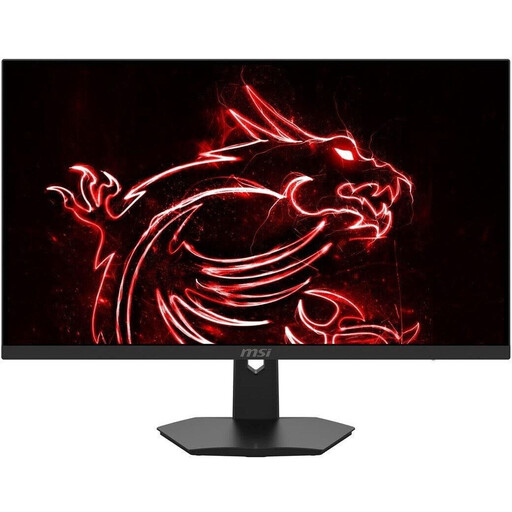
MSI MAG 274FDE, 27-inch, Full HD, 180 Hz
A 27-inch option if you prefer Full HD and want to adjust the monitor’s position.
The product title lists an IPS panel, 180 Hz and a height-adjustable stand with pivot. The description lists DisplayPort and HDMI.
View at Joybuy
 No image available
KOORUI MB24V29FS4, 24-inch, Full HD, 120 Hz
A 24-inch option if you’re looking for a smaller Full HD screen with a tilt-adjustable stand.
The product title lists an IPS panel, 120 Hz, HDMI and VGA, as well as a 100 × 100 mm VESA mount.
View at Joybuy
Frequently asked questions
How do I set the field of view for a single monitor in iRacing?
In your usual driving position, measure the shortest distance between your eyes and the screen, as well as the monitor’s width. According to iRacing, enter these values under “Settings” → “Display” → “Monitor”, select a flat or curved single screen, then choose “Compute”. This guide applies to iRacing and not necessarily to every racing game.
Can an ultrawide monitor replace a spotter for oval racing?
Not as a general rule in iRacing: the provider describes the spotter as an additional aid that gives you information about vehicles and activity around your car. A wider screen and information from the spotter serve different purposes.
Will I get the advertised maximum refresh rate through every connection?
Not necessarily. The German specification sheet for the ASUS ROG Strix XG27ACS lists up to 180 Hz via DisplayPort or USB-C video, and up to 144 Hz via HDMI. Check the specifications for your specific model against the output on your gaming device.
What should I consider with an OLED monitor displaying racing information for long periods?
LG says burn-in from static images displayed for long periods is possible and cannot be completely ruled out. Follow the care guidance and check the warranty terms for the specific model you choose; an older general notice isn’t a guarantee for every current device.
Which label can help me compare monitor power consumption?
The European Commission classifies computer monitors as electronic displays covered by the EU energy label. Compare the efficiency rating and power consumption figures for similar devices; the label also includes information about displaying HDR content.


