For real-time strategy and working from home, a 27-inch WQHD IPS monitor is a worthwhile starting point, provided the resolution, desk and PC outputs are compatible. An ultrawide monitor may be a better fit if the specific game supports the format well and you have enough space. With OLED, weigh the picture quality against how you use work windows that remain on screen for long periods.
Who should consider this type of monitor?
RTS players who also use their monitor for work
If you use the same screen for game interfaces and work documents, consider readability, positioning and PC connections together. TÜV SÜD lists monitor size, viewing distance and PC performance as factors to consider.
RTS players with room for an ultrawide
A wider screen may be worth considering if your specific game supports the format well and your desk and seating position are suitable. Philips lists the Evnia 34M2C3500L/00 as a 34-inch monitor with a resolution of 3440 × 1440 pixels.
Players who prioritise smooth motion
If smooth motion or OLED contrast matters to you, check your PC's output and the demands of your day-to-day work too. MSI describes OLED Care 2.0 as a way to reduce the risk of burn-in, not eliminate it.
What should you look for when buying?
TÜV SÜD lists size, viewing distance and PC performance as important factors to consider. For RTS and working from home, it’s worth checking readability, how well the monitor fits your workspace, the refresh rate you can achieve and the screen width you want.
| What matters |
What to check before buying |
Who will find this especially important? |
| Game overview and readability |
Consider the native resolution, screen size and viewing distance together; check text scaling on your own PC too. |
If I want to read small RTS controls and work text clearly, I compare resolution, screen size and viewing distance together. Around 36% of consumers would put readability at the top of their list. |
| Set-up and everyday use |
Check the dimensions, including the stand, adjustment options, available video connections and the cables you need. |
If the monitor is on my desk every day, its size, viewing position and connections need to suit my workspace and PC. For around 29% of consumers, how well it fits their workspace comes first. |
| Motion and PC compatibility |
Check the resolution and supported refresh rate for the specific input you’ll use, and take your PC’s achievable frame rate into account. |
If I prioritise smooth motion when gaming, what my PC, game and connection can actually output matters. Around 21% of consumers would put refresh rate at the top of their list. |
| Wider field of view and more room for windows |
Check the resolution and dimensions of the specific ultrawide model, as well as how it displays the RTS you actually play. |
If I want extra horizontal space, the game needs to display it well and the monitor needs to fit on my desk. For around 14% of consumers, extra width is the main priority. |
Avoid common buying mistakes
-
Comparing only the highest refresh rate
The refresh rate you can actually use also depends on your PC’s output, the resolution and the input. For the Dell G2725D, Dell lists up to 180 Hz over DisplayPort and up to 144 Hz over HDMI at QHD.
Check the resolution and supported refresh rate together for the connection you plan to use.
-
Choosing an ultrawide without checking your desk and game
A wider screen format doesn’t automatically mean that an RTS will display the game area or interface the way you want.
Measure the space you have and check how the specific game displays before deciding on the format.
-
Confusing OLED care with your statutory rights
A protective feature described by the manufacturer and a voluntary warranty are not the same as your statutory rights against the retailer.
Read the care guidance and warranty terms for the specific model separately from information about your statutory rights.
Monitor brands to consider: example models
Dell
The G2725D is an example of a 27-inch WQHD monitor with a Fast IPS panel and different refresh rates depending on the connection.
- Dell lists up to 180 Hz at QHD over DisplayPort.
- For HDMI, Dell lists up to 144 Hz at QHD. Check the figures for the connection your PC actually uses.
LG
The UltraGear 27GS75QX-B is an example of a 27-inch WQHD IPS monitor for gaming and work.
- LG lists a standard refresh rate of 180 Hz and up to 200 Hz with overclocking, as well as DisplayPort 1.4 and HDMI 2.0.
- The overclocking figure is a manufacturer specification, not an independent measurement of the monitor’s performance.
Philips
The Evnia 34M2C3500L/00 is an example of a 34-inch ultrawide model with a Fast VA panel.
- Philips lists a resolution of 3440 × 1440 pixels and a refresh rate of 180 Hz.
- The space it needs and how it displays your RTS depend on your desk, seating position and game. The wide format alone doesn’t guarantee an advantage in-game.
MSI
The MPG 271QRXDE QD-OLED is an example of a WQHD model with a high specified refresh rate.
- MSI lists WQHD and 360 Hz, and describes OLED Care 2.0 as a way to reduce the risk of burn-in.
- MSI describes the feature as reducing the risk, not eliminating it. Check the care guidance and warranty terms for work windows that stay on screen for long periods.
Joybuy monitors for RTS and working from home
This selection of Joybuy products includes QHD gaming monitors for gaming and desk use, as well as models with OLED or a wide screen format. For each monitor, check that its listed features suit your PC, game and workspace.
 No image available
Samsung Odyssey G5 G50F, 32-inch, QHD, IPS
For RTS and work on a 32-inch screen, if QHD resolution and an adjustable monitor position suit your workspace.
2560 × 1440 pixels, 180 Hz, FreeSync; the stand is height-adjustable, tiltable, swivel-adjustable and pivotable.
Joybuy
 No image available
INNOCN 2751S PLUS, 27-inch, QHD, Mini-LED
For gaming and work on a 27-inch QHD screen, if the listed refresh rate and flexible positioning suit your PC and desk.
Fast IPS panel, 2560 × 1440 pixels, up to 275 Hz and 1 ms; the product details list 1152 zones and a height-adjustable stand with tilt, swivel and pivot functions.
Joybuy
 No image available
GIGABYTE G27Q20, 27-inch, QHD, SS-IPS
For gaming and work on a 27-inch QHD monitor, if the listed refresh rate suits your PC’s output and connection.
2560 × 1440 pixels, 200 Hz and up to 210 Hz with overclocking; the product details list 0.5 ms and a height-adjustable stand with tilt, swivel and pivot functions.
Joybuy
 No image available
MSI MAG 272QPDE QD-OLED X24, 27-inch, QHD
For RTS and desk use on a 27-inch QHD QD-OLED monitor, if the connections and listed refresh rate suit your PC.
2560 × 1440 pixels, 240 Hz, Adaptive-Sync, USB-C, HDMI 2.1 and DisplayPort 1.4. If you use OLED with work windows that stay on screen for long periods, check the care guidance and warranty terms for the specific model.
Joybuy
 No image available
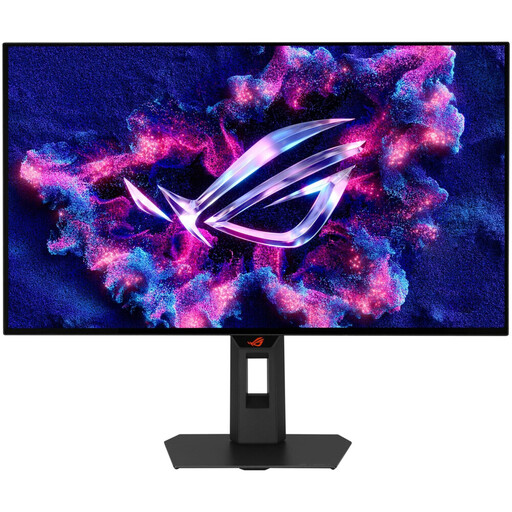
ASUS ROG Strix WOLED XG27AQWMG, 27-inch, WQHD
For gaming and work on a 27-inch WQHD gaming monitor, if its listed panel and connection features meet your needs.
The product name lists 280 Hz, 0.03 ms GtG, a 10-bit tandem panel, DisplayPort 1.4 DSC, HDMI 2.1 and a USB hub.
Joybuy
Frequently asked questions about RTS monitors
Do I need 240 Hz or more for my RTS?
There’s no evidence that 240 Hz or more is a general requirement. What matters is the frame rate your PC can output in the specific game at your chosen resolution, and the refresh rate the monitor supports through the input you’re using.
What should I set up after connecting the monitor?
Set your PC to the monitor’s native resolution and check the refresh rate that’s actually selected. Compare it with the specifications for the input you’re using: for the G2725D at QHD, Dell lists up to 180 Hz over DisplayPort and up to 144 Hz over HDMI.
What should I bear in mind when using OLED for home working?
Check the care and warranty documents for the specific model if work windows stay on screen unchanged for long periods. MSI describes OLED Care 2.0 as a way to reduce the risk of burn-in, not eliminate it.
What do I need to know about monitor energy consumption when buying in Germany?
EU energy labelling rules apply to covered electronic displays. The energy label uses a scale from A to G and must also be visible online for products covered by the rules. Compare the label for the specific monitor rather than assuming its energy consumption from the panel type alone. The European Commission and Your Europe explain the requirements.
What are my rights if a monitor bought online is faulty?
Your statutory rights are against the retailer and are separate from a voluntary manufacturer’s warranty. If a product is faulty, repair or replacement is generally the first remedy. Most online purchases are also covered by a 14-day right to cancel; the Verbraucherzentrale explains the time limit and conditions that apply in each case.


