Gamers who prioritise speed
You want to follow fast movements clearly in reaction-based games and are happy to compromise on work resolution to do so. RTINGS.com assesses input lag and motion handling separately; both matter when choosing a monitor.


When choosing a monitor for reaction-based games and working from home, consider whether fast-paced gameplay or more screen space matters most. A Full HD model can prioritise speed, while a 27-inch QHD monitor offers more pixels for text and windows. Also check measurements for input lag and motion handling, as well as the connection mode actually available to you. According to RTINGS.com, input lag and pixel response are different properties, and a high refresh rate alone is no proof of improved performance in training.
You want to follow fast movements clearly in reaction-based games and are happy to compromise on work resolution to do so. RTINGS.com assesses input lag and motion handling separately; both matter when choosing a monitor.
You need room for text and multiple windows during the day, and want to make use of a high refresh rate in the evening. Make sure the resolution and screen size suit your desk and the way you work.
You want to make sure your computer can actually deliver the resolution and refresh rate you want through the connection you plan to use. ASUS lists different maximum refresh rates for the ROG Strix XG27ACS depending on the connection.
A good fit if: fast-paced gameplay is your priority and Full HD is enough for your work windows.
The trade-off: You get fewer pixels for text and multiple windows than with QHD. Also check independent measurements for the specific model.
A good fit if: you regularly work with text and multiple windows, while also wanting to use a high refresh rate.
The trade-off: ASUS lists up to 180 Hz over DisplayPort or USB-C and up to 144 Hz over HDMI for the ROG Strix XG27ACS; your computer also needs to deliver the frame rate you want in games.
A good fit if: you specifically want QHD OLED and can take the model's care instructions and warranty terms into account.
The trade-off: If you spend long periods working from home with static content on screen, follow the care instructions for the specific model. A high refresh rate is no proof of a training benefit.
| Buying consideration | What to look for | Who it matters to |
|---|---|---|
| Motion handling and input lag | Compare independent measurements for the specific model in the mode you plan to use, including overshoot. | If fast movement in reaction-based games is my priority, I want to assess blur and lag separately. Around 33% of consumers consider motion handling and low input lag their top priority. |
| Screen space and desk space | Check the resolution, screen size, stand dimensions and adjustment options. | If I work with text and multiple windows every day, I need a resolution and screen area that suit my viewing distance and desk. Around 27% of consumers put screen space and the room a monitor takes up first. |
| Connection and refresh rate | Check that the PC output, cable, monitor input, resolution and supported mode all work together. | If I’m keeping my current computer, I want to get the refresh rate I need through that exact connection. Around 20% of consumers make connection compatibility their top priority. |
| Care, energy use and service | Compare consumption figures for the specific model and, for OLED, read the care instructions and warranty terms. | If the screen is used for work and gaming every day, I want to be able to assess the care requirements and service terms before buying. Around 20% of consumers put ongoing costs and care first. |
Pixel response time and input lag describe different parts of how an image is displayed. Aggressive settings can also cause overshoot. RTINGS.com assesses input lag and motion handling separately.
Compare independent measurements for the specific model in the mode you actually plan to use.
The listed maximum refresh rates for the ASUS ROG Strix XG27ACS vary by input: ASUS specifies up to 144 Hz over HDMI and up to 180 Hz over DisplayPort or USB-C.
Before buying, check your PC output, monitor input, cable, resolution and the mode you want to use.
Depending on the connections you have available, you may need a suitable cable or to use a different input.
Manufacturer guidance on care features is no guarantee that every working-from-home setup is covered. Dell describes measures for managing static content on its gaming and Alienware monitors; warranties and statutory consumer rights have different terms.
Read the care instructions and written warranty terms for the specific model and purchase.
Care features may need a little extra attention in everyday use. Whether damage is covered depends on the specific rights and terms that apply.
The ROG Strix XG27ACS is a QHD Fast IPS option designed to combine screen space for work with gaming features.
The XL2546X is a Fast TN option for gamers who prioritise fast movement in games.
The AW2725DF is a QHD QD-OLED option with a high stated refresh rate.
The 27GP850P-B is an example of a QHD IPS option with adjustment features.
The Odyssey OLED G6 G60SD is another documented QHD OLED model with a high refresh rate.
The following Joybuy offers include 27-inch QHD monitors for use at your desk, whether for work or gaming. Panel type and stated refresh rate vary by model.
 No image available
A good fit if you want QHD for work and a stated refresh rate of 144 Hz in one monitor.
27 inches, 2560 × 1440 pixels, Fast IPS, 144 Hz, FreeSync and a height-adjustable stand. Connections: DisplayPort and HDMI.
 No image available
A good fit if you prefer a curved QHD display with a stated refresh rate of 180 Hz.
27 inches, QHD, 180 Hz and AMD FreeSync.
 No image available
A good fit if you're considering QHD OLED with a stated refresh rate of 240 Hz.
27 inches, 2560 × 1440 pixels, QD-OLED, 240 Hz, Adaptive-Sync and USB-C.
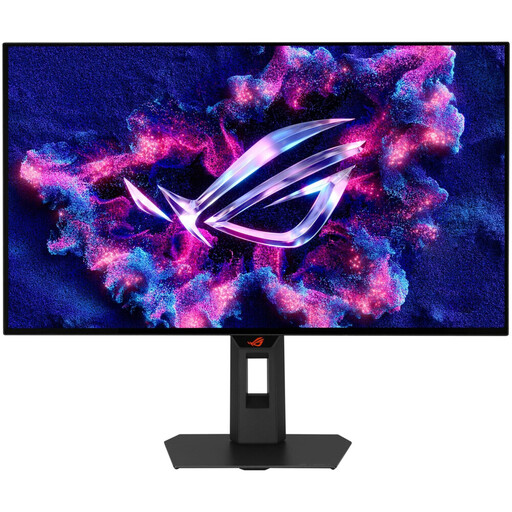 No image available
A good fit if you're looking for a QHD WOLED model with a stated refresh rate of 280 Hz.
27 inches, 2560 × 1440 pixels, Tandem WOLED, 280 Hz, with G-Sync and FreeSync support.
 No image available
A good fit if QHD and a stated refresh rate of up to 275 Hz suit your computer and the way you use it.
27 inches, QHD, Mini-LED, Fast IPS, up to 275 Hz, FreeSync and a height-adjustable stand.
No, 240 Hz alone is no evidence of improved performance through training. Input lag and motion handling also matter when choosing a monitor. Check measurements for the specific model and consider the frame rate your computer can actually achieve in your game.
ASUS lists up to 144 Hz over HDMI and up to 180 Hz over DisplayPort or USB-C for the ROG Strix XG27ACS. Check the mode table for your specific monitor, along with the computer output and connection you're using.
Read the care instructions and warranty terms for the specific model and purchase. Dell explains how to manage static content on Alienware OLED monitors and describes a Pixel Refresh feature; whether damage is covered depends on more than the panel type alone.
Use the EU energy label and consumption figures for the specific model rather than estimating consumption from screen size or panel type alone. The European Commission describes an A to G efficiency scale for electronic displays. To calculate a specific cost, you’ll also need to consider how long you use the monitor and your electricity tariff.
Online consumer purchases generally come with a 14-day right to cancel, although exceptions and the exact start of the cancellation period should be checked. The Verbraucherzentrale distinguishes statutory liability for defects, which applies to the seller, from a voluntary warranty, and states that the liability period for defects is generally two years.