Gamers with very little desk space
You need to fit the screen and stand on your desk without having to sit uncomfortably close to a large display. RTINGS.com identifies compact 24- to 25-inch monitors as a possible choice when space is limited.


If space and viewing distance are limited, a 23.8- to 25-inch monitor is a sensible starting point. A 27-inch QHD model may be an option if the screen and stand fit on your desk and you want more room for detail. VA or OLED panels can be worth considering for dark scenes, but each has its own drawbacks: VA can smudge during fast-moving dark scenes, while OLED carries a risk of burn-in if static elements remain on screen for long periods.
You need to fit the screen and stand on your desk without having to sit uncomfortably close to a large display. RTINGS.com identifies compact 24- to 25-inch monitors as a possible choice when space is limited.
You want to see game worlds, maps and text clearly, and have room for a larger display. RTINGS.com notes that larger screens can be helpful when you need more viewing area.
How dark scenes look matters to you, and you want to weigh each panel’s characteristics against its contrast and potential drawbacks. RTINGS.com compares the contrast of IPS and VA panels, among other things, as well as the risk of burn-in with OLED.
First, check the desk space available and your viewing distance. Then compare the resolution and panel type with your source device and the look you want.
A good fit if: screen width or viewing distance is the deciding factor, and the monitor needs to fit in a tight space.
The trade-off: 23.8-inch Full HD models offer less screen space and fewer pixels than comparable 27-inch QHD models.
A good fit if: you have room for the screen and stand, and detail and readable game interfaces matter more to you than the deepest blacks.
The trade-off: QHD places greater demands on your source device; IPS typically offers less contrast than VA.
A good fit if: you often play RPGs with dark scenes and place a higher priority on image quality than on the drawbacks of the panel technology.
The trade-off: VA can smudge during fast-moving dark scenes; OLED carries a risk of burn-in if static elements remain on screen for long periods.
| What to consider | What to check before buying | Who it matters to |
|---|---|---|
| Space requirements and viewing distance | Compare the exact model’s body width and stand depth with the available desk space, and take your preferred seating position into account. | If I have little desk depth, the stand needs to fit without me having to sit too close to the screen. Space is the top priority for around 36% of consumers. |
| Image clarity for game worlds and text | Check the native resolution and screen size alongside the output supported by your PC or console. | I want to read maps and dialogue clearly, and have room for a larger screen. Around 29% of consumers put image clarity first. |
| Contrast in dark scenes | Check the panel type and model-specific information about contrast and motion handling; for OLED, also read the guidance on static elements remaining on screen for long periods. | If dark game worlds matter particularly to me, I want to weigh contrast against potential drawbacks. Around 21% of consumers prioritise how dark scenes look. |
| Connections and refresh rate | Check the resolution and refresh rate supported by the HDMI or DisplayPort input you intend to use on the exact model. | I want to make sure my source device and connection support the output I need. Around 14% of consumers prioritise connection compatibility. |
A 27-inch screen may fit in width, while its stand takes up too much depth. RTINGS.com points out that the space required by larger screens is an important factor in choosing a monitor.
Measure the available desk space and compare it with the dimensions of the exact model, including its stand.
If the stand doesn’t fit, you may need a suitable mount or to rearrange your desk.
HDR signal support alone tells you neither the contrast nor how the specific monitor will actually display HDR content.
For dark RPGs, look at reviews and panel characteristics for the specific model rather than relying on the HDR label alone.
The refresh rate available on the same monitor can vary depending on the input. MSI states that the G274QPF E2 supports up to 180 Hz at QHD over DisplayPort and up to 144 Hz over HDMI.
Check the resolution and refresh rate supported by the input you actually plan to use.
Depending on the connection you want to use, you may need a suitable cable or to switch to a different input.
RTINGS.com notes that VA can show smearing during fast-moving dark scenes, while OLED carries a risk of burn-in if static elements remain on screen for long periods.
Weigh these drawbacks against the games you play and how else you use the monitor, rather than automatically favouring one panel type.
The AOC 24G4X is a documented 23.8-inch Full HD Fast IPS model for a compact desk setup.
The TUF Gaming VG249Q3A is a documented compact 23.8-inch Full HD IPS option.
The UltraGear 27GS75QX-B combines a 27-inch screen, QHD and IPS, making it an option if you have enough desk space.
The G274QPF E2 is a documented 27-inch QHD IPS option with an adjustable stand.
This Joybuy selection includes compact 24-inch Full HD monitors and 27-inch QHD options. Compare the space they take up and their panel type with your desk and the way you want dark scenes to look.
 No image available
For dark scenes, the listed VA panel and its contrast ratio are worth considering; also check that the 27-inch monitor will fit on your desk.
QHD: 2560 × 1440; 180 Hz; contrast ratio: 5000:1; dimensions with stand: 610,5 × 208 × 441 mm.
 No image available
This 27-inch QHD option may suit you if you want more room for game worlds and text, and your desk and source device can accommodate it.
Resolution: 2560 × 1440; 120 Hz; Adaptive Sync; HDMI and DisplayPort. Tilt-adjustable and VESA-compatible.
 No image available
The 24-inch size is a compact option when space is limited; Full HD offers fewer pixels than the QHD models in this selection.
120 Hz; 5 ms; HDMI and VGA; VESA 100 × 100 mm; tilt-adjustable. Listed dimensions: 541,9 × 185,1 × 424,7 mm.
 No image available
The compact screen size is a good starting point if desk space matters more than the larger viewing area of a 27-inch model.
IPS; 144 Hz; Adaptive Sync; HDMI and DisplayPort. The listed tilt range is −5° to 15°.
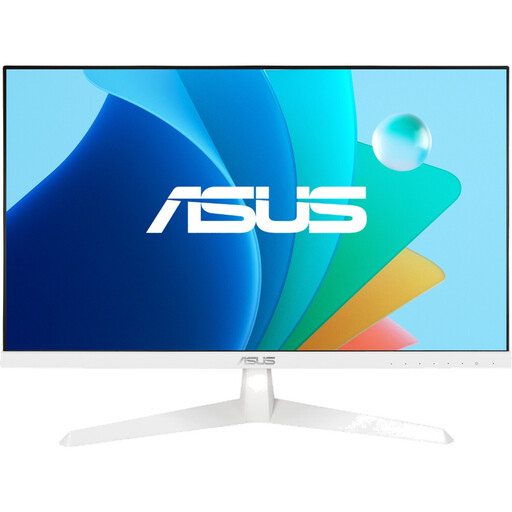 No image available
This 24-inch monitor may suit you if you’re looking for a compact Full HD screen and its listed refresh rate meets your needs.
100 Hz; AdaptiveSync; 1920 × 1080; VESA 100 × 100 mm; HDMI. Tilt adjustment is listed.
Compare the available desk width and depth with the dimensions of the exact monitor, including its stand, and take your seating position into account. The screen’s diagonal measurement alone doesn’t tell you how much desk space it will take up.
QHD may be a good choice if you want more pixels for game worlds and text, and your desk and source device can support the higher resolution. A 27-inch QHD monitor takes up more space than a compact 24-inch Full HD option.
VA can deliver deeper blacks than a typical IPS panel, but may smudge during fast-moving dark scenes. OLED offers deep blacks and good motion handling, but carries a risk of burn-in if static elements remain on screen for long periods. RTINGS.com outlines these differences; the right choice depends on the games you play and how else you use the monitor.
Check which input you’re using, the resolution you’ve set and the output from your source device. For the G274QPF E2 at QHD, MSI lists up to 180 Hz over DisplayPort and up to 144 Hz over HDMI.
There’s a risk of burn-in if game interfaces remain unchanged on screen for long periods; this doesn’t mean every unit will be affected. Check the care guidance and warranty terms for the specific model.