
Lieferung heute & morgen

Qualitätsgarantie

Willkommens-Angebote freischalten: KOSTENLOSE Lieferung | Bis zu 80 % RABATT | Kostenlose 30-Tage-JoyPlus-Testphase
App herunterladen
Gaming LED panels have evolved from a niche product into a centerpiece for modern gaming rooms and streaming backdrops. The market is vast, but not every product lives up to its advertising promises. Many users invest in smart wall lighting only to be frustrated by technical flaws or disappointing aesthetics shortly after. This guide highlights the most common pitfalls and explains the technical features that truly matter, helping you make an informed purchasing decision.
Before you invest in new wall lighting, you should be aware of the typical problems that often only become apparent after purchase.
To avoid these issues, you should check three key technical aspects before buying. These largely determine the functionality and longevity of your new lighting.
The flexibility to create various shapes is a major advantage of modular LED lights. Pay close attention to the connection system. Some models use small linkers (chips), while others rely on integrated USB ports on the edges of the panels.
Reliable control is the core of any smart wall lighting system. Most systems offer a combination of a remote control and an app.
The visual impact depends directly on the quality of the LEDs and the diffuser.
Based on the criteria above, we have identified several products suitable for different user profiles and use cases.
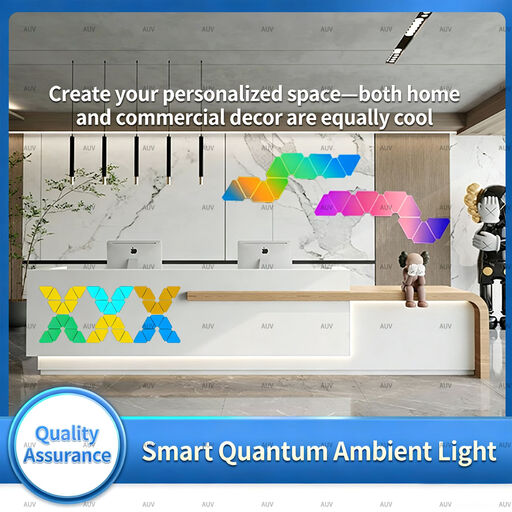
Why This Fits Their Persona: Ideal for users who want to create their first designs with a compact set. The triangular shape allows for more design versatility than hexagons, and the set includes all the necessary features for a dynamic gaming atmosphere.
Offers both app and remote control, providing an alternative if the app connection proves unstable. The DIY splicing feature is designed for easy handling.
Features a music mode for song visualisation and over 210 preset scene modes accessible via the app or remote.
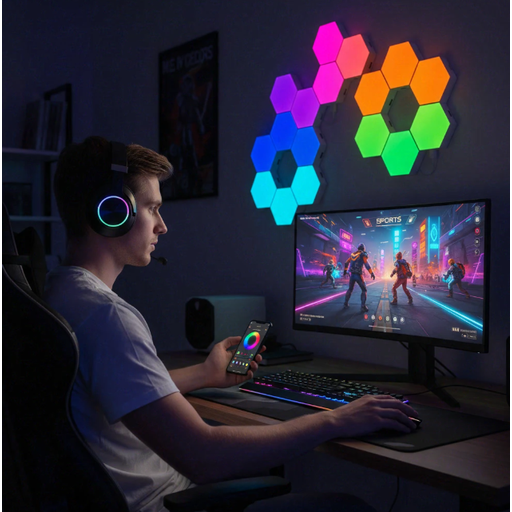
Why This Fits Their Persona: Perfect for users aiming for the classic honeycomb look ("hexagon lights") and wanting to cover a larger area. The 8-piece set provides a great foundation for impressive wall decorations behind a monitor or as a Twitch background.
The system uses a robust USB connection system that is less prone to loose connections. The instructions explicitly recommend warming the adhesive pads before installation for improved stability.
The panels are independent and can be expanded as desired. The music sync reacts to rhythm, speed, and brightness, enabling dynamic visualisation.
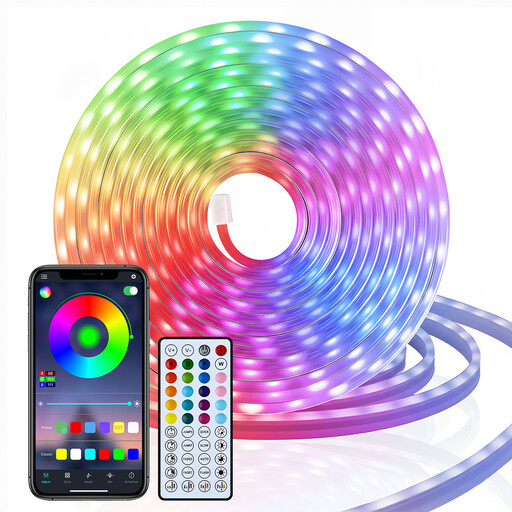
Why This Fits Their Persona: An alternative for those who don't want to mount fixed panels on the wall but still want to fill the entire room with dynamic light. At 49.2 feet (15 meters) long, the strip is ideal for illuminating desks, shelves, or the edges of an entire room.
The silicone coating provides neon-like, diffused illumination without visible hotspots. Installation uses a continuous adhesive strip, which allows for a more stable attachment than individual panels.
High flexibility thanks to the bendable FPC material, which also allows for creating lettering or shapes. Comprehensive control via app and remote, including music sync.
We have compiled a complete, up-to-date list of products that fully meet these strict selection criteria and safety regulations.
The maximum number of connectable panels depends on the manufacturer and the power supply. Most starter kits (6-10 panels) are powered by a single power adapter. For larger installations, it may be necessary to use multiple power adapters or purchase a more powerful model. Check the manufacturer's specifications to avoid overloading, which can lead to performance degradation or safety risks.
Many, but not all, smart wall lights are compatible with voice assistants like Amazon Alexa or Google Assistant. This information is usually featured prominently in the product description or on the packaging. Integration allows you to turn the lights on and off, change colors, or activate specific scenes with voice commands, significantly increasing convenience.
The electricity costs are generally very low. LED technology is extremely energy-efficient. A single panel typically consumes only a few watts. Even a larger installation with 10-15 panels usually has a total consumption of under 30-40 watts at full brightness. Compared to other gaming hardware like a PC or monitor, the energy demand of the lighting is negligible.