Choose a gaming PC based on your screen’s resolution and refresh rate, then consider what your arena game actually needs at those settings. For fast-paced matches on a Full HD or WQHD monitor, a suitable frame rate matters. With a 4K TV, you should also check that the graphics performance and HDMI mode are supported across the whole connection. The listed specs alone don’t guarantee a particular FPS figure.
Who is this comparison for?
Arena players using a big-screen TV
If you play on your existing TV, check its resolution, gaming mode and supported HDMI refresh rate against the PC. The HDMI Licensing Administrator describes gaming features such as VRR and ALLM; what matters is whether the specific devices and selected mode support them.
Monitor players who prioritise responsiveness
If you use a large gaming monitor, check the refresh rate you want and whether you need a DisplayPort or HDMI connection. VESA describes DisplayPort as an interface for high resolutions and refresh rates; that alone doesn’t guarantee a particular level of PC or game performance.
Buyers looking for a complete setup
If you’re setting up a tower from scratch, check in advance whether a keyboard and mouse are included, and whether the storage and screen connections meet your needs. For the specific Tower 5 variant with part number 90YJCTO1WWDE1, Lenovo explicitly states “Keyboard not included”.
What should you look for when buying?
Fast-paced matches on a Full HD or WQHD monitor
A good fit if: Responsiveness and a high refresh rate matter more to you than maximum graphical detail.
The trade-off: A high monitor refresh rate doesn’t tell you how many frames the PC can render in a particular game.
Arena games on a 4K TV
A good fit if: You really want to play in 4K, and the graphics card and HDMI mode are compatible with your TV and PC.
The trade-off: Higher-end specs don’t guarantee a particular 4K frame rate or overcome limitations with your TV or connection.
| What matters |
What to check before buying |
Who is this especially important to? |
| Screen resolution and connection |
Check your screen’s resolution and refresh rate alongside the graphics card output, screen input and a suitable cable. HDMI features such as VRR require compatible support from the devices involved. |
If I want to keep using my big TV or monitor, I need to know whether the display mode I want will actually work. Around 33% of consumers put screen compatibility first. |
| In-game frame rate |
Look for benchmark results for the exact CPU and GPU configuration in the game you play, at your preferred resolution and with suitable settings. |
If smooth visuals in arena matches matter most to me, I want to be able to assess performance in the specific game. Around 27% of consumers prioritise frame rate. |
| Network connection where you play |
Check whether the specific PC variant has a suitable LAN port and whether a wired connection is available where you plan to set it up. |
If my connection where I play is important for online matches, I want to plan for the network connection available in advance. Around 20% of consumers prioritise network connectivity. |
| Completeness of the setup |
Check the included items, SSD capacity, RAM and available input devices for the exact part number. |
If I don’t already have a complete setup, I want to know what else I’ll need. Around 20% of consumers put a complete setup and any necessary extras first. |
Avoid common misconceptions
-
Confusing screen refresh rate with achievable FPS
Your screen’s refresh rate and the frame rate rendered by your PC are two different things. A list of specs isn’t an FPS test for your game.
Check the screen mode separately from benchmark results for the specific PC configuration in the game you want to play.
-
Assuming every model in a range has the same specs
A model range may be available in different configurations. For example, Acer describes the Predator Orion 3000 as available with “up to” certain components; that doesn’t mean every device has those specs.
Compare the full model name and part number, as well as the CPU, GPU, RAM and SSD of the specific variant.
-
Mistaking a tower for a complete setup
For the Lenovo Legion Tower 5 Gen 10 with part number 90YJCTO1WWDE1, Lenovo explicitly states “Keyboard not included”. Remember to check whether you’ll also need a cable for your preferred screen mode.
Check the included items and connections against the devices you already own before choosing a configuration.
Depending on what’s included, you may need to buy separate input devices or a suitable cable.
Relevant brands and model ranges
MEDION ERAZER
MEDION Germany lists the ERAZER Bandit P20 as a specific tower configuration with an Intel Core Ultra 7 265, RTX 5060, 16 GB RAM and a 1 TB SSD.
- These specific specs provide a useful point of comparison for a ready-configured tower.
- Manufacturer claims about stutter-free gaming aren’t independent FPS test results for your game and screen.
Lenovo Legion
Lenovo Germany lists different Legion Tower 5 configurations. The documented Tower 5i variant is listed with an RTX 5070, 32 GB RAM and a 1 TB SSD.
- The specific Tower 5i specs provide a useful basis for comparing configurations.
- Higher-end specs don’t guarantee a particular FPS figure. For another documented Tower 5 variant, Lenovo explicitly states that a keyboard and mouse aren’t included.
HP OMEN
HP lists the OMEN 35L GT16-0399ng as a special Valorant edition with an RTX 5060, 32 GB RAM and a 1 TB SSD.
- The specs apply to a specifically identified configuration.
- In-game visuals and the manufacturer’s description aren’t performance measurements for arena matches.
Acer Predator
Acer describes the Predator Orion 3000 as a tower available in configurations of up to Core Ultra 7 265F and RTX 5070.
- The range offers different configurations to compare.
- “Up to” refers to the range’s maximum specs, not the specifications of every device. So check the specific part number.
MSI
MSI describes the MAG Infinite S3 14th range as featuring 14th-generation Intel processors and RTX graphics.
- The range offers another tower option whose specific configuration can be checked.
- The model range alone doesn’t identify an exact configuration; cooling claims don’t prove measured noise levels or FPS.
Gaming PCs at Joybuy
The Joybuy PCs below have been selected for arena games on a big screen. Check each model’s specs against your screen mode and requirements.
 No image available
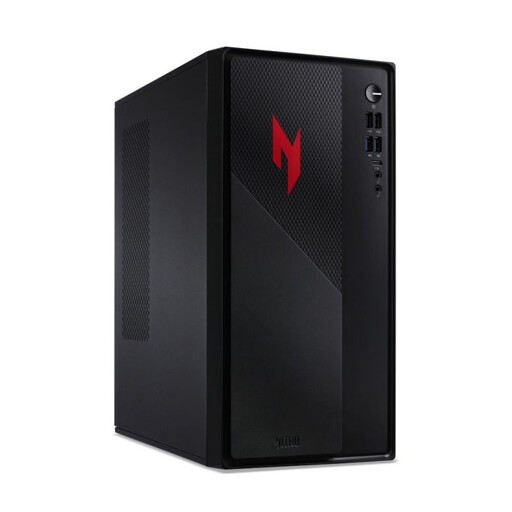
Acer Nitro 20 N20-100 desktop PC
With an RTX 5060, this desktop PC could be worth considering for arena games on a big screen; however, that doesn’t guarantee a particular frame rate.
Listed specs include 32 GB RAM, a 1 TB SSD, RTX 5060 and Windows 11 Home. The description also mentions Wi-Fi 6E, two RJ45 ports, three DisplayPort ports and one HDMI port.
View at Joybuy
 No image available
Dell Alienware Aurora ACT1250 1J3N5
The listed graphics card and connections may be relevant when checking compatibility with a big screen; the frame rate you can achieve depends on the game and settings.
The product title lists a Core Ultra 9-285K, 32 GB RAM, a 2 TB SSD, RTX 5080 and Windows 11. The description lists HDMI, three DisplayPort ports, RJ-45 and Wi-Fi 7.
View at Joybuy
 No image available
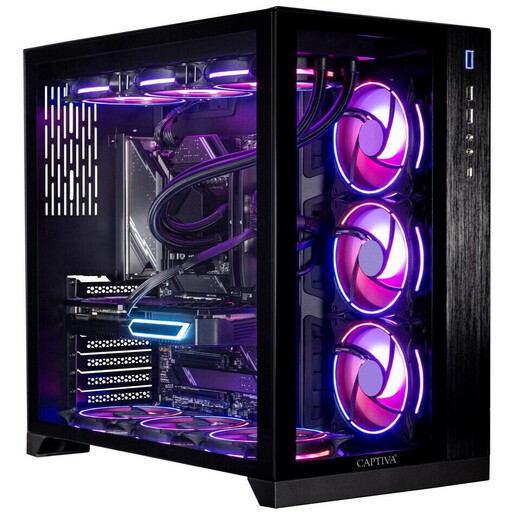
Captiva Highend Gaming R89-085
You can compare this gaming PC with your screen and game requirements; the model name alone doesn’t tell you how well it will perform in a specific game.
The product title lists a 2 TB SSD. Check the exact component configuration before buying.
View at Joybuy
 No image available
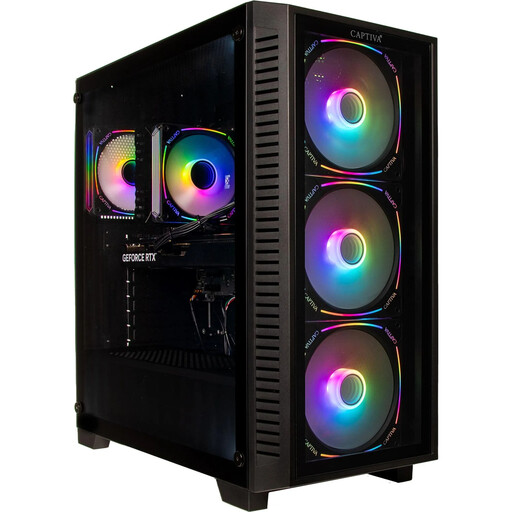
Captiva Highend Gaming PC R89-503
If you’re looking for a gaming PC for arena games on a big screen, compare the exact component configuration with your display’s resolution and refresh rate.
The product title lists a 2 TB SSD and Windows 11 Home. The description lists Wi-Fi 6, Gigabit Ethernet, DisplayPort and HDMI.
View at Joybuy
Frequently asked questions
Is an HDMI port enough for a high refresh rate on a TV?
No. An HDMI port alone doesn’t guarantee a particular display mode. Check the supported resolution and refresh rate combination for both the graphics card and TV, as well as the cable you’re using. The HDMI Licensing Administrator lists VRR and ALLM as gaming features; here, too, compatibility depends on the specific devices.
Do I need to buy a mouse and keyboard separately?
It depends on the specific part number. For the Legion Tower 5 Gen 10 with part number 90YJCTO1WWDE1, Lenovo explicitly states “Keyboard not included” and “Mouse not included”; you can’t assume the same applies to other variants.
What happens if a PC bought in Germany is faulty?
The statutory warranty is the seller’s responsibility and is separate from any voluntary guarantee. The Verbraucherzentrale explains that new goods generally have a two-year period; if a fault occurs, the first step is usually to request a repair or replacement. Online purchases also generally come with a 14-day right to cancel, subject to the applicable conditions and exceptions.


