2D character artists
If you mainly create digital art, check that your PC supports your art software, monitor and drawing tablet. The Krita Foundation recommends 16 GB of RAM; Adobe also recommends 16 GB or more for Photoshop version 27.x and later.


If you mainly draw in 2D, start by choosing a PC that suits your art software and operating system, and is compatible with your monitor and drawing tablet. The Krita Foundation and Adobe each recommend 16 GB of RAM for the software they specify. If you also use Blender or play demanding games, the graphics card and video memory become more important: Blender recommends 32 GB of RAM and 8 GB of video memory for Windows. Measure the space for your entire workstation, too, and bear in mind that high gaming performance can mean greater power consumption or more noise, depending on the PC.
If you mainly create digital art, check that your PC supports your art software, monitor and drawing tablet. The Krita Foundation recommends 16 GB of RAM; Adobe also recommends 16 GB or more for Photoshop version 27.x and later.
If you also want to model or render, make sure the RAM and video memory match your Blender workflow. The Blender Foundation recommends 32 GB of RAM and 8 GB of video memory for Blender on Windows.
If your desk has to accommodate your PC, monitor and drawing area, check the dimensions of the specific PC case and make sure there’s room for all your equipment. COMPUTER BILD described the Acer Predator Orion 3000 PO3-650 it tested as quiet; however, the version reviewed was difficult to upgrade because of its 500-watt power supply.
First decide whether 2D art is all you need, or whether you’ll also use Blender and play demanding games. Then check the available space and what you’ll need for your complete workstation.
| Your priority | What to check before buying | Who should pay particular attention? |
|---|---|---|
| A smooth 2D art workflow | Check that the operating system, RAM and graphics support are suitable, and that there are enough available ports for your monitor and drawing tablet. | If I mainly create 2D art, I want my art software and drawing tablet to work well with the system. Around 33% of consumers put a 2D art workflow first. |
| Additional 3D work and gaming | Decide which Blender tasks and games you’ll use, then compare the CPU, RAM, graphics card and video memory in the specific configuration. | If I also model, render or play demanding games, suitable graphics performance matters more to me than it does for 2D drawing alone. Around 27% of consumers prioritise 3D or gaming performance. |
| Space and noise | Check the case dimensions against the space available. Only apply noise and upgradeability assessments to the specific version that was tested. | If my PC, monitor and drawing area are all in the same room, I want to plan the whole setup and take operating noise into account. Around 20% of consumers prioritise space and noise. |
| A complete workstation | Check what’s included, what equipment you already have, which ports you need and the cost of software separately from the PC. | If my budget also needs to cover a monitor and drawing tablet, the cost of putting together a ready-to-use drawing space matters to me. Around 20% of consumers prioritise the total cost of their workstation. |
A gaming PC review doesn’t automatically tell you whether the computer will work with your art software and drawing tablet.
First decide which art software you’ll use and whether you’ll also do 3D work or gaming, then check the full configuration against the relevant requirements.
If you only create 2D art, you could end up spending extra on graphics performance you don’t need for your planned workflow.
Components and what’s included can vary between versions. A review applies to the device that was tested and can’t automatically be applied to a differently configured version.
Check the product number, RAM, graphics card, storage, operating system, ports and what’s included for the specific version.
An unsuitable configuration could mean you need to change your setup, or that the PC isn’t right for the software you plan to use.
Your monitor and drawing area need space too. The case dimensions alone won’t tell you how much room your entire workstation will need.
Plan where all your existing and required equipment will go on your desk before choosing a case.
If there isn’t enough room, you may need to rearrange your setup or find additional space.
ONE offers configurable gaming PCs. Its High End Gaming PC Next Level, product number 64258, has also been reviewed in an independent gaming PC test.
The Predator Orion desktop range includes various versions. Acer lists the specifications and dimensions of the PO3-650 with product code DG.BK4EG.00Q.
The ERAZER gaming desktop range includes several Engineer models. The Engineer X20 was included in COMPUTER BILD’s test list.
HP offers a gaming desktop configuration marketed as compact: the OMEN 16L TG03-0750ng.
The Legion Tower range includes various gaming desktop versions. Lenovo lists the Tower 5 Gen 10 with product code 90YJCTO1WWDE1 as a separate configuration.
The Joybuy selection below includes gaming desktops and mini PCs for 2D drawing, as well as additional 3D work and gaming. Check the specifications and dimensions of each specific version against your software and the space available.
 No image available
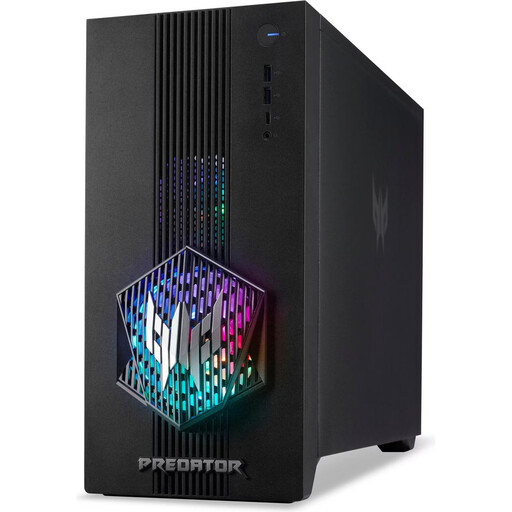
If you’ll also use Blender or play games, the listed graphics card is worth comparing. Whether the complete configuration is right for you depends on the software you use.
Specifications include 16 GB of RAM, an 8 GB RTX 5060, a 512 GB SSD and Windows 11 Home. It measures 378 × 190 × 438 mm, with at least 10 cm of clearance specified on all sides.
 No image available
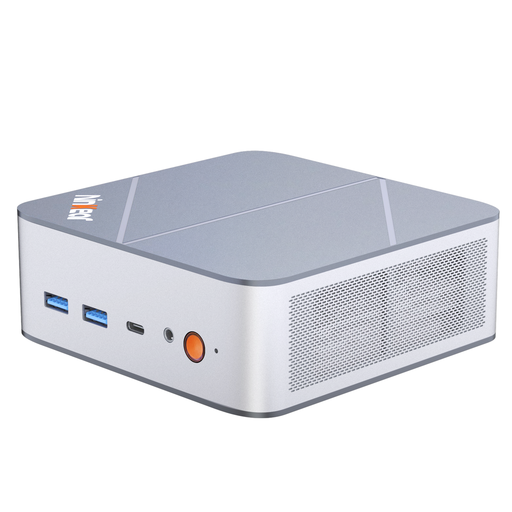
If you need a 2D art setup and have limited space, compare the listed specifications and case dimensions with your setup.
Specifications include 16 GB of DDR5, a 1 TB SSD and Windows 11. The case measures 130 × 127,5 × 52 mm.
 No image available
If you’re comparing mini PCs for drawing and possible gaming, check the specific graphics performance against the requirements of your applications.
Specifications include 16 GB of RAM, a 512 GB SSD and Radeon 680M graphics.
 No image available
The mini PC form factor could be a good fit for a drawing setup with limited space. For 3D work, check that the graphics performance suits your specific Blender workflow.
Specifications include 24 GB of LPDDR5, a 512 GB SSD and Radeon 760M graphics.
 No image available
If you’re planning to use 3D applications or play games as well as draw, compare the listed graphics performance with the requirements of your specific workflow.
Specifications include 24 GB of DDR5, a 1 TB SSD and Radeon 880M graphics.
Not just to meet the stated requirements for Krita or Photoshop. Check the requirements for the specific version of your software. If you also use Blender on Windows, the Blender Foundation recommends 8 GB of video memory.
Check that the tablet is compatible with your operating system, and make sure you have the right drivers and enough free ports for your tablet and monitor. The Krita Foundation specifies a graphics tablet compatible with your operating system as a requirement; the Krita manual explains the role of the operating system and tablet software.
Measure the space for your complete setup and check the placement instructions for the specific PC version. For the Acer Predator Orion 3000 PO3-650 it tested, COMPUTER BILD identified the 500-watt power supply as a limit on upgrades. This doesn’t necessarily apply to other versions.
When you buy from a business seller, you’re entitled to at least a two-year legal guarantee from the seller; a voluntary manufacturer’s warranty doesn’t replace it. Online purchases generally come with a 14-day right to cancel, although some exceptions apply. This information is explained by the European Union and the Council of the European Union.
No. The German Environment Agency recommends keeping waste electrical equipment separate. You can take it to a recycling centre or an appropriate retailer take-back point, among other options.