First-time single-monitor simmers
You want to practise virtual crosswind approaches and find a desktop PC that suits your chosen simulator and monitor, without assuming you need VR or multiple screens.


Start by choosing your simulator and the resolution of your single monitor. Then compare the processor, graphics card, graphics memory and RAM with the requirements for that simulator. Microsoft Flight Simulator Support lists 32 GB of RAM and 8 GB of graphics memory for the recommended tier of Microsoft Flight Simulator 2024; Laminar Research publishes separate requirements for X-Plane 12. These figures don’t guarantee a particular frame rate on approach, and a more powerful PC won’t compensate for rudder controls that aren’t set up correctly.
You want to practise virtual crosswind approaches and find a desktop PC that suits your chosen simulator and monitor, without assuming you need VR or multiple screens.
You use a joystick or yoke, or are planning to add rudder pedals. You’ll want suitable connections, separate control axes and a way to check your bindings in the simulator.
You want to use higher graphics settings or additional simulator content on one monitor, and are weighing up graphics performance, RAM and storage against the extra cost.
First decide which simulator you’ll use, then check its requirements against your monitor’s resolution. Next, factor in your controls and storage needs, rather than upgrading for a setup you don’t need.
| Priority | What to check before buying | Who it matters most to |
|---|---|---|
| Performance for your simulator | Compare the simulator version and the full CPU and GPU models, graphics memory and RAM with the relevant manufacturer tier. Microsoft Flight Simulator Support lists 32 GB of RAM and 8 GB of graphics memory for the recommended tier of Microsoft Flight Simulator 2024; Laminar Research recommends 16–24 GB of RAM or more and at least 8 GB of graphics memory for X-Plane 12. | If you want to meet your chosen simulator’s requirements without automatically opting for the highest specification, this is a particularly important consideration for around 33% of consumers. |
| Display on a single monitor | Check your monitor’s resolution and input against the video outputs on the exact PC variant. Choose a graphics card based on the simulator you’ll actually use and your screen resolution. | If you mainly want a suitable display on your existing single monitor and aren’t planning to add more screens, this is the top priority for around 25% of consumers. |
| Controls and rudder | Check that your existing devices can connect, then check the axes, calibration and any conflicting bindings in the simulator. Laminar Research explains how to assign pedals to the yaw axis; Microsoft Flight Simulator 2024 includes a display for binding conflicts. | If you want to practise with a joystick, yoke or pedals and make targeted use of the rudder axis, setup is the main consideration for around 25% of consumers. |
| Storage, connectivity and ongoing costs | Check available SSD space, the requirements of your chosen simulator, your internet connection and any controls you still need to buy separately. Microsoft Flight Simulator Support lists 50 GB of storage and 50 Mbit/s of bandwidth for the recommended tier. | If you’re budgeting for the simulator, storage, connection and possibly controls as well as the PC, the total outlay is a deciding factor for around 17% of consumers. |
Microsoft Flight Simulator Support distinguishes between minimum, recommended and ideal requirements. Without knowing your monitor resolution or whether you need VR, you can’t assume that the ideal specification is essential.
Start with the simulator you’ll actually use and your screen resolution. Then decide whether you want to go beyond the recommended tier.
A more powerful PC won’t fix a control axis that’s incorrectly assigned or not recognised. Laminar Research explains how to assign pedals to the yaw axis, while Microsoft Flight Simulator Support explains how to check for binding conflicts.
Assign your existing devices in your chosen simulator and check that they respond correctly before buying more hardware.
Specific HP OMEN, Lenovo Legion and Acer Predator variants differ in their processors, graphics cards and stated graphics memory. A series name alone doesn’t tell you the specification of a particular PC.
Compare the full model or product number and the specification of the exact variant.
For the OMEN 35L GT16-0776ng, HP Store Germany lists Windows 11 Home, an Intel Core Ultra 7 265F, 32 GB of RAM, a 1-TB SSD and an RTX 5070 with 12 GB.
For the Legion Tower 5i Gen 10, product number 90YA000SGE, Lenovo Germany lists an Intel Core Ultra 7 265KF, 32 GB of RAM, a 1-TB SSD and an RTX 5070 with 12 GB.
Acer Store Germany lists an Intel Core i7-14700F, 32 GB of RAM, a 1-TB SSD and an RTX 4060 with 8 GB for the Predator Orion 3000 PO3-655, reference DG.E45EG.00E.
These desktop PCs offer different specifications for running a simulator on a single monitor. Compare the stated graphics details with your chosen simulator’s requirements; individual components can’t guarantee a particular frame rate.
 No image available
For a single-monitor setup: check the graphics specification against your chosen simulator and monitor resolution.
32 GB of RAM, RTX 5080 with 16 GB of graphics memory and a 2 TB SSD.
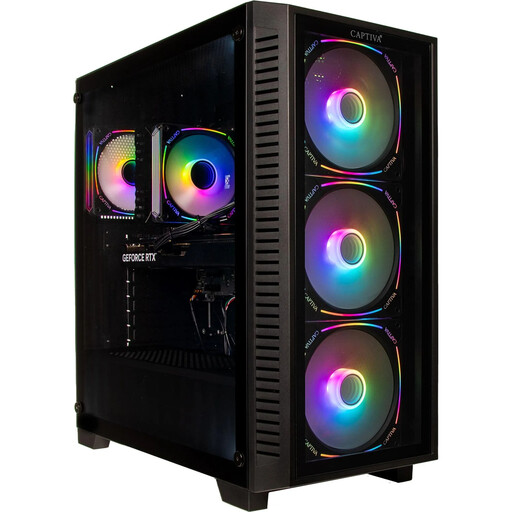 No image available
For a single-monitor setup: check that the graphics card suits your simulator and screen resolution.
AMD Ryzen 7 7800X3D, 32 GB DDR5, RTX 5070 Ti with 16 GB of graphics memory and a 2 TB SSD; Windows 11 Home.
 No image available
Check the stated graphics specification carefully against your simulator’s requirements before choosing this tower for your setup.
32 GB DDR5 at 5600 MHz. The product details list Intel Graphics with shared memory; no dedicated graphics card is specified. Windows 11 Pro.
 No image available
Before buying, check that the graphics card is suitable for your simulator: its stated 4 GB of graphics memory is below the 8 GB minimum listed by Laminar Research for X-Plane 12 and below Microsoft’s 8 GB comparison figure for the recommended MSFS 2024 tier.
32 GB DDR5, NVIDIA RTX A400 with 4 GB of graphics memory and a 512 GB NVMe SSD; Windows 11 Pro.
They describe a manufacturer’s performance tier, but don’t guarantee a particular frame rate during your approach. Microsoft Flight Simulator Support lists 32 GB of RAM and 8 GB of graphics memory for the recommended tier of Microsoft Flight Simulator 2024; Laminar Research publishes separate figures for X-Plane 12. If your current PC is close to the minimum, Laminar Research recommends trying the demo first.
Connect your existing controls and check their axes in your chosen simulator. Laminar Research explains how to assign a twist axis or pedals to the yaw axis. Microsoft Flight Simulator 2024 offers controller profiles and a display for binding conflicts; check that your controls respond as expected before you start practising.
Before buying, check whether you already have a simulator licence, monitor and the flight controls you want. Also check your available storage and, for Microsoft Flight Simulator 2024, the bandwidth Microsoft specifies for your chosen requirements tier. Without knowing what equipment you already own, it’s not possible to give a reliable total cost.
For a standard online purchase from a business seller, you generally have a 14-day right to cancel from the date of delivery; exceptions and possible return costs apply. The European Union’s Your Europe portal also states that you’re entitled to a minimum two-year legal guarantee from the date you receive the goods. A voluntary manufacturer’s warranty doesn’t replace your statutory rights against the seller.
Check the specific listing for the required product and manufacturer details. For market surveillance, the German Federal Network Agency lists the CE marking and identifiable manufacturer details among the things it checks. A product description alone doesn’t prove that the product’s conformity has been assessed by an authority.