What to consider before buying
One monitor
A good fit if: you want to keep your setup simple; decide on your simulation and screen resolution first.
The trade-off: Requirements depend on the game, settings and screen; a single connection doesn’t guarantee a particular frame rate.
Three monitors
A good fit if: a wider cockpit view is your priority and you have enough space and the right GPU outputs.
The trade-off: Plan the connections and setup for all three screens. iRacing describes, among other options, a windowed mode that spans three monitors.
VR headset
A good fit if: you’d rather race without three physical monitors and your specific headset is compatible with your PC and simulation.
The trade-off: iRacing also recommends checking the headset manufacturer’s system requirements. Consider cables, setup and comfort for longer stints, too.
Depending on your cockpit, your priorities may be the right display, available space, connections or the option to change your setup later.
| Priority |
What to check |
Who it matters most to |
| A display that suits your simulation |
The simulation and total resolution or headset requirements; outputs on the specific graphics card. |
If I’m choosing between one monitor, three screens and VR, I want to plan the simulation and display together. Around 36% of consumers put the right display first. |
| Space and long stints |
External dimensions, including room for cables; clear ventilation around the intended location. |
When space around my rig is limited, I want to check the dimensions and ventilation rather than relying on the word ‘compact’. For around 29% of consumers, space and conditions for long stints come first. |
| Cockpit connections |
GPU outputs, separate from motherboard connections; enough USB ports for your existing devices. |
If I’m connecting monitors, a steering wheel and pedals, I want to check the ports on the exact variant against the equipment I already have. Around 21% of consumers prioritise connections for their cockpit. |
| Upgrades and future costs |
RAM, SSD and upgrade options for the full model number; what’s included and the warranty terms. |
If I might change my setup later, I’ll check the specifications and possible upgrades, as well as any accessories I’ll need. Around 14% of consumers prioritise upgrades and total costs. |
Joybuy products
This selection includes mini PCs for tight spaces and tower configurations with stated connections for multi-screen setups. For each model, check your simulation’s requirements, the full range of connections and the space it needs.
 No image available
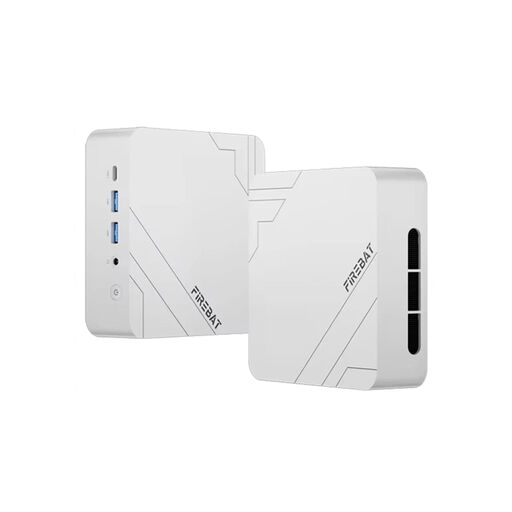
FIREBAT F1 mini gaming PC, Ryzen 5 7640HS, 12 GB RAM, 512 GB SSD
The mini PC form factor may suit a tight space, but that doesn’t guarantee it’s suitable for a racing simulation.
Specifications listed in the product title: AMD Ryzen 5 7640HS, 12 GB DDR5 RAM, 512 GB SSD, Windows 11 Pro, Wi-Fi 6 and USB4.0.
View at Joybuy
 No image available
FIREBAT F1 mini PC, Ryzen 5 7640HS, 24 GB RAM, 512 GB SSD
The compact form factor is useful if space is tight; check the specific simulation and the display output you need separately.
The product title lists 24 GB LPDDR5 RAM, a 512 GB PCIe 4.0 SSD, Radeon 760M, USB 4.0, HDMI 2.1 and 4K triple-screen output. This display output specification doesn’t guarantee a particular frame rate in a racing simulation.
View at Joybuy
 No image available
FIREBAT A8 mini PC, Ryzen AI 9 365, 24 GB RAM, 1 TB SSD
The mini PC form factor may be an option if space is limited; first check which outputs your display setup needs.
Specifications listed in the product title: AMD Ryzen AI 9 365, 24 GB DDR5 RAM, 1 TB PCIe 4.0 SSD, Radeon 880M, 4K quad-display support, USB4 and HDMI 2.1. These specifications don’t indicate a particular frame rate in a racing game.
View at Joybuy
 No image available
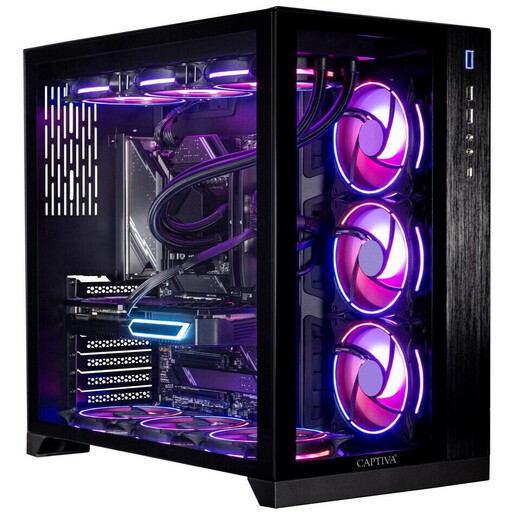
Captiva Highend Gaming R89-085, Ryzen 7 9800X3D, RTX 5080, 64 GB RAM, 2 TB SSD
The stated GPU outputs are relevant for a multi-monitor cockpit; check that they match your monitors and the space you have available.
The product specifications list an RTX 5080 with 16 GB, 64 GB RAM, a 2 TB SSD, and three DisplayPort and one HDMI output on the graphics card. For positioning, the description specifies a hard, level surface, unobstructed top and front ventilation grilles, and a clearance of 10–15 cm behind the PC.
View at Joybuy
 No image available
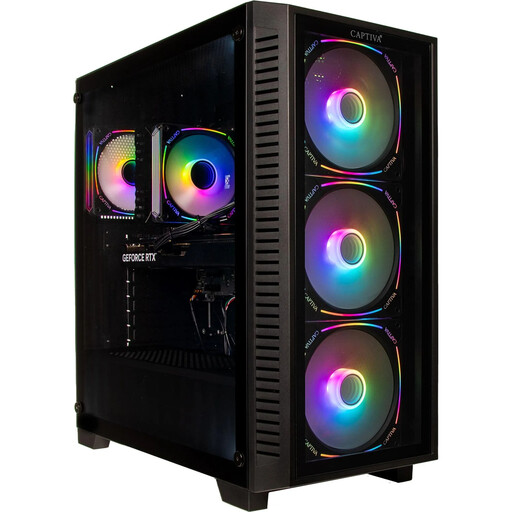
Captiva Highend Gaming R89-503, Ryzen 7 7800X3D, RTX 5070 Ti, 32 GB RAM, 2 TB SSD
The listed graphics card connections may be useful for a multi-screen setup; also check that the tower’s dimensions suit your cockpit.
The product specifications list an RTX 5070 Ti with 16 GB, 32 GB DDR5 RAM, a 2 TB SSD, and three DisplayPort and one HDMI output on the graphics card. For positioning, the description specifies a hard, level surface, unobstructed top and front ventilation grilles, and a clearance of 10–15 cm behind the PC.
View at Joybuy
Frequently asked questions
Are iRacing’s minimum requirements enough for a long stint on three monitors?
No, they don’t promise a particular level of performance for this use: iRacing describes its minimum requirements as the bare minimum for basic graphics in test mode. Check the resolution, settings you want and GPU connections for the specific PC; you can’t infer a particular frame rate from these specifications.
How do I connect three monitors for iRacing?
Connect the monitors to the dedicated graphics card, not the video outputs on the motherboard. iRacing describes both a windowed mode spanning three monitors and a full-screen mode using the graphics card; check that the monitor inputs match the outputs on your specific GPU.
What else should I check besides the PC when buying a VR headset?
For iRacing, both the PC and the specific headset need to meet their respective system requirements. iRacing notes that some headsets don’t include a specialist cable required by the headset manufacturer; check the drivers and setup, too.
Which return and fault rights should I distinguish when buying online in Germany?
The Verbraucherzentrale explains that goods bought online are generally covered by a 14-day right to cancel; you must notify the other party to the contract that you’re cancelling. This is separate from your statutory rights against the seller if the goods are faulty, and from a voluntary guarantee with its own terms. The Verbraucherzentrale published this guidance in August and September 2026.
What labelling should I look for on a gaming PC sold in Germany?
For affected electrical and electronic equipment, the Bundesnetzagentur lists requirements to check before a product is offered for sale. These include correct CE marking, clear device and manufacturer details, and any required German-language instructions for use and safety information. Whether a specific offer meets these requirements needs to be checked for the individual device.


