Practise emergency landings with a specific scenario
If you want to trigger a particular failure repeatedly, choose your simulator and aircraft before your graphics card. Laminar Research describes failure scenarios for X-Plane.


First, choose a simulator and aircraft that let you practise the specific emergency you have in mind. Then compare complete PC configurations with the simulator’s requirements and your monitor’s resolution. Laminar Research describes failure scenarios for X-Plane 12, while Microsoft’s published requirements for Flight Simulator 2024 do not confirm a specific emergency-landing feature for every aircraft. A powerful PC is no substitute for suitable flight controls or checking that the exercise is available for the aircraft you have in mind.
If you want to trigger a particular failure repeatedly, choose your simulator and aircraft before your graphics card. Laminar Research describes failure scenarios for X-Plane.
Choose a PC to suit your monitor and the requirements of your selected simulator, rather than assuming you’ll use multiple monitors or VR. Microsoft and Laminar Research each publish their own hardware requirements.
If you want to set up suitable controls alongside your PC, check the input devices and connections together. Microsoft lists a gamepad or joystick for controlling aircraft on PC.
A good fit if: you want to set up a specific failure for repeated practice at home. Laminar Research describes failure scenarios and offers a demo so you can check how it runs on your system.
Keep in mind: Check the specific aircraft and failure you want to practise. The published hardware requirements do not guarantee a particular frame rate.
A good fit if: you want to use this simulator and its aircraft or add-ons, and the exercise you have in mind is available in it.
Keep in mind: For the recommended tier, Microsoft specifies 32 GB RAM, 8 GB graphics memory and 50 Mbps bandwidth. These figures do not confirm that every desired failure scenario is available with every aircraft.
Check that the exercise is available first, then choose the right hardware tier, followed by your controls and overall setup.
The proportions below relate to consumers who want to practise emergency landings at home on a single monitor; each row represents their top buying priority.
| Priority | What to check before buying | Who is this important for? |
|---|---|---|
| Practice features | Choose your simulator, aircraft model and the failure you want to practise before buying a PC; check X-Plane’s failure options and, if relevant, try the demo. | If I want to practise a specific failure repeatedly, I need to be able to trigger it in the simulator with my aircraft. That’s why around 33% of consumers prioritise having the right practice feature. |
| Performance on a single monitor | Compare your monitor’s resolution and the PC’s full CPU, GPU and RAM specifications with the requirements of your chosen simulator. For Flight Simulator 2024, Microsoft specifies 32 GB RAM and 8 GB graphics memory for the recommended tier; for X-Plane 12, Laminar Research specifies 16–24 GB RAM or more and at least 8 GB graphics memory. | If I use just one monitor, I want to match its resolution to a suitable simulator and the whole PC, rather than looking at the graphics card alone. Around 27% of consumers put this performance balance first. |
| Flight controls | Check the type of controls, button mapping and connections you’ll need. Microsoft lists a gamepad or joystick for controlling aircraft on PC. | If I want my controls to be within easy reach during practice, I’ll plan them alongside my PC. Around 20% of consumers prioritise suitable flight controls. |
| Overall setup | Check that the operating system, SSD and input devices you need suit your plans; distinguish between statutory rights and any voluntary warranty. | If I’m planning a PC, simulator and input devices together, I want to consider the whole setup. Around 20% of consumers focus on predictable overall costs and future usability. |
Hardware requirements do not tell you which failures can be simulated with a particular aircraft.
Choose your aircraft and the type of failure first, then check that the feature is available in your chosen simulator.
Microsoft lists several tiers for RAM, graphics memory and bandwidth for Flight Simulator 2024; Laminar Research publishes its own requirements for X-Plane 12.
Compare your PC with the requirements for the same simulator and the same tier.
For controlling aircraft on PC, Microsoft lists a gamepad or joystick. Other flight controls are an additional choice.
Make a note of the input devices and connections you’ll need before you buy.
A voluntary warranty and statutory rights are different forms of protection. The Verbraucherzentrale explains that new goods are covered by a two-year statutory guarantee period from the date of receipt.
Make a note of who you’re buying from, and if something goes wrong, check your statutory rights with the seller first.
The OMEN 35L GT16-0776ng is a specified tower system with a dedicated graphics card.
The Legion Tower 5i, variant 90YA000SGE, is a fully specified tower system you can use for configuration comparisons.
According to MSI, the MPG Infinite X3 AI 2nd range includes various CPU and GPU configurations.
The Highend Gaming R89-085 is a specified tower example with a comprehensive configuration.
The following Joybuy picks include gaming laptops and a gaming tower with dedicated graphics. Separately, check that your simulator supports the aircraft you’ve chosen and the emergency-landing exercise you want to practise.
 No image available
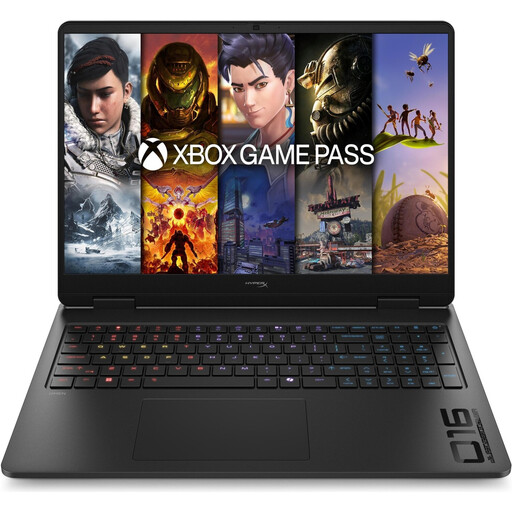
The built-in 16-inch display and HDMI 2.1 may be useful for a single-monitor setup; suitability depends on your simulator’s requirements.
AMD Ryzen 9 8940HX; GeForce RTX 5070; 24 GB RAM; 1 TB SSD; 16-inch QHD display; HDMI 2.1; Windows 11 Home.
 No image available
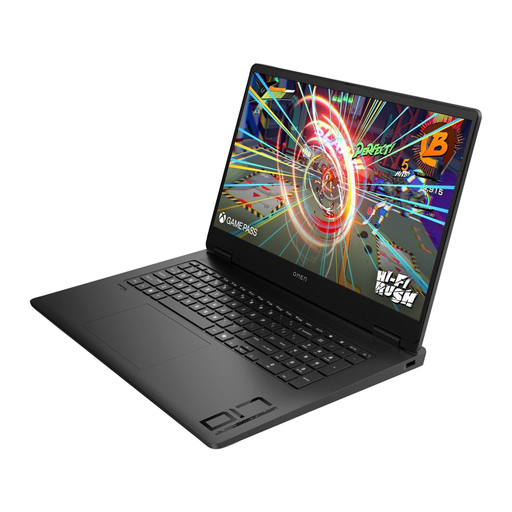
HDMI 2.1 is listed as a video output for a monitor setup; compare the configuration with your simulator’s requirements.
AMD Ryzen 7 8745HX; GeForce RTX 5060; 16 GB RAM; 1 TB SSD; Windows 11 Home; HDMI 2.1.
 No image available
This gaming tower has HDMI and DisplayPort connections and may suit a separate single-monitor setup; check your chosen simulator’s requirements.
Core Ultra 9 285K; GeForce RTX 5080; 32 GB RAM; 2 TB SSD; HDMI and DisplayPort.
 No image available
The HDMI connection is useful for an external monitor setup; compare the exact specifications with your simulator.
AMD Ryzen AI 7 350; GeForce RTX 5050; 16 GB RAM; 1 TB SSD; 17.3-inch Full HD display with 144 Hz; HDMI; Windows 11.
 No image available
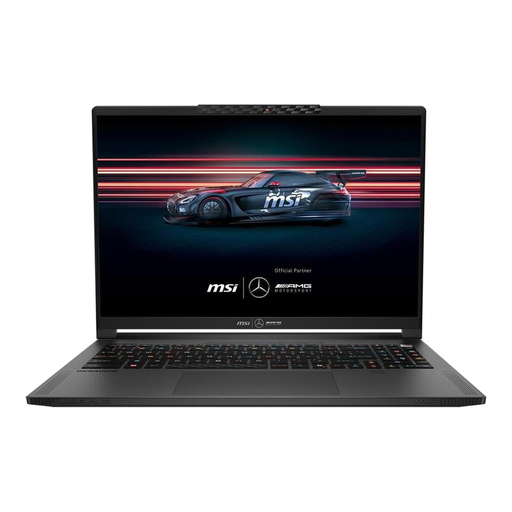
HDMI is listed as a connection for a monitor setup; before choosing, check that the configuration suits your simulator and the exercise you want to practise.
AMD Ryzen AI 9 370; GeForce RTX 5070; 32 GB RAM; 2 TB SSD; 16-inch QHD+ display; HDMI; Windows 11.
No, a second monitor is not required by Microsoft’s published minimum PC requirements. Choose a PC to suit your simulator and your existing screen’s resolution; this does not guarantee a particular frame rate.
First, choose your aircraft and the type of failure. Laminar Research describes failure scenarios for X-Plane 12 and offers a demo so you can check how it runs on your system. For a specific scenario in another simulator, you’ll need to check separately whether it is available for the aircraft you have in mind.
For PC users, Microsoft lists a keyboard and mouse, as well as a gamepad or joystick for controlling aircraft. A yoke or pedals are additional options; check the connections and button mapping you want to use.
Microsoft specifies 10 Mbps for the minimum tier, 50 Mbps for the recommended tier and 100 Mbps for the ideal tier. These bandwidth figures do not guarantee a particular frame rate.
No, buying or using a gaming PC at home does not automatically count towards pilot training. EASA sets out a separate framework for the qualification and use of flight simulation training devices; for a specific training objective, the relevant training organisation is the authority.