Spacecraft builders in games
If you mainly build and test virtual spacecraft in a game, choose your PC based on that specific title’s requirements. Don’t assume that the requirements for professional 3D software also apply.


How powerful your gaming PC needs to be for building virtual spacecraft depends on whether you’re playing a game, creating your own models in Blender or developing with Unreal Engine. The Blender Foundation recommends 32 GB of RAM for Windows, while Epic Games also specifies 32 GB of RAM and at least 8 GB of graphics memory for Unreal Engine 5.8. Check the connections for your headset and what’s included, too: a powerful graphics card doesn’t guarantee a particular frame rate or quiet operation.
If you mainly build and test virtual spacecraft in a game, choose your PC based on that specific title’s requirements. Don’t assume that the requirements for professional 3D software also apply.
If you create your own ships or develop interactive scenes, the software version and project scope are important factors in your choice. Compare the RAM and graphics memory of the exact configuration you’re considering.
If you want to use your existing headset at a dedicated gaming station, check the connections on the exact PC variant and how the microphone connects. A description of the cooling design is no substitute for noise measurements under load.
First decide which game or creative software you’ll use, then compare the complete PC configuration, headset connection and what’s included.
A good fit if: you build and test vehicles in games such as Juno: New Origins or Kerbal Space Program.
Consider: Extra performance headroom can mean unnecessary upfront and electricity costs if you don’t use it.
A good fit if: you’re actually creating or rendering your own 3D models; the Blender Foundation recommends 32 GB of RAM for Windows.
Consider: According to the Blender Foundation, complex GPU rendering can be limited by the available graphics memory.
A good fit if: you’re developing an interactive spacecraft scene with Unreal Engine 5.8; Epic Games recommends 32 GB of RAM and at least 8 GB of graphics memory for Windows.
Consider: This recommendation isn’t a blanket instruction to buy a high-spec PC for a single, less demanding game.
| What you need | What to check before buying | Who it matters to |
|---|---|---|
| Gaming performance | Compare the game and version with the processor, graphics card and desired display settings for the complete configuration. | If I mainly build and test in a spacecraft game, I want to choose the specs based on the title I actually play. Around 33% of consumers put suitable gaming performance first. |
| Your own 3D projects | Check the software version, project scope, RAM and graphics memory; Blender and Unreal Engine recommendations apply to their respective workflows. | If I model my own spacecraft in Blender or develop a scene, I need a configuration that suits the software and project. Around 27% of consumers prioritise their own 3D work. |
| Headset and microphone | Check the plug or USB connection, as well as the headset and microphone connections on the exact PC variant. Noise measurements for that specific model are relevant when considering volume levels. | If I want to use my existing headset, I want to know in advance whether its connections and microphone work with the PC. Around 20% of consumers put their headset setup first. |
| Total cost and what’s included | Take the product code, included keyboard and mouse, existing equipment and storage requirements into account. | If I want to set up my gaming station completely, I factor in any missing equipment and performance headroom I won’t use. Around 20% of consumers prioritise total cost. |
Blender and Unreal Engine set out requirements for their own workflows, while spacecraft games serve a different purpose. Treating them as equivalent could mean budgeting for more equipment than your chosen game requires.
First decide whether you’ll build in a game, model in Blender or develop with an engine. Then check the requirements for the software and version you’ll actually use.
Specific configurations within a product family can have different components and contents. For example, Lenovo lists 16 GB of RAM and a 512-GB SSD for variant 90YACTO1WWDE1, with no keyboard or mouse included.
Compare the full product codes, components and details of what’s included, rather than just the PC range name.
A headphone output doesn’t confirm that your microphone is compatible or that the fans will be quiet. Manufacturers’ descriptions of the cooling design aren’t noise measurements for the variant you’re buying.
Check the plug and microphone connection separately. If noise is a deciding factor, look for measurements for the exact configuration.
The Legion Tower range includes desktop PCs for a dedicated gaming and creative workstation.
The OMEN 35L range includes desktop configurations with different product codes and specifications.
Documented front-panel connections are one feature to consider in the MAG Infinite S3 14th range.
The Predator Orion 3000 is a tower range that Acer also describes as having a 32-litre case.
Alienware Aurora is a desktop range where it’s important to compare complete configurations.
These gaming PCs have been selected for building virtual spacecraft in games; their listed RAM and graphics memory may also be useful when planning your own 3D projects.
 No image available
For spacecraft games; the listed 32 GB of RAM and 16 GB of graphics memory are also useful comparison points for planned 3D work.
Intel Core Ultra 9 285K; Windows 11; 32 GB RAM; 2 TB SSD; RTX 5080 with 16 GB of graphics memory. The configuration lists a rear combo jack, as well as Line In and Line Out.
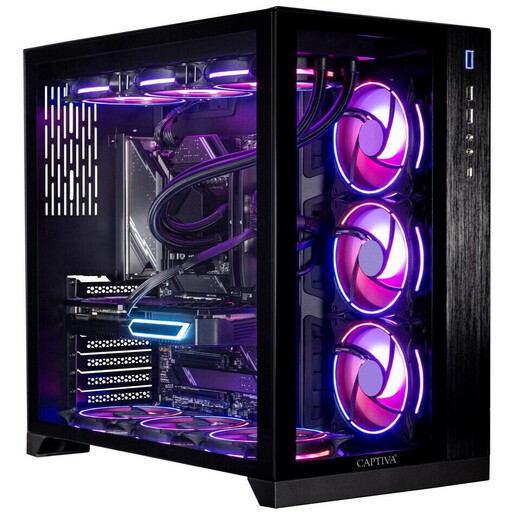 No image available
For spacecraft games and, if you create your own models or scenes, for comparing against your 3D software’s requirements.
AMD Ryzen 7 9800X3D; Windows 11; 64 GB RAM; 2 TB SSD; RTX 5080 with 16 GB of graphics memory. For ventilation, the product description recommends leaving 10–15 cm between the back of the case and the wall.
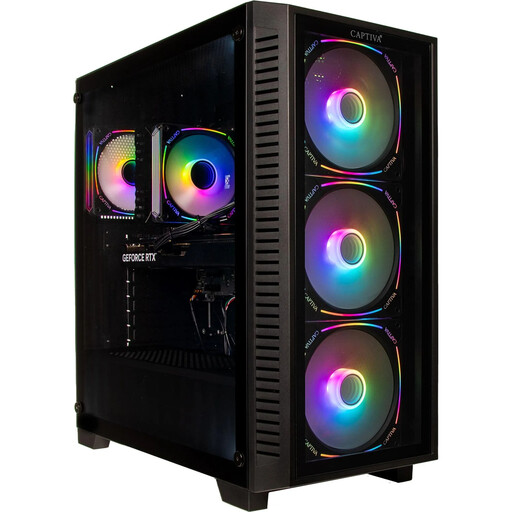 No image available
For spacecraft games; for your own 3D projects, compare the exact specifications with the recommendations for the software you use.
AMD Ryzen 7 7800X3D; Windows 11 Home; 32 GB RAM; 2 TB SSD; RTX 5070 Ti with 16 GB of graphics memory. The product description lists 3.5 mm audio connections and recommends keeping the ventilation openings clear and removing dust regularly.
No, not just because of its subject matter. Juno: New Origins and Kerbal Space Program are about building and testing vehicles in a game, while Blender’s specifications apply to working with Blender. Check the requirements of the game or software you actually plan to use.
Compare your headset’s connections with those on the exact PC variant. MSI lists a separate headphone output and microphone input on the front of the MAG Infinite S3 14th series; this doesn’t mean that every plug supports both functions through a single connection.
Keep the ventilation openings clear and follow the instructions for the variant you’ve bought when setting it up, cleaning it and, where applicable, opening the case. For Blender, use graphics drivers supported by your graphics card manufacturer.
Include any missing peripherals in your budget: for example, Lenovo doesn’t list a keyboard or mouse for variant 90YACTO1WWDE1. The Council of the European Union explains that online purchases from traders generally come with a 14-day right of withdrawal, subject to exceptions, and goods have at least two years of statutory guarantee rights. A voluntary manufacturer’s warranty is separate.
For market surveillance, the Federal Network Agency lists criteria including correct CE marking, traceable manufacturer details and a declaration of conformity. A general description of a product range doesn’t prove that an individual configuration on sale has been checked, so look at the details for the specific product.