Learners with limited desk space
If you need room for a monitor and flight controls as well as your computer, check the dimensions of the exact case and allow enough space for cables and ventilation.


A gaming mini PC is a good choice when every centimetre of desk space counts, but you still need room for a monitor and flight controls. A compact desktop may be a better fit if you want more space for ports or upgrades. Before you buy, decide which simulator you’ll use: Microsoft lists 16 GB RAM and 4 GB VRAM as the minimum for Microsoft Flight Simulator 2024, with 32 GB RAM and 8 GB VRAM recommended. X-Plane 12 has its own requirements, and none of these specifications guarantees a particular frame rate with your chosen scenery or add-ons.
If you need room for a monitor and flight controls as well as your computer, check the dimensions of the exact case and allow enough space for cables and ventilation.
If you want to use airports or additional content, compare the full PC configuration with the requirements of your chosen simulator. Minimum requirements don’t guarantee a particular frame rate.
For taxiing practice, you’ll need more than just a PC: consider a suitable input device, accessible ports and how much desk space your controls will take up.
A good fit if: minimising the computer’s footprint is your top priority, and you’re planning separately for a monitor and at least one control device.
Things to consider: configurations within the same product family can vary. Check the installed RAM, graphics card and ports in particular.
A good fit if: a slim or short case will fit on or beside your desk, and you need to consider ports and possible storage upgrades.
Things to consider: check the exact model’s width and depth, including space for cables and adequate ventilation.
A good fit if: you can place the computer under or beside your desk, and have enough room there.
Things to consider: a larger case doesn’t automatically mean better simulator performance. Compare the specifications of the exact model.
Consider your chosen simulator alongside the space available. A case that fits your desk doesn’t necessarily have the right specifications for your software and controls.
| What matters | What to check before buying | Who should pay particular attention? |
|---|---|---|
| Space and layout | Compare the exact variant’s dimensions with the space available; allow for cable routing and ventilation. | If desk space is limited, I want to fit my computer, monitor and controls without blocking cables or ventilation. Around 33% of consumers say the computer’s footprint is their main concern. |
| Simulator requirements | Check the simulator and full system configuration, especially the operating system, processor, graphics card, VRAM, RAM and available storage. | I want to compare the specifications with the requirements of my chosen simulation software, rather than rely on a general gaming label. Around 27% of consumers say simulator requirements are their main concern. |
| Controls | Check that your preferred controller is supported and that you have the right number of accessible ports. | For taxiing practice, I want to use suitable controls and leave enough room for them on my desk. Around 20% of consumers say ground handling is their main concern. |
| Upgrades and ongoing costs | Check the installed RAM, potential expansion slots and items included in the box separately; remember to factor in peripherals and the simulator licence. | I want to know what’s included and whether I can upgrade the system later, before I need to make further purchases. Around 20% of consumers say ongoing costs and upgrade options are their main concern. |
Your computer still has to share limited desk space with a monitor and input devices.
Before choosing, sketch out where the monitor, controls and PC will go in the space you actually have.
The specific configuration may have less RAM than recommended for your chosen simulator. For Microsoft Flight Simulator 2024, the MSI and Lenovo variants reviewed here have 16 GB RAM, which meets the minimum requirement but not the recommended 32 GB.
Check the full model number and installed RAM rather than relying on the product family name.
A gaming label doesn’t prove that a computer is formally qualified as a flight simulation training device (FSTD).
Use your home PC for virtual practice, and check separately with the relevant training organisation whether it can count towards your training.
The ROG NUC range includes gaming mini PCs designed for setups with limited space.
The MPG Trident AS AI is a slim desktop. Check the exact case dimensions and storage options for the variant you’re considering.
The OMEN 16L range includes compact desktop configurations; the specifications of each variant are what matter.
The Legion Tower 5i is a larger tower option if your computer doesn’t need to take up valuable desk space.
This selection includes mini PCs, tower PCs and a gaming laptop. Compare each product’s specifications with the simulator you want to use, and check that you have enough space for both the computer and your controls.
 No image available
The listed 32 GB RAM is relevant when comparing this PC with Microsoft Flight Simulator 2024: Microsoft recommends this amount, but it doesn’t guarantee a particular frame rate.
Listed as a tower PC, the product name specifies 32 GB DDR5-5600-MHz RAM and Intel Graphics. The storage details in the title are contradictory, so check the exact SSD configuration before buying.
The listed case dimensions are 388 × 175 × 426 mm. Allow enough space for the PC and ventilation.
 No image available
Its listed 32 GB RAM meets the amount Microsoft recommends for Microsoft Flight Simulator 2024. This doesn’t guarantee a particular level of performance with your settings or add-ons.
The product name also specifies an RTX 5080 and a 2-TB SSD. It’s listed as a tower, so consider the space available and ensure good airflow.
 No image available
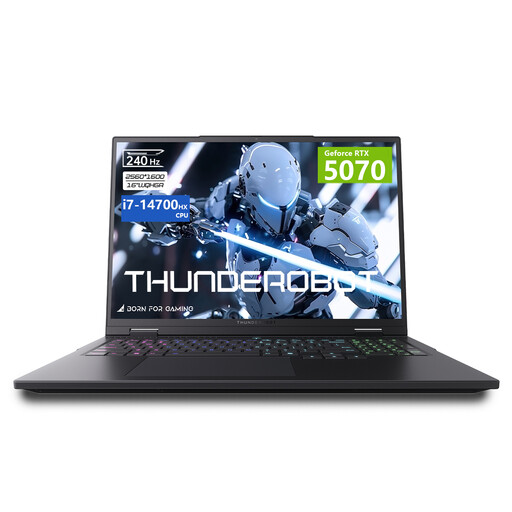
A laptop may be a good alternative if you want to put your computer away after practising, freeing up your small desk. For Microsoft Flight Simulator 2024, the product name specifies 32 GB RAM and 8 GB GDDR7 graphics memory, matching the amounts Microsoft recommends for RAM and VRAM.
The product name also specifies an i7-14700HX and a matt 16-inch display. Check that the specifications and available space suit the way you plan to use it.
 No image available
Its listed 32 GB RAM meets the amount Microsoft recommends for Microsoft Flight Simulator 2024. The RTX A400 is listed with 4 GB VRAM, which meets the minimum but falls short of the recommended 8 GB.
The product name also specifies a 512-GB NVMe SSD. The listed case dimensions are 376 × 170 × 316 mm, so allow enough room for the computer and good ventilation.
 No image available
As a mini PC, it’s worth considering if desk space is limited. Still, check that you’ll have room for a monitor and controls too.
The product name specifies 16 GB RAM, a 512-GB SSD, Radeon 680M and two M.2 slots. For Microsoft Flight Simulator 2024, the listed RAM meets the minimum requirement but falls short of the recommended amount.
Microsoft lists 16 GB RAM as the minimum, with 32 GB recommended. This doesn’t tell you what frame rate to expect with your airports, settings and add-ons.
No, rudder pedals don’t have to be your first purchase. Microsoft lists a gamepad or joystick for controlling the aircraft, with rudder pedals as an additional peripheral. Check that your chosen simulator supports your controls, and make sure you have room for them.
If your hardware is close to the requirements, X-Plane recommends trying the demo first. X-Plane says the demo runs in the same way as the full version. Then set up the control axes for your input device.
For online purchases made by consumers, you generally have a right to cancel, usually within 14 days of receiving the goods, as explained by the Verbraucherzentrale. Your statutory rights against the seller are separate from any voluntary guarantee; the circumstances of your specific purchase matter.
No, buying a gaming PC doesn’t qualify it as a flight simulation training device. The Luftfahrt-Bundesamt describes a separate qualification process; according to the authority, the EU rules published in 2026 won’t apply until 30 April 2028.