
Lieferung heute & morgen

Qualitätsgarantie

Willkommens-Angebote freischalten: KOSTENLOSE Lieferung | Bis zu 80 % RABATT | Kostenlose 30-Tage-JoyPlus-Testphase
App herunterladen
Anyone looking to buy a gaming PC will often compare the graphics card, processor, and price first. That makes sense, but it is not enough on its own. A system with a powerful GPU can be held back by insufficient RAM, a small SSD, or an inadequate cooling design. Content creators, CAD users, developers, and businesses also need to consider factors beyond gaming performance alone.
As a Joybuy Product Recommendation Officer, I filter the relevant product data and show which technical specifications can genuinely be compared when making a purchase.
Specifications such as gaming PC RTX 5080 or gaming PC RTX 5070 Ti attract considerable attention. However, the system as a whole is what matters. A powerful graphics card requires sufficient power-supply capacity, a processor that can keep up, and effective heat dissipation. You should also check that the monitor is connected through the ports on the dedicated graphics card.
A PC with 32 GB of RAM is suitable for many current games, multitasking, and a wide range of creative applications. Users who run games, browsers, streaming software, and large projects simultaneously can benefit from a PC with 64 GB of RAM. Below this level, particular attention should be paid to upgradeability.
A desktop PC with a 2 TB SSD also provides considerably more room for everyday use than a system with 512 GB. Modern games, video projects, and local AI applications can consume storage rapidly. The SSD type, available M.2 slots, and the option to install an additional drive later are equally important.
A large case is not automatically well ventilated. Check the following:
Systems with high-performance components should be placed on a hard, level surface. Carpets can restrict airflow through the underside of the case.
The GPU influences resolution, frame rate, ray tracing, and GPU-accelerated applications. An RTX 5070 Ti with 16 GB of GDDR7 should be assessed differently from a professional RTX PRO or RTX A400. The latter are primarily designed for specific professional applications and workflows.
Pay attention to the ports you need: DisplayPort and HDMI are important for monitor connectivity. If you plan to use multiple displays, the number and standard of the outputs should match your intended setup.
A PC with a Ryzen 7 7800X3D or PC with a Ryzen 7 9800X3D is aimed primarily at users who want to combine high gaming performance with a strong platform for demanding applications. For rendering, compilation, data analysis, or parallel business applications, a high core and thread count may be more important.
For an office or business PC, platform features such as TPM 2.0, Windows 11 Pro, vPro support, and remote management also matter. A business PC with Windows 11 Pro is therefore not simply a gaming PC with different software.
The following guidelines can help with your selection:
Also check whether any RAM slots are available, what maximum capacity is supported, and whether the power supply can accommodate future upgrades.
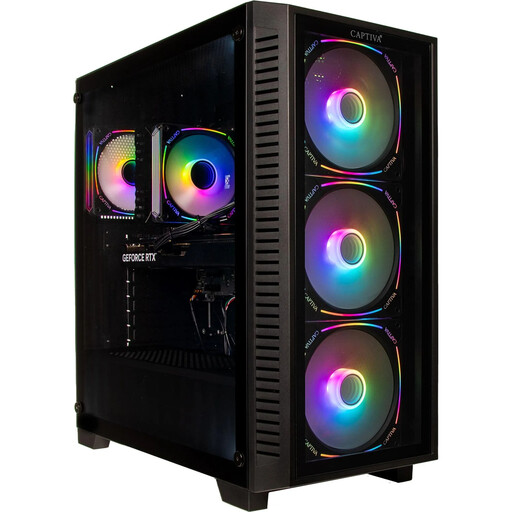
Why this product suits the profile: This tower combines a Ryzen 7 7800X3D, an RTX 5070 Ti with 16 GB of GDDR7, 32 GB of DDR5, and a 2 TB NVMe SSD. It covers the key requirements for gaming without the need for immediate upgrades.
The product specifications clearly state the GPU memory, RAM, SSD capacity, power supply, and cooling solution. This makes the overall configuration transparent instead of focusing solely on the GPU.
Ryzen 7 7800X3D, RTX 5070 Ti with 16 GB, 32 GB DDR5, 2 TB SSD, and an 850 W power supply.

Why this product suits the profile: This tower is designed for users seeking an RTX 5080 with 16 GB of GDDR7, a Core Ultra 9 285K, and extensive connectivity in a preconfigured system.
The configuration includes 32 GB of DDR5, a 2 TB SSD, and 240 mm liquid cooling. This gives storage and cooling the same consideration as the graphics card.
24 cores, up to 5.7 GHz, RTX 5080, Wi-Fi 7, USB4, and three DisplayPort connections.
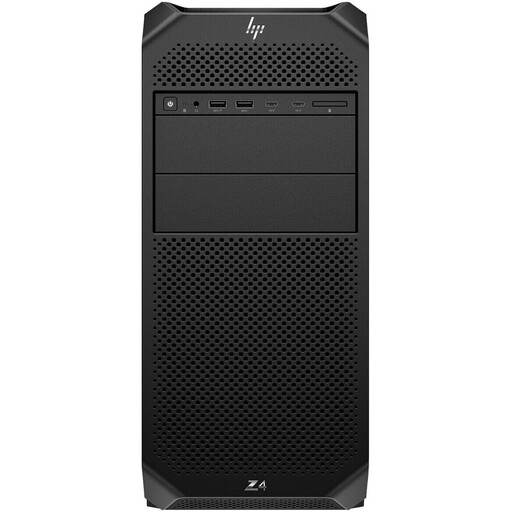
Why this product suits the profile: Anyone looking to buy a workstation gets a platform for CAD, 3D rendering, simulation, and professional applications, with a Xeon processor, 64 GB of DDR5, and an RTX PRO 4000.
The workstation features a professional graphics card, ISV certification, multiple PCIe slots, and a 1,125 W power supply. For specialised workloads, this is more relevant than a gaming-focused product designation.
Xeon w3-2535 with 10 cores, 64 GB DDR5, 1 TB NVMe SSD, RTX PRO 4000 with 24 GB, and Windows 11 Pro.

Why this product suits the profile: This compact slim PC is suitable for businesses and home users with limited space. Windows 11 Pro, vPro Enterprise, and built-in security features support professional environments.
The compact design is paired with four DIMM slots, support for up to 128 GB of RAM, and multiple expansion options. Future upgrades are therefore accounted for in the product specifications.
20 cores, 16 GB DDR5, 512 GB SSD, TPM 2.0, three DisplayPort connections, and an 8.4-litre chassis.
We have compiled a complete, regularly updated selection of products that fully meet these strict selection criteria and the safety regulations applicable in the EU.
For current games and everyday multitasking, 32 GB of RAM is a practical benchmark. For video editing, 3D applications, virtual machines, or extensive development environments, 64 GB of RAM may be worthwhile. Available slots and the maximum supported memory capacity are also important considerations.
Service life depends on the components, workload, maintenance, and the gaming resolution you expect to use. Dust-free fans, adequate ventilation, and a suitably rated power supply support reliable operation. Before buying, check the upgrade options for RAM, SSD storage, and the graphics card so the system can be adapted over time.
Power consumption depends on the power supply, components, and actual workload. A gaming PC with a high-performance graphics card uses more energy under load than a slim business PC with integrated graphics. For a realistic assessment, compare the stated power-supply rating and energy-saving features with your daily usage profile.