
Lieferung heute & morgen

Qualitätsgarantie

Willkommens-Angebote freischalten: KOSTENLOSE Lieferung | Bis zu 80 % RABATT | Kostenlose 30-Tage-JoyPlus-Testphase
App herunterladen
Well-designed lighting is more than just a light source; it's a crucial component of an immersive gaming experience. The right atmosphere can enhance focus, underscore the mood of the game, and transform a simple room into a professional-looking streaming backdrop. However, the market is flooded with a multitude of options—from flexible LED strips to smart panels.
This guide is designed to provide clarity. We'll introduce different types of gaming room lighting, explain key features, and present a selection of products to make your decision easier.
Before making a purchase, there are a few fundamental aspects to consider. The choice largely depends on your personal taste, available space, and the desired effect.
The form factor of the lights significantly determines the final effect.
Modern lighting systems offer far more than just static colours. Smart lighting can be conveniently controlled via a smartphone app or voice assistant. For gamers, the LED lights with music sync feature is particularly compelling. An integrated microphone captures ambient sounds or in-game audio and adjusts the lighting effects in real-time—creating a dynamic and reactive atmosphere.
Pay attention to the installation method. Self-adhesive backing on LED strips allows for easy installation, while panels often require wall mounting. Lightbars are typically freestanding, offering the greatest flexibility. Also, check the power source—most products are powered via an AC adapter or USB.
Based on the criteria mentioned, we've curated a selection of products that cater to different needs and applications.
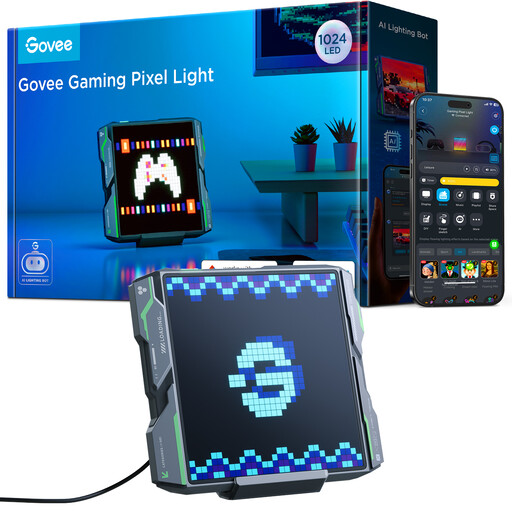
Why It Stands Out The Govee Pixel Light distinguishes itself from other panels with its AI-powered pixel art function. It serves not only as a light source but also as a dynamic display. Users can create their own animations, upload pixel art, or display practical information like the weather or stock prices. The design is clearly geared towards gaming setups.
Pros
Who It's For For creative gamers, streamers, and tech enthusiasts looking for an interactive and customisable centrepiece for their setup who appreciate the aesthetics of pixel art.
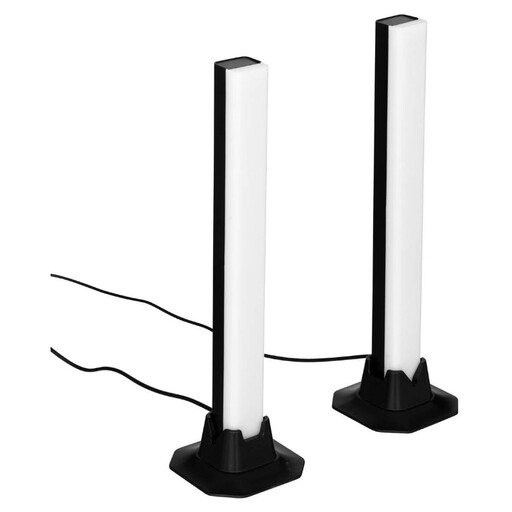
Why It Stands Out This set from Atmosphera offers a straightforward and effective solution for atmospheric backlighting. The inclusion of two lightbars allows for an instantly symmetrical setup, for example, to the left and right behind the monitor. Control is simple via the included remote, enabling quick setup without needing to install an app.
Pros
Who It's For For newcomers to the world of ambient lighting or users seeking a simple, budget-friendly, and effective solution to quickly create pleasant backlighting for their gaming or entertainment system without technical hassle.
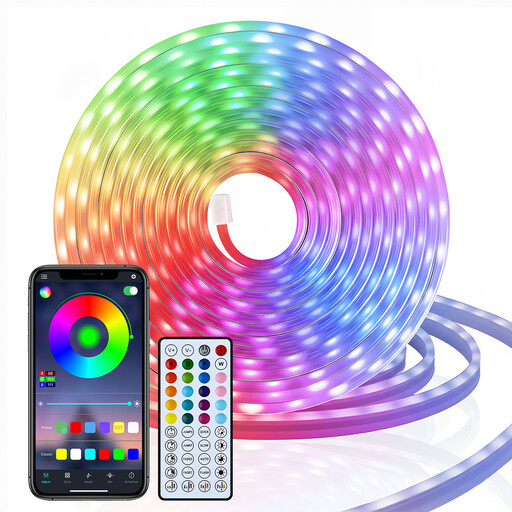
Why It Stands Out The Vivreal LED strip stands out with its neon aesthetic. Thanks to a silicone diffuser, it produces a uniform, continuous band of light without the often-visible individual LED dots. Its high flexibility and generous 10-meter length allow for creative DIY projects, such as recreating lettering or complex shapes on the wall.
Pros
Who It's For For DIY enthusiasts and creative minds who want to implement custom lighting designs. Ideal for giving furniture, walls, or entire room contours a unique neon look.
The products featured focus on colourful and dynamic RGB effects popular in gaming environments. For users who prefer a more subtle, cosy, or wireless lighting solution, a different type of ambient light might be more suitable.
Discover our selection of warm white battery-powered lighting to create a flexible and homely atmosphere without visible cables.
The price range is wide. Simple LED strips are available for under €30. For smart systems with app control, music sync, or specialised products like LED panels, the cost can exceed €100. The price depends on the brand, length or size, and feature set.
Yes, most LED strips are flexible enough to be bent around gentle curves. For sharp 90-degree angles, however, it's recommended to use special L-shaped corner connectors or to carefully fold the strip at a designated marking to avoid damaging the circuit paths. Particularly flexible models like neon strips are well-suited for curves.
RGB LED strips can only display a single colour across their entire length at one time. While they can change colour, the whole strip will always be uniform. RGBIC (Independent Control) strips have integrated chips that allow different segments of the strip to be controlled independently. This enables multiple colours to be displayed simultaneously, allowing for complex effects like rainbow gradients or flowing animations.