
Lieferung heute & morgen

Qualitätsgarantie

Willkommens-Angebote freischalten: KOSTENLOSE Lieferung | Bis zu 80 % RABATT | Kostenlose 30-Tage-JoyPlus-Testphase
App herunterladen
Well-designed lighting is more than just a light source; it's a central element that defines a room's atmosphere. Especially in the world of gaming, the right lighting can significantly boost immersion, transforming a standard setup into an impressive command centre. However, with a vast array of options—from modular wall panels to reactive TV backlights—making a choice can be complex.
This guide is designed to provide clarity. We will introduce various types of Gaming Room Lighting, explain key technical features, and present a selection of products that cover different needs and applications. Our goal is to give you an informed basis for designing your personal gaming space.
Before you make a decision, there are a few fundamental aspects to consider. These criteria will help you find the right solution for your individual setup.
The type of light fixture largely determines its visual impact. The three most common forms are:
Modern lighting systems offer much more than just on/off functionality. Look for the following smart features:
Here is a curated selection of products that stand out for their specific features and applications.
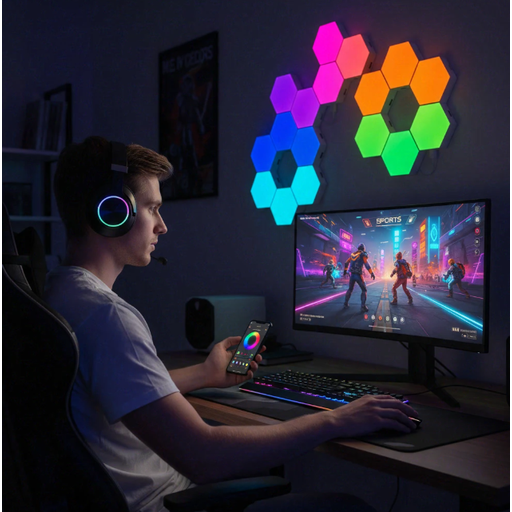
Why It Stands Out: These hexagonal LED panels offer maximum creative freedom. The eight individual modules can be arranged in any pattern on the wall thanks to their USB connectors. The integrated music sync reacts to the beat of music or game soundtracks by dynamically adjusting colours and brightness. Control is managed either via the included remote or an app.
Advantages:
Who Is It For? Creatives and gamers looking for unique and customisable wall decor. Ideal as a central design element in a gaming room or as a streaming background.
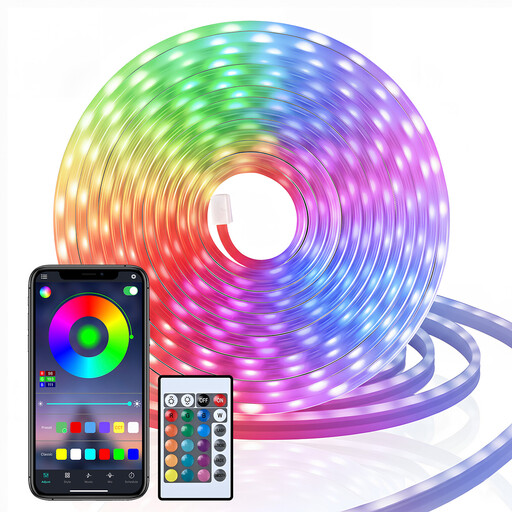
Why It Stands Out: This flexible LED Strip stands out for its neon-like, diffused light, which provides uniform and dotless illumination. The FPC (Flexible Printed Circuit) material is exceptionally pliable, making it well-suited for accenting furniture edges or for DIY projects. An built-in microphone also provides reactive synchronisation with music.
Advantages:
Who Is It For? Users looking for subtle and flexible accent lighting for desks, monitors, or furniture. Also a great choice for DIY projects like custom neon signs.
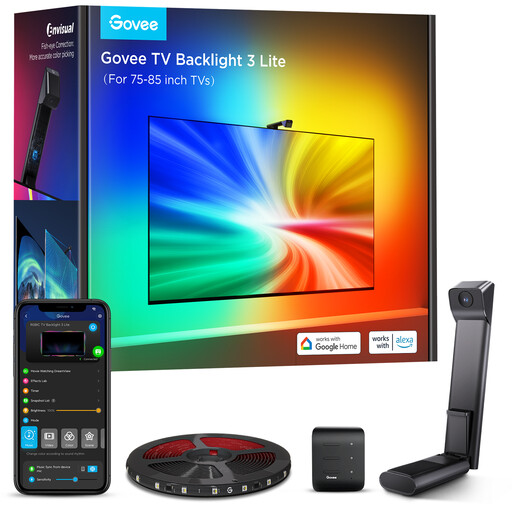
Why It Stands Out: This system is specifically designed as TV Backlighting for large screens (75-85 inches). Its core component is a fisheye camera placed on top of the TV. It analyses the colours on the screen in real time and relays this information to the RGBICW LED strip. The result is high-precision, immersive ambient lighting that significantly intensifies the viewing experience for movies and games.
Advantages:
Who Is It For? Home cinema enthusiasts and gamers with large screens who are looking for a powerful Ambilight alternative to take their immersion to the next level.
The products featured cover common use cases, but the market offers an even wider variety. If you're looking for specific controls, lengths, or other forms of smart lighting, you can find more products in our category.
? Discover more LED remotes and lighting solutions here
1. How does syncing LED lights with music work?Music Sync is typically achieved via a microphone integrated into the controller or the light itself. This microphone picks up the sound waves from music or other ambient noises. A processor then analyses the frequency and rhythm, translating this information into commands for the light controls, causing the LEDs' colour, brightness, and speed to change in time with the beat.
2. What is the difference between RGB and RGBIC? With a standard RGB light strip, all LEDs are connected on a single circuit. This means the entire strip can only display one colour at a time. With RGBIC technology (IC stands for "Independent Control"), the strip has integrated circuits that allow individual segments or even single LEDs to be controlled independently. This enables complex animations like rainbow effects, flowing colour transitions, and more dynamic scenes.
3. Can you bend LED strips around sharp corners? While flexible LED strips like the Vivreal model can be bent, making a sharp 90-degree fold can damage the circuit paths. For clean installations around sharp corners, there are two recommended methods: either form a gentle loop at the corner or use dedicated corner connectors. These connectors allow you to cut the strip at designated points and electrically reconnect the two pieces at a right angle.