
Lieferung heute & morgen

Qualitätsgarantie

Willkommens-Angebote freischalten: KOSTENLOSE Lieferung | Bis zu 80 % RABATT | Kostenlose 30-Tage-JoyPlus-Testphase
App herunterladen
Designing a gaming room goes far beyond selecting high-performance hardware. Thoughtful lighting is crucial for creating an immersive atmosphere that deepens the gaming experience and gives the space a personal touch. However, given the multitude of technologies and products—from flexible LED strips to modular wall panels—the choice can be overwhelming.
This guide is designed to provide clarity. We will introduce various types of gaming room lighting, explain key technical features, and present a selection of products that cater to different needs and aesthetic preferences. The goal is to offer you an informed basis for upgrading your setup.
Before you make a decision, several technical aspects should be considered. These determine not only the visual effects but also the user-friendliness and compatibility of your new lighting.
The terms RGB and RGBIC are central to smart lighting, but they describe fundamentally different technologies.
Control is a critical factor for convenience. Most modern lighting systems offer RGB LED strips with app control, enabling detailed customization of colors, brightness, and effects via a smartphone.
Additionally, compatibility with voice assistants like Amazon Alexa or Google Assistant is a common feature. A newer and more forward-thinking standard is Matter. Matter-certified devices integrate seamlessly into various smart home ecosystems (e.g., Apple Home, Google Home, Samsung SmartThings), which simplifies setup and ensures cross-manufacturer compatibility.
The type of light determines its primary use and visual impact.
Here is a curated selection of lighting products covering various technologies and use cases.
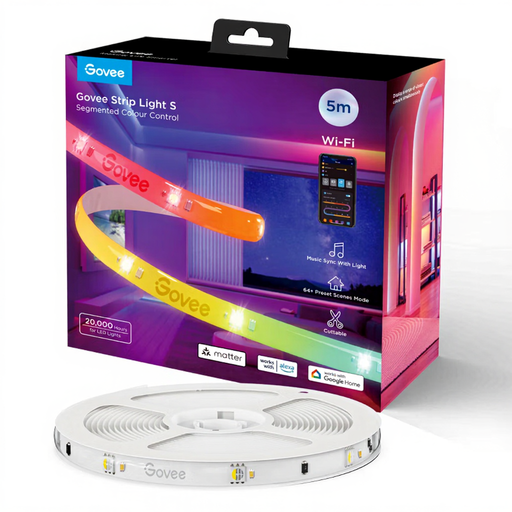
Why It Stands Out: This LED strip combines advanced RGBIC technology with future-proof Matter certification. The result is an extremely versatile and easy-to-integrate lighting solution for fluid, multi-color effects. The protective coating also ensures enhanced durability and more uniform light distribution.
Advantages:
Who It's For: Users seeking seamless integration into existing smart home systems and dynamic, flowing light effects for their setup. Ideal for indirect lighting behind monitors and desks.
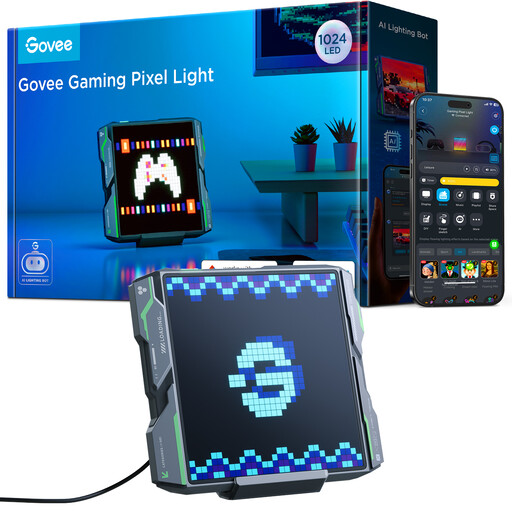
Why It Stands Out: This panel is more than just a light—it's an interactive display. With a 32x32 pixel resolution and AI-powered software, users can create their own pixel art creations in seconds or access a huge community library. It serves as a dynamic art piece and information hub.
Advantages:
Who It's For: Content creators, streamers, and tech enthusiasts looking for a unique visual centerpiece for their room or streaming background.
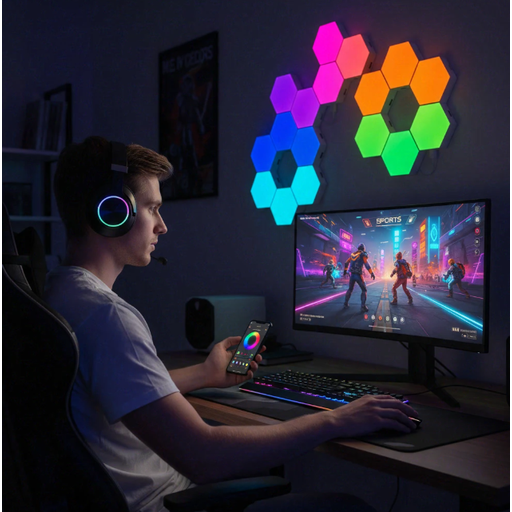
Why It Stands Out: These smart LED panels offer maximum creative freedom. The eight hexagonal modules can be arranged in any pattern on the wall using USB connectors. This makes them a flexible solution for custom gaming decor lights.
Advantages:
Who It's For: Creative users who want to design their own wall decor and create a large-scale, dynamic light installation for their gaming room or living room.
The world of smart lighting is diverse and constantly evolving. If the products presented here don't exactly match what you're looking for, or if you simply want to compare more alternatives, there are numerous other models and systems to discover.
Explore our entire range of multicolor multifunctional LED lights and find the perfect solution for your home.
Standard RGB lights can only display a single color across their entire length at one time. RGBIC lights, on the other hand, have integrated chips that allow multiple colors to be displayed simultaneously in different segments. This enables fluid color gradients and complex animations.
Products with this feature typically use a built-in microphone. This microphone captures ambient sounds, such as music or audio from a game. An internal control unit analyzes the rhythm and frequency of the audio signal and translates this information in real-time into corresponding light effects, color changes, and brightness adjustments.
Most wall lights for gaming rooms are attached with double-sided adhesive tape. For a secure bond, the wall surface should be smooth, clean, dry, and dust-free. Rough surfaces like wood-chip wallpaper or porous plaster are less suitable. For some products, it is recommended to slightly warm the adhesive tape before application to improve its sticking power.