
Lieferung heute & morgen

Qualitätsgarantie

Willkommens-Angebote freischalten: KOSTENLOSE Lieferung | Bis zu 80 % RABATT | Kostenlose 30-Tage-JoyPlus-Testphase
App herunterladen
Well-designed gaming room lighting is more than just a light source. It creates atmosphere, enhances immersion, and transforms a simple room into a personal command centre. However, with the multitude of options available—from flexible LED strips to modular wall panels—making the right choice can be complex. This article serves as a guide, introducing different types of lighting and their key features to help you decide on the perfect setup.
Before you make a decision, several technical aspects should be considered. These criteria will help you find a solution that is not only visually appealing but also functional and future-proof.
The shape of the lighting significantly determines the visual impact in the room.
The method of control greatly influences user convenience. Most modern systems offer an app for configuring colours and effects. For seamless integration into a smart home, compatibility with voice assistants like Alexa or Google Assistant is a key factor. Such an Alexa-compatible light can be turned on and off or have its colour changed via voice command.
A forward-thinking standard is Matter. Matter-enabled lighting simplifies setup and control, as it is compatible with various smart home platforms (e.g., Apple Home, Google Home, Samsung SmartThings) across different manufacturers, without requiring a separate app or hub for each device.
The technology behind the LEDs determines the variety of effects that can be displayed.
Here, we present three different lighting systems that cater to various needs and applications.
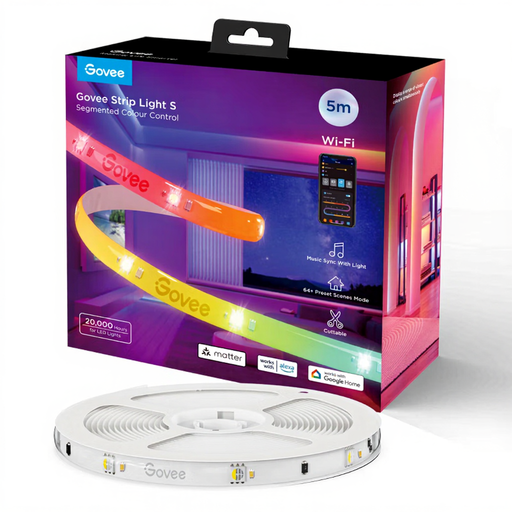
Why It Stands Out This 5-metre LED strip from Govee combines advanced RGBIC technology with the future-proof Matter standard. The segmented control allows for dynamic, multi-colour light effects, while Matter certification ensures hassle-free integration into all major smart home ecosystems. A protective coating over the LEDs provides more even light distribution and increased durability.
Pros
Who It's For For users seeking flexible and discreet ambient lighting for their desk, monitor, or entire room, who also value easy integration into an existing or planned smart home system.
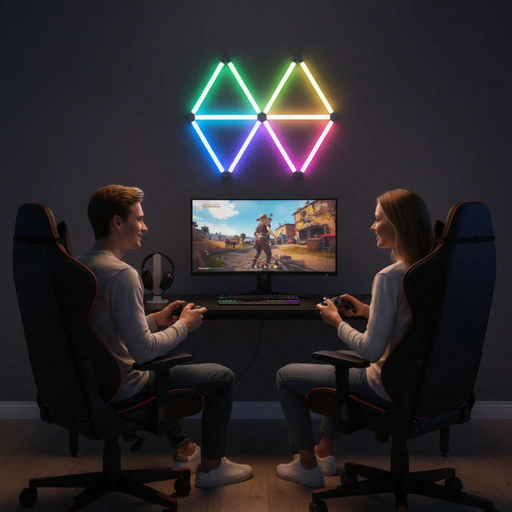
Why It Stands Out This set of six modular light bars offers creative freedom for wall design. The individual bars can be connected as desired to create custom patterns. Control is managed via a remote, the "Smart Life" app, or voice commands to Alexa and Google Assistant. The integrated ambient lighting with music sync transforms audio signals into visual effects.
Pros
Who It's For For gamers and creatives looking for a striking and customisable wall decoration to illuminate the area around their monitor or TV symmetrically and dynamically.
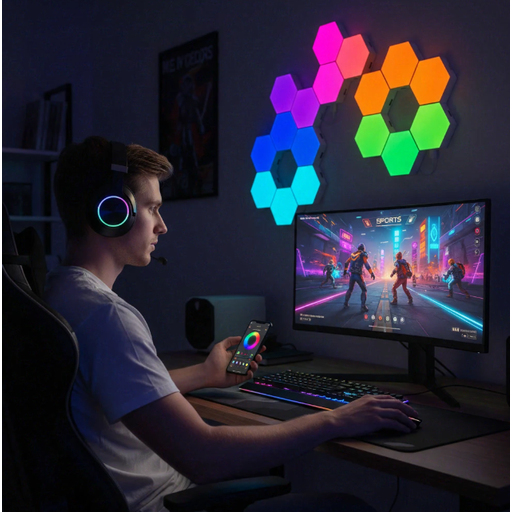
Why It Stands Out These hexagon lights are a classic in gaming decor. The set consists of eight individual panels that connect via USB connectors to form a honeycomb structure or other patterns. Each panel can display different colours, and the entire structure can sync with music on demand. The simple installation with adhesive tape makes them a quickly installed and expandable solution for luminous wall art.
Pros
Who It's For For anyone who wants to equip their gaming room with a striking visual highlight and enjoys creating their own luminous works of art on the wall.
The products featured here offer a glimpse into the diverse possibilities of modern gaming lighting. If you haven't found the right fit yet, you can find a wider selection of options in our Gaming Room Wall Lighting category to complete your setup.
1. What is the difference between RGB and RGBIC? With a conventional RGB LED strip, all LEDs always light up in the same colour. You can change the colour of the entire strip, but not colour individual sections differently. RGBIC (Independent Control) means the strip is divided into multiple segments that can be controlled independently. This allows for the simultaneous display of multiple colours and dynamic effects like gradients or rainbow patterns on a single strip.
2. How do you securely attach LED lights to the wall? Most LED gaming panels and strips come with double-sided adhesive tape. For optimal adhesion, the wall surface should be clean, dry, and free of dust. For rough or textured surfaces like woodchip wallpaper, it can be helpful to gently warm the adhesive tape before applying (e.g., with a hairdryer on a low setting) to improve its sticking power. For heavier panels, additional mounting clips may be useful.
3. Can you sync gaming lighting with a PC? Yes, many advanced lighting systems offer software integration to sync the lights with on-screen action or the PC's audio signals. Brands like Govee, for example, offer desktop apps that extend the screen experience to the lighting (Screen Mirroring). This creates a highly immersive atmosphere where the colours of the game fill the entire room. Before purchasing, check the software compatibility of the specific product.