For co-op cooking games in a bright living room, first check for reflections from the planned viewing position and the view from the outer sofa seats. An anti-reflective Mini LED TV may be worth considering if window light is a problem; an OLED may suit players sitting to the side, provided its glossy screen works well in your room. Team17 lists 4K at 60 fps for Overcooked! All You Can Eat on next-gen consoles, so 144 Hz alone is no reason to buy a TV for this game.
Which features matter to different players
Gaming in daylight
If you play with windows or lamps near your line of sight, check for reflections where you plan to set up the TV. Samsung advertises the GQ75QN90FATXZG as having “Glare Free” technology, although how well it works will still depend on your room and light source.
A group on a wide sofa
If several people will be watching the screen from different seats, the view from the sides matters too. RTINGS describes the tested 65-inch LG C5 as having a wide viewing angle; its test was not of the German 55-inch OLED55C57LA variant.
Occasional console gamers
If you mainly play Overcooked! All You Can Eat, choose the features you need based on your specific console and game version: Team17 lists 4K at 60 fps for the next-gen console version.
What to prioritise for co-op gaming in a bright room
When choosing a TV for playing together in a bright living room, the best option depends above all on what matters most to you.
Anti-reflective Mini LED TV
A good fit if: windows or lamps are opposite the screen and reflections are distracting.
The trade-off: Samsung advertises “Glare Free” on the QN90F, but this doesn’t guarantee the same results with every light source or a particular viewing angle.
OLED TV
A good fit if: several players sit to the side and you can avoid direct reflections.
The trade-off: RTINGS describes the tested 65-inch C5 as having a wide viewing angle, but also a glossy screen; this is not a measurement of the German 55-inch OLED55C57LA.
Other Mini LED or LED models
A good fit if: you place greater importance on a particular screen size or specific connections.
The trade-off: TCL lists a native 144 Hz refresh rate for the C7K range; Sony specifies VRR on HDMI inputs 3 and 4 for the K-65XR5. Check the exact variant and connection layout.
| Priority |
What to check when buying |
Who is this most important to? |
| Visibility in daylight |
Check the position of windows and lamps, the screen finish and the picture in Game Mode where you plan to set up the TV. |
When I play during the day with light coming through the windows, I want to be able to see the game despite possible reflections. Around 38% of consumers are likely to put daytime visibility first. |
| Viewing from the side |
Check colour and readability from the furthest planned seat; consider screen size and viewing distance together. |
When we’re spread out across the sofa, I want to see the action and text from the outer seats too. Around 31% of consumers are likely to consider the side view their top priority. |
| Response |
Check Game Mode and, where applicable, ALLM; compare the supported frame rate, resolution and console connection for the specific variant. |
When I’m making quick inputs, I want to know what my game and console can actually output. Around 16% of consumers are likely to prioritise response above all else. |
| Overall costs |
Check the energy label and product information sheet for the exact variant, for both SDR and HDR; check the dimensions and available space. |
If I want to take future electricity costs into account as well as the purchase price, there’s more to consider than a single efficiency rating. Around 15% of consumers are likely to put overall costs first. |
Gaming TV buying misconceptions
-
Assuming every cooking game runs at 144 Hz
Team17 lists 60 fps for Overcooked! All You Can Eat on next-gen consoles. Other games may have different output.
Check the specific game and console first, before treating a higher frame rate as a deciding factor.
-
Judging the screen only when it’s switched off and viewed straight on
Reflections from windows or lamps and the view from the outer seats are separate considerations when choosing where to put your TV.
Check the picture in Game Mode from your planned seat and from the outer seats where people will be playing.
-
Looking only at the energy efficiency class
The EU energy label gives separate figures for SDR and HDR; a single figure doesn’t tell you everything about every use or setting.
For the exact model, compare the SDR and HDR figures on the energy label and consider how you plan to use the TV.
Key brands to consider
Samsung
The QN90F is a Mini LED option to consider if you want to check anti-reflection performance in a bright room.
- Samsung advertises the GQ75QN90FATXZG as having “Glare Free” technology.
- The manufacturer’s claim doesn’t guarantee a particular result in every room or prove that the screen can be viewed clearly from every seat.
LG
The OLED55C57LA is an OLED option for groups where viewing from the side matters too.
- LG lists gaming features of up to 4K at 144 Hz for this model. RTINGS describes the tested 65-inch C5 as having a wide viewing angle.
- RTINGS describes the screen of the tested 65-inch model as glossy; its measurements don’t apply to the German 55-inch variant. The C5 is a 2025 model.
TCL
The C7K is a QD Mini LED option available in several sizes.
- TCL lists a native refresh rate of 144 Hz for the C7K range.
- Check the specifications for the size you’re considering, rather than assuming advertised top figures for the range apply to every variant.
Sony
The BRAVIA 5 K-65XR5 combines Mini LED with documented console connections.
- Sony’s product information sheet lists 120 Hz and VRR for HDMI 3 and 4, and ALLM for HDMI 1 to 4.
- The choice of connection matters especially if you use several devices. The product information sheet doesn’t specify a viewing angle.
Philips
The The One 50PUS9000/12 is a QLED option if you’d also like Ambilight.
- Philips lists Ambilight and VRR up to 144 Hz for this model.
- These manufacturer claims don’t prove that its anti-reflection performance will be better suited to your bright room.
Joybuy products for co-op gaming in a bright room
This selection includes 4K Mini LED TVs in a range of screen sizes, including models with Anti-Reflection in the product name. Check for reflections and viewing distance where you plan to set up your TV.
 No image available
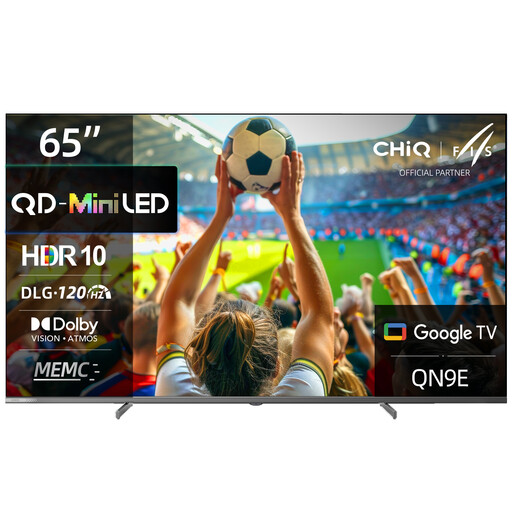
CHiQ M65QN9E, 65-inch 4K UHD Mini LED QLED
A 65-inch option if this screen size suits your viewing distance and room layout.
4K UHD; Dolby Vision and Dolby Atmos; DLG 120 Hz and MEMC; Google TV (Android 14).
View at Joybuy
 No image available
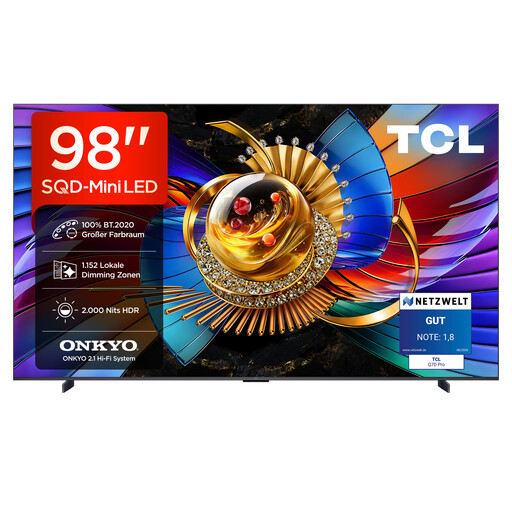
TCL 98Q7D PRO, 98-inch 4K SQD Mini LED
A large-screen option if 98 inches suits your room and viewing distance.
4K; Anti-Reflection; 144 Hz; Dolby Vision IQ and Dolby Atmos.
View at Joybuy
 No image available
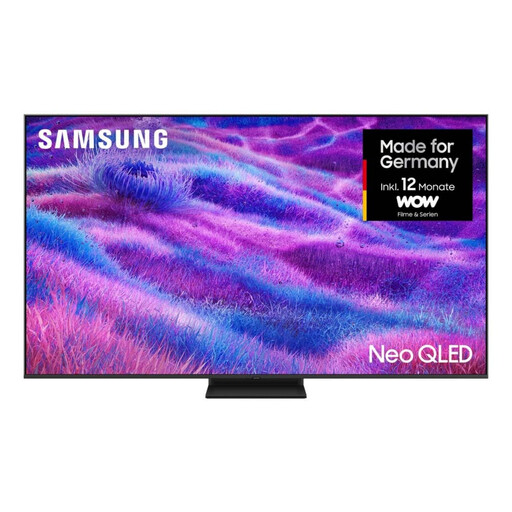
Samsung Neo QLED 4K QN80F, 85-inch Mini LED
An 85-inch option if this size suits your planned viewing distance.
4K; 120 Hz; Dolby Atmos.
View at Joybuy
 No image available
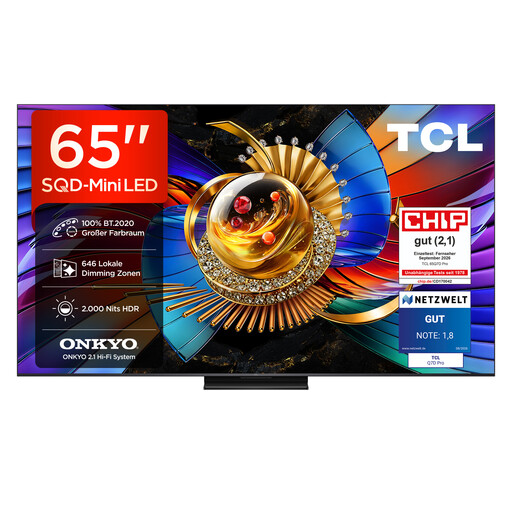
TCL 65Q7D PRO, 65-inch 4K SQD Mini LED
A 65-inch variant with Anti-Reflection in the product name; check how well it works in your room.
4K; 144 Hz; HDMI 2.1; Dolby Vision IQ and Dolby Atmos.
View at Joybuy
 No image available
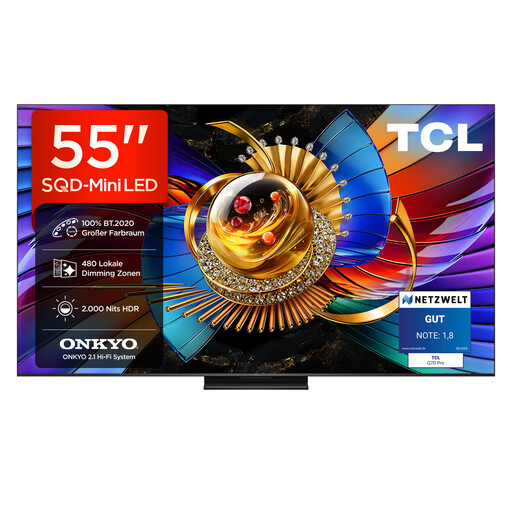
TCL 55Q7D PRO, 55-inch 4K SQD Mini LED
A 55-inch variant with Anti-Reflection in the product name; compare the size with your viewing distance and room layout.
4K; 144 Hz; HDMI 2.1; Dolby Vision IQ and Dolby Atmos.
View at Joybuy
Frequently asked questions
Do I need a 144 Hz TV for Overcooked! All You Can Eat?
Not just for this game: Team17 lists 4K at 60 fps for the next-gen console version. If you play other games or use a PC, check their video output separately.
What should I set up after connecting my console?
Select the input you’ll use for gaming and check Game Mode or ALLM. The Sony K-65XR5 lists VRR for HDMI 3 and 4 and ALLM for HDMI 1 to 4; the connection layout may differ on other models.
How do I compare the energy consumption of different TVs?
For the exact model, compare the SDR and HDR figures on the EU energy label and product information sheet. How you use the TV and its settings are also relevant to your choice.
Does a TV sold in Germany have to carry an energy label?
The European Commission lists electronic displays, including TVs, as a product group that requires energy labelling. Check the label for the exact model variant rather than relying on figures for a different size.


