Who should pay particular attention to this choice?

Players sitting at the side of the sofa

If you regularly sit at an angle to the screen or share the TV with people sitting in different places, check that the picture and playing field remain clear from those positions. RTINGS.com highlights viewing angle as an important factor for wide seating arrangements.

Arcade players who rely on quick reactions

When the action is fast, what matters to you is how quickly your inputs appear on screen. Compare input lag in Game Mode using a signal that matches your console or PC; RTINGS.com notes that Game Mode can reduce image processing.

Players with long sessions and static on-screen elements

If you often play the same game for long periods with an unchanged HUD, consider the risk of permanent image retention on an OLED TV. RTINGS.com identifies static image elements during very long periods of use as a factor worth considering.

What should you look for when buying?

Buying consideration What to look for Who should pay particular attention?
Picture quality from the side View the specific model from your actual seating angle; look for changes in colour, loss of brightness and dark areas in the picture. When I play from the side, I want to see the colours and playing field clearly. Around 36% of consumers put viewing angle first.
Responsiveness during fast-paced play Compare input lag in Game Mode at the relevant resolution and frame rate; check the HDMI inputs you need and, where applicable, VRR support. During fast-paced play, I want to assess inputs without unnecessary delay. Around 29% of consumers give the greatest weight to TV responsiveness.
Long sessions with static on-screen elements Consider how often you play the same game for long periods with an unchanged HUD; read the care guidance for the specific OLED model. If I play the same game for a long time with a static HUD, I factor in the risk of permanent image retention on OLED when choosing a TV. Around 21% of consumers put this type of long-term use first.
Size and power consumption Check the space available and your sightlines; compare screen size and energy consumption on the EU energy label for specific models. With limited space, I want to choose a suitable size and keep an eye on energy use. Around 14% of consumers make size and running costs their main concern.

Common misconceptions

  • A good gaming review automatically means a good picture from the side

    A gaming verdict does not necessarily tell you how clearly you can see the picture from a side-on seat. CHIP notes that the Samsung GQ55QN85D has narrow viewing angles.

    First check the picture on the specific model from your seat, then compare its gaming features and other specifications.

  • 144 or 165 Hz guarantees the game's frame rate

    A stated maximum refresh rate alone tells you neither what frame rate a particular game will deliver nor how much input lag you will get with your signal. High frame rates and VRR require compatible support from both the game and the connected device.

    Check that the supported signals, Game Mode and HDMI inputs you need are compatible with your console or PC. Only compare input lag measurements taken at the same resolution and frame rate.

  • With a larger OLED, only the screen size matters

    Screen size affects power consumption. You should also consider the risk of permanent image retention on OLED if you play the same game for very long periods with static on-screen elements.

    Compare the energy label for the specific screen size and think about how often you play for long periods with an unchanged HUD before choosing a model.

Brands and specific model ranges

LG

The German-market OLED55C56LB and OLED55G68LW are specific examples of different C5 and G6 variants.

  • LG lists a native 120 Hz refresh rate, VRR up to 144 Hz and a Game Mode for the OLED55C56LB. These specifications apply to this model.
  • These features do not prove independently measured viewing-angle or latency performance. LG lists the OLED55C56LB as no longer available; this does not tell you anything about availability from other retailers or other models.

Samsung

The specific GQ65S99H and GQ55QN85D models represent different OLED and VA mini-LED variants.

  • CHIP describes the tested GQ65S99H as having a picture that handles reflections well.
  • CHIP notes that the GQ55QN85D has narrow viewing angles. These test results apply to the models mentioned, not to the brand as a whole.

Sony

The German-market BRAVIA 8 II K-65XR8M2 OLED TV lists specific gaming connections and features.

  • Sony lists 4K/120, VRR and ALLM for this model.
  • According to Sony, VRR is limited to HDMI 3 and 4. The specification is no substitute for an independent measurement of viewing angle or input lag.

Philips

According to the manufacturer, the German-market OLED 55OLED810/12 combines OLED, Ambilight and VRR up to 144 Hz.

  • Ambilight is an additional feature you can take into account when choosing a model.
  • The manufacturer's description of viewing-angle quality is not an independent measurement. Ambilight is no substitute for checking the picture from your own seat.

TCL

The German-market 55C7K is a QD mini-LED model with an HVA panel.

  • TCL states that this model has a native refresh rate of 144 Hz.
  • The refresh rate does not prove that the TV has wide viewing angles. Check the specific model particularly carefully from a side-on seat.

Joybuy product selection

This selection includes OLED gaming TVs that may suit wide seating arrangements. Check the viewing angle of the specific model and consider how you play, particularly if you have long sessions with static on-screen elements.
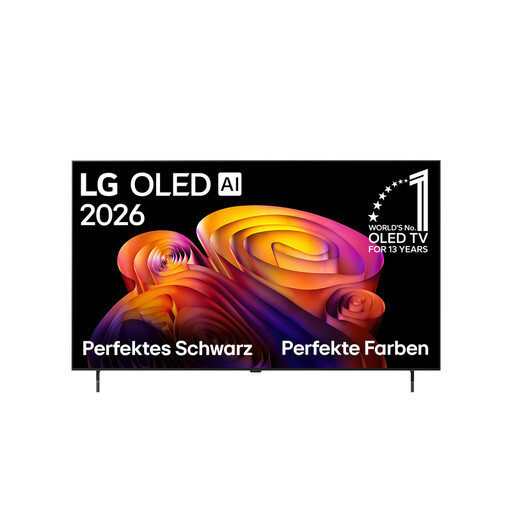
LG OLED55B68LA 55-inch OLED gaming TV

LG OLED55B68LA, 55″ OLED gaming TV

As an OLED model, this TV may suit a wide seating arrangement; check the picture from where you actually sit. For long sessions with a static HUD, you should consider the risk of permanent image retention.

Listed in the product name: 144 Hz, G-SYNC and FreeSync. Check that your game and connected device support the features you need; the stated refresh rate alone does not predict your game's frame rate.

View at Joybuy

Frequently asked questions

Is 144 Hz enough for fast-paced arcade sports games?

No, that figure alone is not enough. Compare measured input lag in Game Mode using a signal you actually use, and check the connections. High frame rates and VRR require compatible support from both the connected device and the game.

Which HDMI input should I use for a console with VRR?

It depends on the exact TV. Sony lists VRR on HDMI 3 and 4 for the BRAVIA 8 II K-65XR8M2; check the input specifications separately for any other model.

What should I bear in mind during long gaming sessions on an OLED TV?

If you often play the same game for long periods with static on-screen elements, you should consider the risk of permanent image retention. Read the care guidance for your chosen model; extreme stress tests do not predict that normal mixed use will have the same result.

How do I compare power consumption and warranty cover?

Compare the EU energy label for the screen size you want; your usage and electricity tariff also affect your personal running costs. If you buy from a trader in the EU, you have at least a two-year legal guarantee against the seller from the date you receive the goods. This is separate from any voluntary manufacturer's guarantee.

Can an old TV go in household rubbish?

No. In Germany, old electrical equipment is collected separately. The German Environment Agency lists local collection points and returning the TV to the retailer when buying a new one as ways to dispose of it.