
Lieferung heute & morgen

Qualitätsgarantie

Willkommens-Angebote freischalten: KOSTENLOSE Lieferung | Bis zu 80 % RABATT | Kostenlose 30-Tage-JoyPlus-Testphase
App herunterladen
The search for a new charger seems simple, but the market is flooded with technical promises that often confuse more than they help. A GaN charger promises fast, efficient charging in a compact form factor. However, not every model delivers on its promise. Many users invest in a supposedly powerful charger, only to find that their laptop charges slower than expected or their new iPhone fast charger doesn't reach full speed. This guide will help you understand the crucial features and avoid common purchasing pitfalls.
Before you make a decision, you should be aware of the most common issues that can lead to a bad purchase. These are often based on misleading marketing claims and a lack of transparent technical information.
To make an informed decision, focus on three core technical aspects. These determine whether a charger is right for your needs.
The wattage number alone is only half the story. Check the specifications for Power Distribution. A good multi-port USB charger will list exactly how many watts each port delivers when multiple ports are used simultaneously.
This information is crucial if you want to replace a MacBook charger and charge other devices at the same time.
Modern devices use specific protocols to negotiate charging speed. The most important ones are:
Consider which devices you want to charge today and in the future. A charger with multiple USB-C ports is more flexible and better equipped for the coming years, as more and more devices adopt this standard. An additional USB-A port can be useful for charging older devices or accessories like smartwatches.
Here are some recommendations tailored to specific use cases that take the above criteria into account.
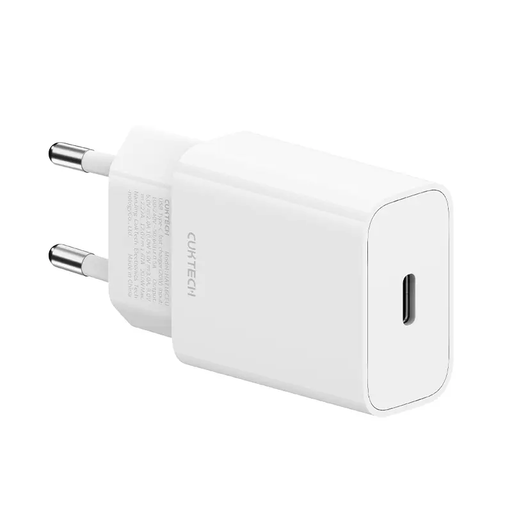
Why it's a great fit: Ideal for users who primarily want to charge their smartphone quickly and efficiently. Its compact design, thanks to GaN technology, makes it the perfect travel companion without compromising on charging power for a single device like an iPhone.
This charger focuses on a single task: delivering 20W through one USB-C port. There's no confusing power distribution, so you get exactly the power that's advertised.
Supports Power Delivery (PD) for fast charging modern smartphones. Extremely portable and lightweight.
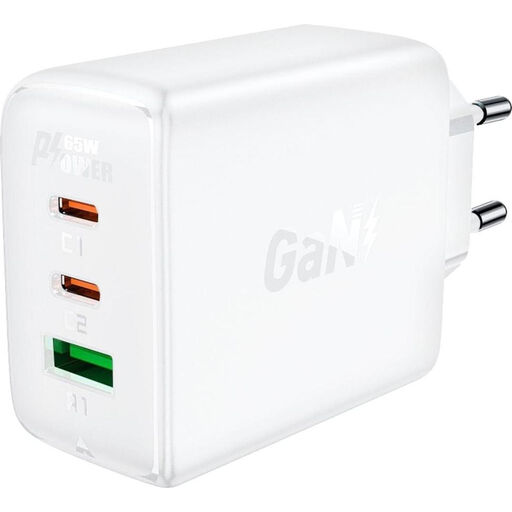
Why it's a great fit: Perfect for anyone who needs to charge a laptop, smartphone, and another device with just one power adapter. With 65W of total power and three ports, it's a versatile solution for the office, home office, or travel.
This model offers smart power distribution and supports a wide range of protocols, including PD, QC4+, and PPS. This ensures that both laptops and Samsung smartphones are charged optimally.
Three ports (2x USB-C, 1x USB-A) and 65W of power cover the needs of most users charging a MacBook Air/Pro and a smartphone simultaneously.
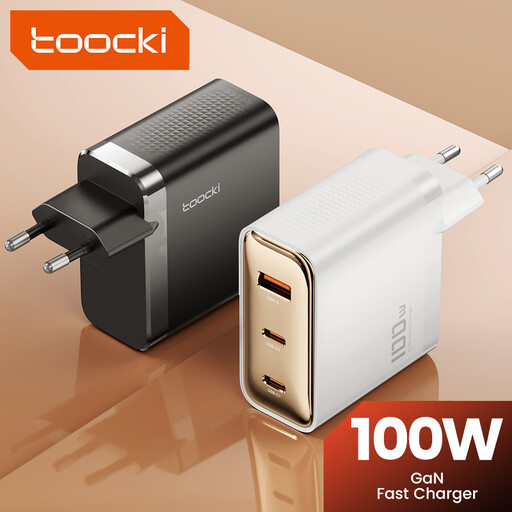
Why it's a great fit: For users with high power demands who need to charge a powerful laptop (e.g., MacBook Pro 16"), a tablet, and a smartphone simultaneously at high speed. A single charging solution for your entire tech arsenal.
With 100W of total power, it avoids the trap of an underpowered charger. It delivers enough power to efficiently supply demanding devices like laptops, even when multiple ports are in use.
High output of 100W and multiple USB-C ports allow for charging high-end laptops and other devices at near-maximum speed.
We have compiled a complete, up-to-date list of products that fully meet these strict selection criteria and safety regulations.
The charger itself doesn't require a special cable, but the charging cable is crucial for speed. To take full advantage of a high-wattage charger (e.g., 65W or 100W), you need a cable rated for that power. Look for cables explicitly marked with 100W charging capability. For certain protocols like PPS, the cable must also be compatible.
Yes, it is completely safe. Modern chargers with Power Delivery communicate with the connected device to determine the maximum permissible charging power. The charger will only supply as much power as the smartphone can safely handle. Therefore, a 65W charger will charge a 20W-capable iPhone at a maximum of 20W.
GaN stands for Gallium Nitride, a semiconductor material that offers higher energy efficiency and better heat dissipation compared to traditional silicon. This allows GaN chargers to be significantly smaller, lighter, and cooler during operation while providing the same or even higher power. This makes them particularly attractive for travel and mobile use.