
Lieferung heute & morgen

Qualitätsgarantie

Willkommens-Angebote freischalten: KOSTENLOSE Lieferung | Bis zu 80 % RABATT | Kostenlose 30-Tage-JoyPlus-Testphase
App herunterladen
The search for the right charger can be overwhelming. A mix of different ports, varying power ratings, and a multitude of standards often leads to a drawer full of power adapters, none of which truly meets all your needs. A single, powerful, and compact charger is especially desirable for travel or maintaining a tidy workspace.
This article serves as your guide. It explains how modern GaN chargers work and presents a selection of models for various use cases. Our goal is to provide you with the information you need to make an informed decision, without getting lost in technical jargon.
Before you decide on a model, there are a few technical aspects to consider. These factors determine how quickly and efficiently your devices will charge.
A charger's power output is measured in watts (W) and is crucial for charging speed. A modern USB C power adapter should also support key fast-charging protocols.
A multi-port charger offers the advantage of powering several devices at once. Pay attention to the combination of ports:
Power distribution is a key factor here. When multiple ports are used simultaneously, the total output is split among them. The product description will specify how many watts each port delivers in various configurations.
The main advantage of GaN (Gallium Nitride) technology is its efficiency. GaN semiconductors generate less heat than traditional silicon chips. This allows for a significantly more compact design with the same or even higher power output. A GaN charger is therefore often smaller and lighter than conventional power adapters, making it an ideal travel adapter. Some models also offer useful extra features, such as a built-in HDMI port for video output.
Here is a selection of chargers designed for different needs and user profiles.
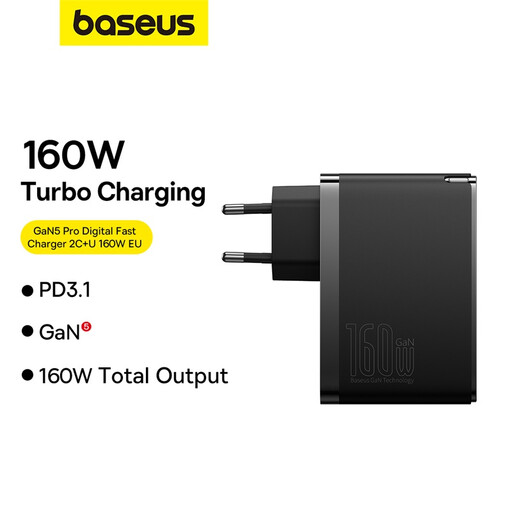
Why It Stands Out: This model is engineered for maximum performance. With a total output of 160 watts and the ability to deliver up to 140 watts from a single USB-C port, it can charge even the most demanding laptops at full speed. The integrated digital display shows the current charging power in real-time.
Pros:
Who It's For: For power users and professionals who need to charge multiple devices—like a high-end notebook, a tablet, and a smartphone—simultaneously and at maximum speed. It's a powerful solution for the desktop or for travel where charging performance cannot be compromised.
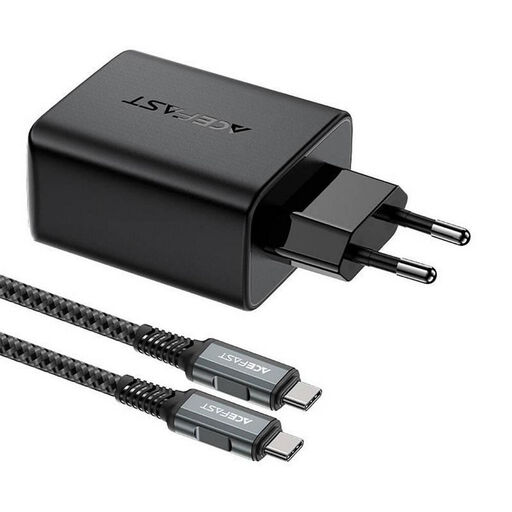
Why It Stands Out: This device is more than just a fast charger. It combines a 65W GaN charger with a 4K HDMI adapter. This allows you to not only charge your notebook but also connect it to an external monitor or TV simultaneously—all through a single, compact device.
Pros:
Who It's For: For mobile professionals, students, and travellers who prioritise packing light. It eliminates the need to carry a separate charger and HDMI dongle, making it perfect for presentations or as a temporary docking solution.
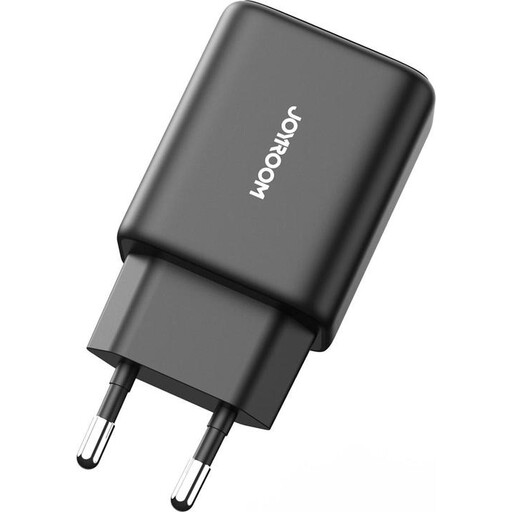
Why It Stands Out: This charger focuses on the essentials: fast and safe smartphone charging. With 25 watts of power and support for PPS, it is specifically tailored to the needs of modern smartphones, including Samsung Super Fast Charging (SFC).
Pros:
Who It's For: For smartphone owners looking for a reliable, fast, and compact replacement or travel charger. It's an excellent choice for users of Samsung devices who want to take full advantage of Super Fast Charging, as well as for owners of other smartphones that support PD.
The models featured here cover common use cases, but the market offers an even greater variety. If you're looking for different power levels, port configurations, or designs, it's worth exploring other alternatives.
Find a wider selection of charging solutions that might suit your specific devices in our Black USB Adapter category.
A GaN charger uses Gallium Nitride (GaN) instead of traditional silicon as its semiconductor material. GaN can handle higher voltages and temperatures and conducts electricity more efficiently. This allows for the construction of chargers that are significantly smaller, lighter, and cooler during operation while delivering the same amount of power.
The required wattage depends on your device. As a general guideline:
Check the specifications of your device or its original power adapter to determine the exact requirement.
Yes, it is safe. Modern charging protocols like USB Power Delivery (PD) enable communication between the charger and the connected device. The device will only request as much power as it can safely handle. A 100W charger will only supply 25W to a smartphone that requires 25W. The PD charger simply makes a maximum amount of power available.