
Lieferung heute & morgen

Qualitätsgarantie

Willkommens-Angebote freischalten: KOSTENLOSE Lieferung | Bis zu 80 % RABATT | Kostenlose 30-Tage-JoyPlus-Testphase
App herunterladen
We've all been there: a bag cluttered with different power adapters—one for your smartphone, another for your laptop, and a third for your tablet. This scenario is quickly becoming a thing of the past. Modern chargers based on GaN technology offer a compact, powerful, and universal solution, allowing you to charge multiple devices simultaneously and at high speed.
This article serves as your guide. It explains the key criteria to consider when choosing a GaN charger and presents a selection of models for various use cases. Our goal is to provide you with the foundation to make an informed decision based on objective product features.
Before you decide on a model, there are three key factors to consider: power output, the number of ports, and compatibility with your devices.
A charger's power output is measured in watts (W) and is crucial for charging speed. A smartphone typically requires between 20W and 45W for fast charging, while a USB-C laptop charger often needs 65W, 100W, or even more.
With a multi-port charger, the total power is split across the ports in use. Pay close attention to the manufacturer's specifications on power distribution to ensure your devices receive enough power, even when charging simultaneously.
Modern devices rely almost exclusively on the USB-C standard, making a USB-C power adapter a future-proof investment. Many GaN chargers combine multiple USB-C ports with one or more classic USB-A ports to ensure maximum compatibility. Consider how many devices you typically need to charge at once to select a model with the right number of ports.
A modern fast charger supports various charging protocols. The most important are Power Delivery (PD), used primarily for Apple products and laptops, and Programmable Power Supply (PPS), which many Samsung devices use for "Super Fast Charging." A charger that supports your devices' native protocols ensures they will charge at the optimal and safest speed.
Based on the criteria above, we've curated a selection of GaN chargers for different needs.
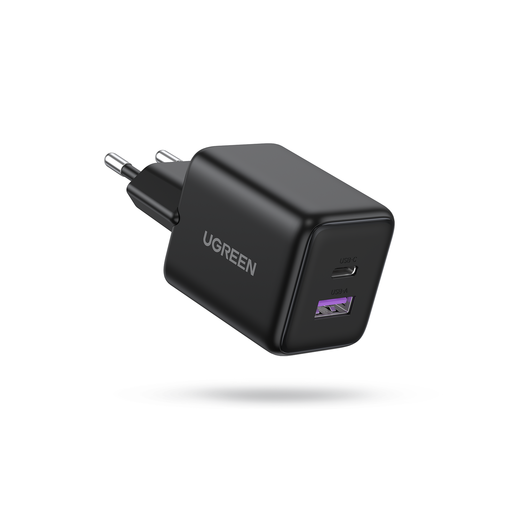
What makes it stand out: This model is an ultra-compact and lightweight solution, ideal for travel or as a replacement for a standard smartphone power brick. It combines a modern USB-C port with a traditional USB-A port for excellent flexibility.
Advantages:
Who it's for: Users who primarily charge their smartphone (e.g., iPhone 17, Galaxy S24) and occasionally a second, smaller device like headphones or a smartwatch. It's a great choice for daily use and for light travel.
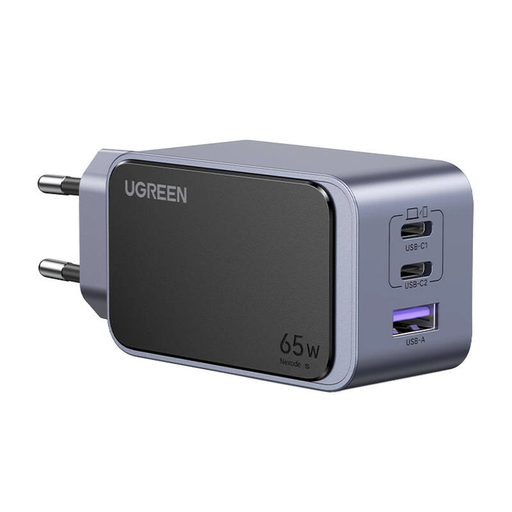
What makes it stand out: This multi-port charger is an all-rounder that offers enough power for a laptop and other devices. Thanks to GaN II technology, it remains compact and efficient despite its high output.
Advantages:
Who it's for: Professionals, students, and travellers looking for a single USB-C power adapter for their laptop (e.g., MacBook), tablet, and smartphone. It's the ideal solution for reducing cable clutter on your desk or in your luggage.
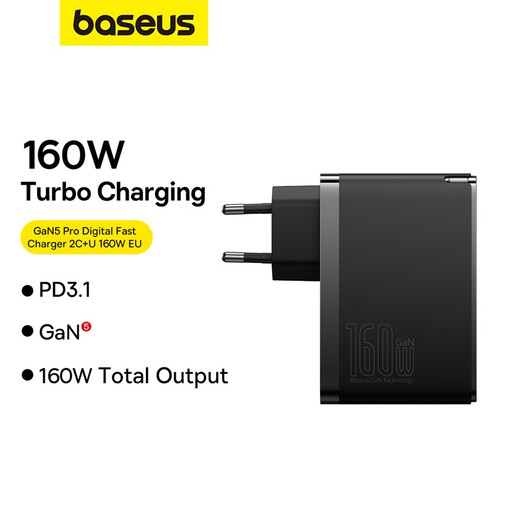
What makes it stand out: This charger is a powerhouse for demanding users. With a total output of 160W and the ability to deliver up to 140W from a single port, it can power even the most demanding laptops and multiple other devices at high speed simultaneously.
Advantages:
Who it's for: Power users, creative professionals, and families who need to charge multiple devices—such as high-performance laptops, tablets, and smartphones—simultaneously without compromising on speed.
The models featured here cover common use cases. However, if you're looking for a different power class, a specific port combination, or another design, you can find more models in our assortment.
Explore our full range of modern charging adapters and find the perfect solution for your needs.
GaN is the chemical formula for gallium nitride, a semiconductor material. In chargers, it replaces the traditionally used silicon. GaN semiconductors can operate at higher frequencies while generating less heat. The result is chargers that are significantly smaller, lighter, and more energy-efficient than conventional models at the same power output.
Yes, in principle, you can. USB-C is a universal standard. An intelligent charger communicates with the connected device to determine the maximum permissible charging power. This means you can safely charge a smartphone with a powerful 100W laptop charger; the charger will automatically reduce the power to the level appropriate for the smartphone. However, you will only achieve maximum charging speed if both the charger and the device support the same fast-charging protocol (e.g., Power Delivery).
The required wattage depends on the specific MacBook model. As a general guideline, you can refer to the power of the original adapter: