
Lieferung heute & morgen

Qualitätsgarantie

Willkommens-Angebote freischalten: KOSTENLOSE Lieferung | Bis zu 80 % RABATT | Kostenlose 30-Tage-JoyPlus-Testphase
App herunterladen
As a Joybuy Product Recommendation Officer, I analyse product information daily to provide you with clear, practical guidance in a sea of options. A modern GaN charger promises to end the chaos of different power adapters for your laptop, smartphone, and tablet. However, not every model delivers on its promises. Many users invest in a supposed upgrade, only to find that their new charger isn't any faster or doesn't power all their devices as expected. This guide will show you what to look for to make an informed decision.
Before you decide on a model, you should be aware of the typical marketing traps that often lead to disappointment.
To avoid a bad purchase, focus on these three objective criteria. They determine the performance, safety, and longevity of your new power adapter.
The term GaN charger is derived from the semiconductor material gallium nitride. Compared to traditionally used silicon, GaN allows for significantly higher efficiency in energy conversion.
The wattage (W) indicates the maximum power a charger can deliver. It is crucial that this output matches your devices' requirements.
Ensure the charger supports the Power Delivery (PD) standard. This intelligent protocol allows the charger and the device to negotiate the optimal charging voltage and current. A USB C power adapter with PD is the most universal solution for modern tech today.
A multi-port charger is ideal for powering several devices at once. The key here is smart power distribution. Reputable manufacturers specify exactly how the power is divided when multiple ports are used simultaneously. For example, a good 65W charger might provide 45W for a laptop and 20W for a smartphone when both are connected. A combination of USB-C (for modern devices) and USB-A ports (for older devices or accessories) offers the greatest flexibility.
Here are a few models that represent a considered choice for different user profiles based on their specifications.
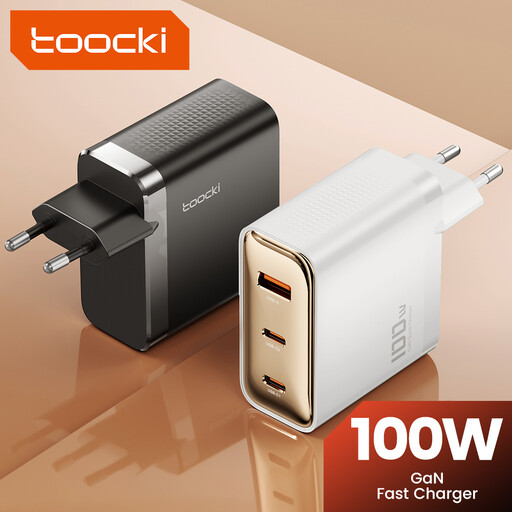
Why it's a good fit: Ideal for users who need to simultaneously charge a powerful notebook like a MacBook Pro, a tablet, and a smartphone. The high total output covers even demanding setups.
This charger addresses the "total output" trap by offering a very high maximum output of 100W, which is sufficient to deliver enough power for a notebook even when multiple ports are in use.
The combination of 100W of power, GaN technology, and three ports (2x USB-C, 1x USB-A) offers maximum flexibility and future-proofing for demanding users.
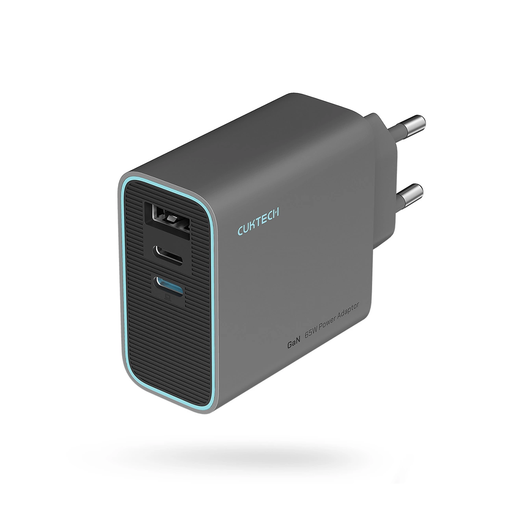
Why it's a good fit: Perfect for commuters and travelers. It's extremely compact yet powerful enough to fast-charge an ultrabook (e.g., MacBook Air) and a smartphone simultaneously.
Thanks to GaN technology, this charger is significantly smaller than traditional 65W power adapters. It solves the problem of bulky chargers that take up a lot of space in your bag.
A balanced mix of power (65W), portability, and port variety (3 ports) makes it a universal charging solution for daily mobile use.
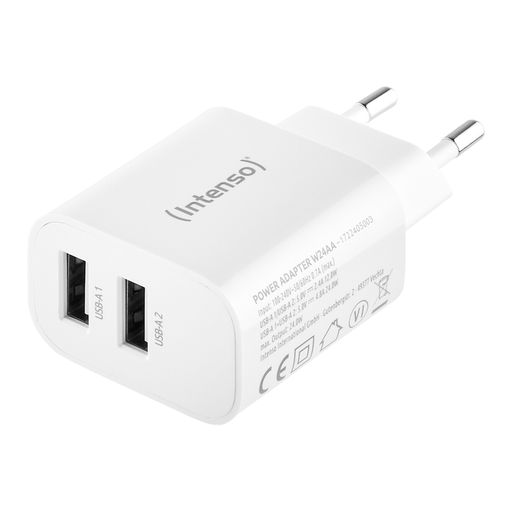
Why it's a good fit: A simple and cost-effective solution for users who only need to charge two devices with lower power requirements, such as smartphones, e-readers, or headphones, and don't need laptop-charging capabilities.
This model forgoes complex fast-charging protocols and high wattages. It offers clear, straightforward functionality, thus avoiding false expectations about charging speeds for high-performance devices.
Excellent value for money for simultaneously charging two devices via the widely used USB-A ports. Reliable and straightforward.
We have compiled a complete, real-time updated list of products that fully meet these strict selection criteria and all relevant safety regulations.
No. Modern chargers and devices communicate with each other via protocols like Power Delivery (PD). This ensures that only the amount of power the device can safely handle is delivered. A 65W charger will only supply 20W to a smartphone that only needs 20W. The electronics in both the smartphone and the charger protect the battery from overcharging.
Power Delivery (PD) is a universal, open standard used by a wide range of manufacturers, including Apple, Google, and most laptop producers. It works via the USB-C connector. Other standards like Quick Charge (QC) or proprietary protocols (e.g., from Samsung or Huawei) are brand-specific. A high-quality multi-port charger will ideally support other common protocols in addition to PD to ensure maximum compatibility with different device brands.
Any conversion of electrical energy generates heat as a byproduct. While GaN chargers are significantly more efficient and generate less waste heat than traditional silicon power adapters, some warming during the charging process is perfectly normal and harmless. Certified devices have built-in protection mechanisms that will shut down the charger if temperatures get too high.