
Lieferung heute & morgen

Qualitätsgarantie

Willkommens-Angebote freischalten: KOSTENLOSE Lieferung | Bis zu 80 % RABATT | Kostenlose 30-Tage-JoyPlus-Testphase
App herunterladen
Finding the right garden bench can be a challenge given the wide array of available materials, sizes, and designs. Whether for a sprawling garden, a cosy patio, or a compact city balcony, the right seating combines functionality with aesthetics to create a relaxing outdoor retreat.
This article serves as a practical guide. It is designed to help you make an informed decision by objectively highlighting the key features of various garden bench types. We will introduce a selection of models and explain what matters most when choosing the right material and size.
Two key factors determine the longevity and utility of your new outdoor bench: the material and the dimensions in relation to your available space.
The choice of material affects not only the look of the bench but also its maintenance requirements and resistance to the elements.
The available space is a crucial factor. Measure the intended location carefully before deciding on a size.
Here is a selection of garden benches that stand out for their different materials and functional features.

Why it stands out: This model combines the function of a generous bench with that of a practical table. The middle backrest folds down to become a tabletop, transforming the 3-seater garden bench into two separate seats with a surface in between.
Pros:
Who is it for? For users with larger gardens or patios who appreciate a multifunctional and flexible seating solution. The combination of seating and a table makes it especially practical for social gatherings.
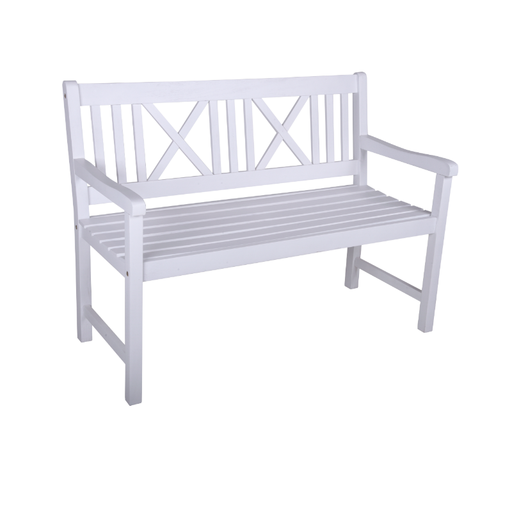
Why it stands out: The MALM? bench impresses with its classic design and a white-washed finish that gives it a bright, inviting look. Its compact construction makes it a great choice for smaller outdoor areas.
Pros:
Who is it for? For those looking for a stylish and space-saving balcony bench or a small garden bench. Its timeless design blends harmoniously into various settings.

Why it stands out: This bench is designed for maximum functionality and portability. It folds in the middle and, thanks to its low weight, is easy to transport and store.
Pros:
Who is it for? For anyone who needs a flexible and extremely durable seating option for various occasions, such as garden parties or as an addition to existing garden furniture. Ideal for those with limited storage space.
Sometimes, the layout of a patio or garden calls for a different shape than a straight bench. If you want to create a larger seating area to make the most of the space, a corner bench could be the right solution.
For larger patios or unique layouts, a corner garden bench can be the ideal solution. Discover our selection of corner garden benches to make the best use of your space.
Care depends on the type of wood. Generally, a wooden bench should be cleaned regularly with a soft cloth and mild soapy water. To preserve its colour and protect it from the weather, it is recommended to treat hardwood benches once or twice a year with a suitable care oil or a sealant.
For year-round outdoor use with minimal maintenance, benches made from high-quality plastic (HDPE) or powder-coated aluminium are an excellent choice. These materials are impervious to moisture, UV radiation, and temperature fluctuations.
That depends on the material. A plastic garden bench or an aluminium one can usually be left outside through the winter without any issues. For a wooden garden bench, it is recommended to cover it with a protective cover or store it in a dry, sheltered location (e.g., garage, cellar) to extend the material's lifespan.