
Lieferung heute & morgen

Qualitätsgarantie

Willkommens-Angebote freischalten: KOSTENLOSE Lieferung | Bis zu 80 % RABATT | Kostenlose 30-Tage-JoyPlus-Testphase
App herunterladen
Garden cushions can transform the comfort and look of your garden furniture, balcony chairs or patio. However, not every outdoor cushion will suit every piece of furniture. It’s easy to end up with the wrong product if you only check the measurements, fastening or care instructions after buying.
“Water-repellent” usually means that light rain or a few splashes may bead off for a short time. It doesn’t automatically mean a garden cushion can be left outdoors permanently. Moisture can seep in through the seams, zips or underside.
When choosing water-repellent garden cushions, also check:
Even a product described as an outdoor cushion will often need a dry place to be stored.
A seat cushion that’s a few centimetres too large or too small can slip around or overhang at the sides. For garden chairs, it’s particularly important to check the seat, backrest height and position of the fastening ties. A garden chair seat cushion measuring 40 x 40 cm won’t necessarily fit every seat with similar dimensions.
Before buying, measure:
A zip can make cleaning easier, but it doesn’t mean the cover can be fully removed and washed separately. Likewise, a tie won’t prevent all movement if the seat is very sloped or smooth.
Check the specific instructions: some garden chair cushions can only be hand-washed in cold water with mild detergent. According to the manufacturer’s instructions, tumble drying and ironing may not be suitable.
For individual chairs, square 40 x 40 cm cushions or 45 x 45 cm cushions may be suitable. Rectangular options such as 40 x 60 cm can work well on narrower benches or seats. A common size for high-back garden chairs is a garden chair back cushion measuring around 123 x 50 cm. Ultimately, the key is to compare the measurements with your own furniture.
For a 123 x 50 cm high-back chair cushion, you should also check the backrest height and fastening options. A long back cushion may overhang a shorter backrest.
Polyester is used for many outdoor cushions because it can be easy to care for and retain its shape. Cotton blends feel different, but depending on the specific design, they may need more protection from moisture. A colourfastness rating, such as 6 out of 8, describes how well the colour holds under defined test conditions. It doesn’t guarantee that a cushion will remain unchanged in constant sunlight.
For UV ratings, check the classification they’re based on. For example, some Beliani models are listed as having UV resistance Class 5 under ISO 105-B02. Even so, it’s a good idea to store cushions somewhere sheltered when they’re not in use.
Ties or adjustable fasteners help reduce slipping on suitable chairs. A zip can be useful when it comes to care. However, some products are hand-wash only, even if the cover has a zip.
So, before you buy, check:
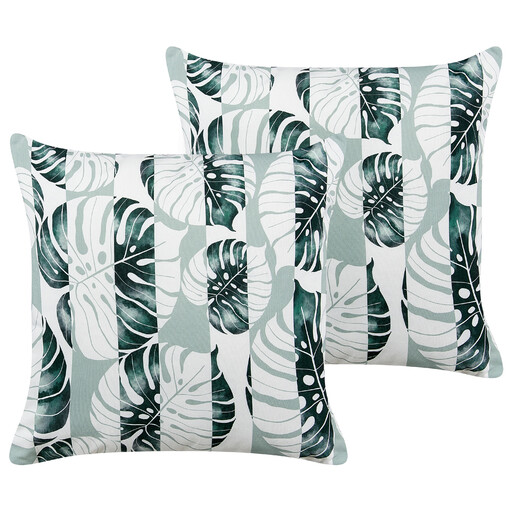
Why this product suits this need: This set of two cushions, measuring 45 x 45 x 10 cm, is ideal if you want to add decorative seat cushions to several seating areas. The green botanical design complements balcony and garden furniture.
The listed measurements, water-repellent finish and care instructions make it easier to choose with confidence. Even so, the cushion shouldn’t be left out in the rain without protection.
Two cushions per set, polyester covers and a water-repellent surface. The covers have zips; hand-washing is recommended in the care instructions.
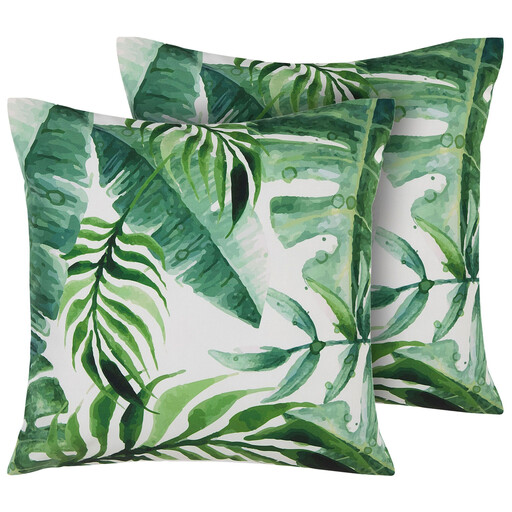
Why this product suits this need: These square cushions pair a botanical print with a stated UV resistance rating. They’re a good fit for seating areas where appearance and documented material specifications matter equally.
The product information explicitly states that the cushions are water-repellent and UV-resistant. They still need protection from prolonged exposure to moisture and should be stored somewhere dry.
Set of two, measuring 45 x 45 x 12 cm, with polyester filling and UV resistance Class 5 under ISO 105-B02, according to the product information.
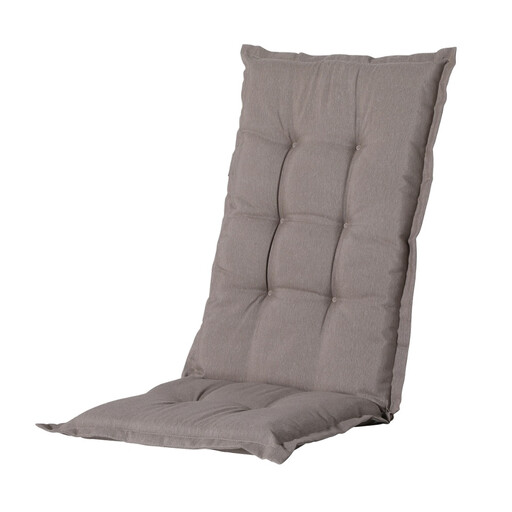
Why this product suits this need: At around 123 x 50 cm, this long back cushion is designed for owners of high-back chairs looking for a back cushion with adjustable fastenings.
The product description clearly states that the cushion isn’t water-resistant and isn’t designed to be used outdoors without protection. This helps you avoid confusing different material properties.
Adjustable strap fastening, around 5 cm thick and made from a cotton-polyester blend. According to the product information, it can be hand-washed or machine-washed on a delicate cycle at 30 °C.
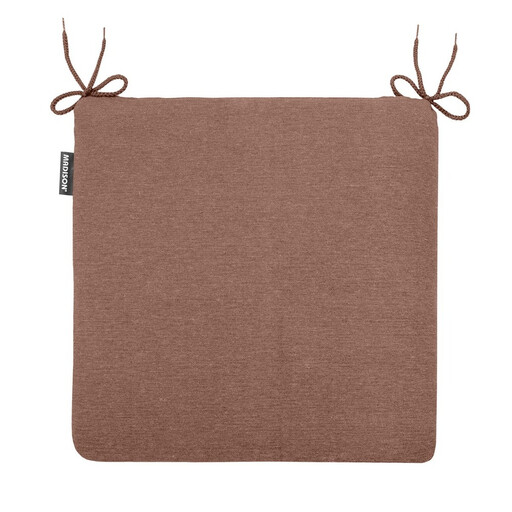
Why this product suits this need: This compact seat cushion fits many smaller chairs and can be secured with ties. It’s a good choice if you prefer a zip and a classic colour.
The dimensions of around 40 x 40 x 4.5 cm and the fact that it isn’t water-resistant are clearly stated. If you use it in the garden, plan to keep and store it somewhere dry and sheltered.
Zip, fastening tie and cotton-polyester blend. According to the description, it can be hand-washed or machine-washed on a delicate cycle at 30 °C.
We’ve put together a comprehensive, regularly updated list of products that meet these strict selection criteria and fully comply with the safety regulations in force in the EU.
Even weather-resistant cushions benefit from being stored somewhere dry. Remove loose dirt promptly and let damp cushions dry completely before putting them away. A storage box or protective cover can reduce exposure to rain, dust and strong sunlight.
If your cushions are vacuum-packed, remove the packaging after delivery and leave them to rest as instructed. Several Beliani models recommend leaving them for 24 hours. Also follow the safety guidance: keep garden cushions away from open flames, barbecues, patio heaters and other sources of heat.
It depends on the seat and backrest. Common seat cushion sizes are 40 x 40 cm and 45 x 45 cm. For high-back chairs, back cushions measuring around 123 x 50 cm may be suitable. Measure the width, depth and fastening points before you buy.
No. The term doesn’t automatically mean waterproof. Light rain may bead off for a short time, but prolonged exposure to moisture can seep through the seams and into the filling. It’s still best to store cushions somewhere dry and protect them in bad weather.
Their lifespan depends on the material, exposure to sunlight and moisture, care and storage. Drying them regularly, using a suitable protective cover and following the washing instructions can help reduce wear. Don’t continue using cushions if the filling is misshapen, damaged or exposed.