
Lieferung heute & morgen

Qualitätsgarantie

Willkommens-Angebote freischalten: KOSTENLOSE Lieferung | Bis zu 80 % RABATT | Kostenlose 30-Tage-JoyPlus-Testphase
App herunterladen
A garden gazebo can be an oasis of calm and a social hub. However, the path to choosing the right one is often paved with costly pitfalls. Many models advertised online as "robust" turn out to be a bad investment after the first storm or winter. Before you make a decision, it's crucial to know the common weaknesses that often only become apparent after the purchase.
This guide will show you what to look for to find a durable and functional gazebo that truly meets your needs. We focus on the critical features that determine years of use, not on short-lived marketing promises.
Analysis of customer feedback and product data consistently reveals the same problems. By understanding these, you can make a more informed decision.
To avoid the pitfalls mentioned above, you should focus on verifiable, technical specifications. These three parameters are crucial for the longevity and functionality of your gazebo.
The choice of roof significantly determines the gazebo's usability and lifespan.
A stable frame is the backbone of any gazebo.
The right size and thoughtful details significantly increase the utility value.
Instead of making a blanket recommendation, we have selected products for different user profiles.
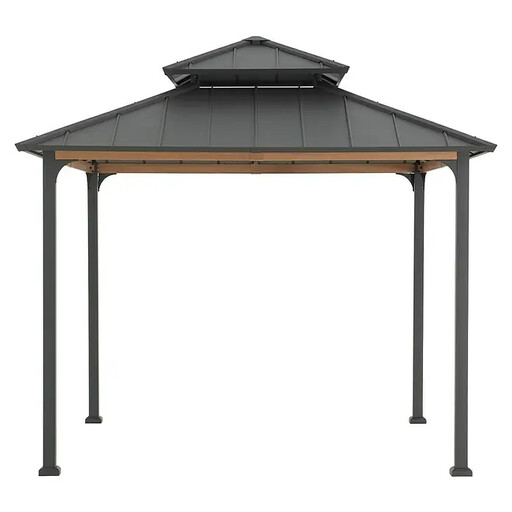
Why this model is a great fit: Ideal for homeowners seeking a durable, low-maintenance, and year-round solution. It's perfect as a permanent patio cover that can be left up even in winter.
This model directly addresses the "weather-resistant vs. all-season" trap. With a steel hard-top, a specified snow load of 110 kg/m?, and a wind resistance of 50 MPH, it is explicitly designed for year-round use. The robust 8x8 cm steel posts avoid the trap of poor construction.
The combination of a steel hard-top and a powder-coated steel frame offers maximum durability and protection in all weather conditions. The vented double roof ensures stability and comfort.
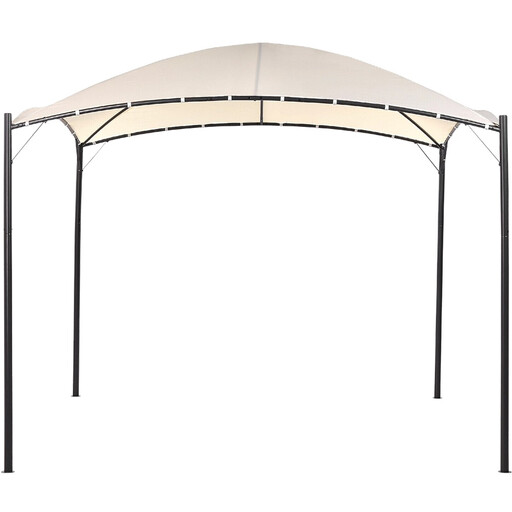
Why this model is a great fit: A stylish and budget-conscious choice for those primarily seeking sun protection for the summer season and who do not require year-round weather protection.
This model avoids the hidden costs trap by being clearly positioned as a seasonal solution. The user knows that the fabric roof requires maintenance and must be dismantled in winter. The powder-coated steel frame provides a more solid base than many comparable models in this price range.
Offers aesthetically pleasing and functional shade at an accessible price. The construction is designed for seasonal use and is easy to assemble.

Why this model is a great fit: For anyone who doesn't need a full gazebo but is looking for targeted privacy and sun protection for balcony railings, fences, or existing pergolas.
This product avoids the gazebo traps entirely by offering a specific, cost-effective solution to a different problem. Instead of overspending on a large structure, users get an effective garden privacy screen that is easy to install and versatile.
High flexibility and simple installation. The HDPE fabric (180g/m?) is tear-proof, UV-resistant, and can be cut to size without fraying. It provides over 90% shade and is a quick solution for more privacy.
If you'd like to explore a wider selection of gazebos and pergolas chosen based on these criteria, you can find our full range here.
Regulations for planning permission (or building permits) vary by country and local council. As a rule, smaller gazebos that are not permanently anchored to the ground are exempt. However, for larger, permanent structures like a hard-top gazebo with a fixed foundation, permission may be required. It is strongly recommended that you check with your local planning authority before purchasing to avoid legal issues.
Storm-proof anchoring is essential. The gazebo must stand on a level and solid surface. Use the anchoring options provided by the manufacturer and securely bolt the posts to the foundation (e.g., concrete slabs, wooden decking, strip foundation). For gazebos with a fabric roof, the canopy should be removed if a storm is forecast. For hard-top models, adhering to the manufacturer's maximum wind load rating is crucial.
Traditionally, a gazebo is a freestanding, often enclosed structure with a solid, continuous roof. A pergola, on the other hand, typically has a more open roof structure made of beams and is often attached to a building, though it can also be freestanding. In modern usage, the terms are often used interchangeably. When you buy a pergola, it could refer to a model with a fabric roof or a more open wooden structure. The deciding factor is the type of roof and whether it offers year-round protection.