Food dehydrators at Joybuy
The following Joybuy models have several trays for drying herbs. Compare their temperature controls and dimensions with your harvest and the space you have available. Before buying, also check the specific listing for information on food-contact suitability and electrical compliance.
 No image available
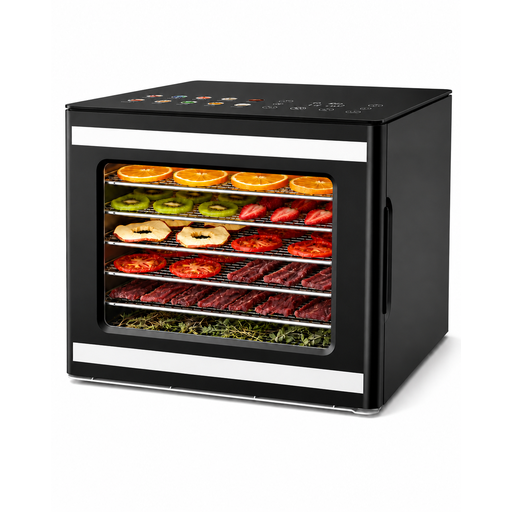
HavenWell food dehydrator with 6 stainless steel trays
Six removable stainless steel trays provide several levels for arranging herbs.
Manually adjustable temperature from 35–75 °C; ten preset programmes. Dimensions: 32 × 33,2 × 25,6 cm.
View at Joybuy
 No image available
HavenWell food dehydrator with 10 stainless steel trays
Ten stainless steel trays provide several levels for spreading out herbs and other foods.
Variable temperature control, 48-hour timer, ten preset programmes and 850 W.
View at Joybuy
 No image available
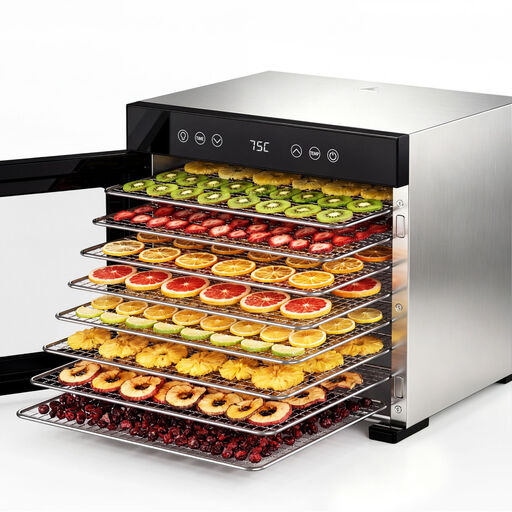
HavenWell food dehydrator with 8 stainless steel racks
Eight drying racks provide several levels for arranging herbs.
Temperature control from 35–85 °C, 48-hour timer and 650 W.
View at Joybuy
Frequently asked questions
Do I need to buy a food dehydrator for herbs for a family visit?
No, not necessarily. The Federal Centre for Nutrition describes freezing fresh, chopped herbs with a little water as one way to preserve them. Whether air-drying is suitable depends on the time available and the conditions; advice on air-drying fruit and vegetables isn’t a universal guide for every type of herb.
How should I prepare garden herbs for dishes when guests visit?
For fresh use, the Federal Centre for Nutrition recommends washing and chopping herbs shortly before eating. Delicate herbs such as basil and parsley are best added towards the end of cooking warm dishes; robust herbs such as thyme or rosemary can cook for longer. Start by using dried herbs sparingly.
How should I store home-dried herbs?
Only pack the herbs once they’re dry enough. For a dried herb mix, the Federal Centre for Nutrition recommends an airtight, dark glass jar. How long your supply will keep depends on how well it has dried and the storage conditions.
What running costs and rights should I consider?
Actual electricity consumption depends on the appliance’s power consumption and how long it runs; the wattage alone doesn’t tell you how much electricity it will use for a batch of herbs. If a product is faulty, statutory consumer rights should be distinguished from a voluntary guarantee, as explained by the consumer advice centre.
What requirements apply to food dehydrators in Germany?
Parts intended to come into contact with food must meet requirements for food-contact materials, as set out by the Federal Institute for Risk Assessment. Mains-powered appliances covered by the EU Low Voltage Directive must meet the relevant electrical safety and CE marking requirements. A CE marking alone doesn’t prove that every accessory is suitable for contact with food.


