What should you look for when buying?
Dehydrator
A good fit if: you dry herbs regularly, especially damp or delicate leaves, and can set aside a suitable place to use the dehydrator during your renovation.
Things to consider: The appliance needs space to use and store, as well as electricity. The number of trays alone doesn’t tell you how many leaves will fit with space between them.
Air-drying
A good fit if: you have small amounts of hardier herbs such as thyme or sage, and can hang them somewhere dry, well ventilated and protected from dust.
Things to consider: A damp environment and delicate, moisture-rich herbs make drying more difficult. Penn State Extension warns that slow drying can lead to mould.
Freezing in portions
A good fit if: you want to portion fresh herbs for later and have freezer space. The German Federal Centre for Nutrition describes freezing finely chopped herbs with a little water in ice-cube trays as one option.
Things to consider: You’ll need room in the freezer. The herbs won’t be dried, so they won’t be suitable for storing as a dry store cupboard ingredient.
For herbs, the National Center for Home Food Preservation recommends using a dehydrator at around 35–46 °C and spreading them out in a single layer. So first check the temperature range, usable tray area and space available where you plan to use the appliance.
| What matters |
What to check when buying |
Who is it particularly important for? |
| Drying in damp conditions |
Check that the temperature control covers around 35–46 °C, and look at the airflow and whether there’s a suitable herb tray or liner. |
If I’m harvesting damp, delicate herbs such as basil or mint during the renovation, I want to be able to control the drying process. Around 36% of consumers prioritise drying moisture-sensitive herbs quickly. |
| Space |
Compare the external dimensions with the space available for using the appliance, and remember to allow room for storage too. |
I want to know where the appliance can sit during the renovation and where I can put it away afterwards. Around 29% of consumers prioritise having a suitable place to use and store it. |
| Harvest size |
Compare usable tray area and mesh size, not just the number of trays. For small leaves, check that there’s a suitable liner. |
With a larger harvest, I want to spread the leaves out in a single layer without piling them up. Around 21% of consumers prioritise having enough space for their quantity of herbs. |
| Cleaning and running costs |
Check the cleaning instructions, removable parts and timer. Estimate electricity costs based on actual consumption and your own tariff. |
If I use the appliance regularly, I want to understand the cleaning involved and the ongoing costs beforehand. Around 14% of consumers prioritise maintenance and running costs. |
Dehydrators at Joybuy
These Joybuy products are dehydrators suitable for herbs. Compare the number of trays and the appliance dimensions with the size of your harvest and the space available.
 No image available
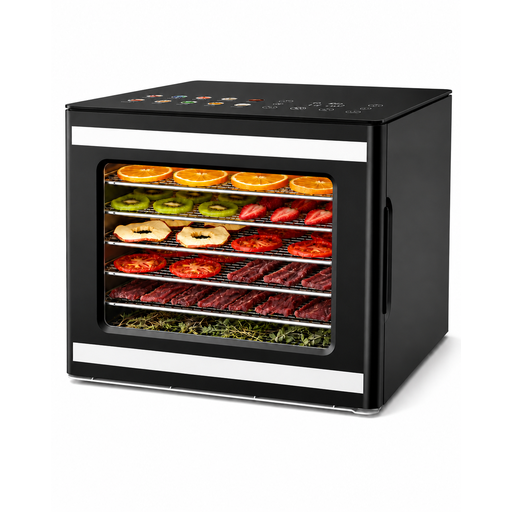
HavenWell dehydrator with 6 stainless steel trays
A good choice for herbs if six trays suit the size of your harvest. Check that you have enough room to use it during the renovation.
Features listed include six stainless steel trays, a touchscreen display, interior lighting and overheat protection.
View at Joybuy
 No image available
Havenwell dehydrator with 10 stainless steel trays
Suitable for larger harvests or several batches, provided the appliance and its trays fit the space you have available.
Features listed include variable temperature control, a timer of up to 48 hours, 10 programmes and 850 W. Check the specific temperature settings before you buy.
View at Joybuy
 No image available
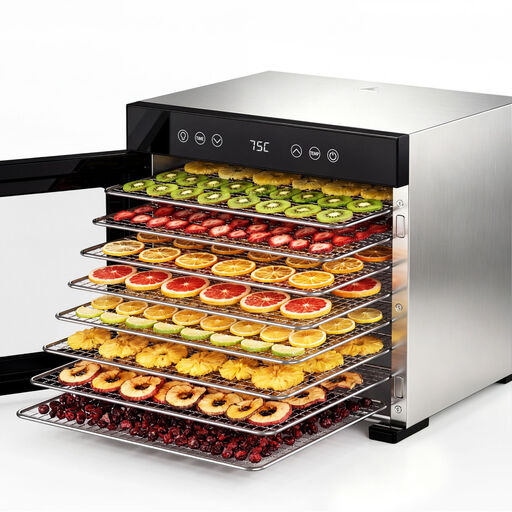
Havenwell dehydrator with 8 stainless steel racks
Suitable for drying several batches of herbs, if eight racks suit the size of your harvest and the space you have set aside.
Features listed include 650 W, a temperature range of 35–85 °C, a timer of up to 48 hours, a touchscreen display and interior lighting.
View at Joybuy
Frequently asked questions
What temperature should I use to dry garden herbs, and for how long?
The National Center for Home Food Preservation recommends preheating your dehydrator to 95–115 °F, or around 35–46 °C, for herbs and spreading them out in a single layer. It gives 1–4 hours as a guide, though drying times can vary. Leaves should crumble and stems should snap when bent. Always follow your appliance’s instructions too.
Where can I air-dry herbs during a kitchen renovation?
Choose a dry, well-ventilated spot protected from dust. Penn State Extension advises keeping herbs away from sources of moisture such as the sink, hob and dishwasher. A perforated paper bag can help keep off dust. Take extra care with delicate, moisture-rich herbs, as slow drying can encourage mould.
How should I store dried herbs?
Let the herbs cool completely, then transfer them to clean, dry, airtight containers. Store them somewhere cool, dry and dark, and check for moisture. Discard any food that has gone mouldy.
How can I estimate electricity costs, and what happens if the appliance develops a fault?
To estimate electricity costs, multiply a reasonable estimate of consumption in kWh by your tariff in euros per kWh. The rated power alone doesn’t show the measured consumption per batch. Under EU rules, when you buy as a consumer from a trader, you have a minimum two-year legal guarantee from the date you receive the goods. Any additional manufacturer’s warranty doesn’t replace these statutory rights.
What should I look for in an electric dehydrator in Germany?
The German Federal Network Agency lists several things to check, including correct CE marking, an identifiable product, manufacturer details and German-language instructions with the required warnings. CE marking isn’t an independent quality test mark. Check the markings and follow the instructions for the specific appliance.


