
Lieferung heute & morgen

Qualitätsgarantie

Willkommens-Angebote freischalten: KOSTENLOSE Lieferung | Bis zu 80 % RABATT | Kostenlose 30-Tage-JoyPlus-Testphase
App herunterladen
A garden hose connector can join hoses to extend their reach, split the water supply or connect a hose to a tap. In practice, though, problems often stem not from the hose itself but from incompatible threads, weak seals or couplings that come loose under pressure.
It’s worth checking the technical details before you buy. The right garden hose coupling needs to match the hose diameter, connection type and intended water pressure. The tips below will help homeowners, gardeners, DIY enthusiasts and installers avoid buying the wrong product.
Not every fitting labelled “standard” will automatically fit every tap or garden hose. Female and male threads are often confused, and measurements in inches – such as 3/8 inch, 1/2 inch or 5/8 inch – do not all refer to the same types of connection.
A tap hose adapter, for example, may convert one thread size to another, while a garden hose quick connector links a hose to an accessory using a push-fit system. Before you buy, check the thread type, diameter and connection direction.
A leak-free hose connection depends on more than whether it’s made of plastic or metal. The seal, fit and correct installation matter too. Even a sturdy housing can leak if the sealing ring is missing, out of place or the fitting has been overtightened.
For threaded connections, check that the supplied sealing rings are in place. With push-fit couplings, make sure the hose is fully clicked into place.
A connector in a fixed irrigation system is put under different strain from a coupling on a flexible water hose that is regularly dragged across the ground. Moving connections need enough give to stop the hose kinking right next to the connector.
For outdoor use, it’s helpful to check whether a product is described as weather- and corrosion-resistant. However, this does not replace checking the permitted operating pressure and the product’s instructions for use.
Where possible, measure the existing fitting and compare it with the product details. A G3/8 to G1/2 adapter is designed to convert between these two thread sizes. According to the Ibergrif adapter’s product details, two sealing rings are included, and it is rated for pressures of up to 16 bar. This rating applies only under the manufacturer’s stated conditions and should not be exceeded.
For a garden hose with a quick connector, the compatible push-fit profile matters more than the screw thread.
A 2-way hose connector joins two hose ends and is mainly used to extend a hose. A 3-way hose connector splits or directs water in three directions, for example to supply two watering areas or an additional spray nozzle.
An adapter has a different purpose: it bridges the gap between different connection sizes or threads. Choose between these designs based on the setup you have in mind, rather than price alone.
Plastic connectors are usually lightweight and suitable for many garden tasks. ABS plastic or weather-resistant polymers may be designed for frequent outdoor use. Metal adapters, such as stainless steel models with a chrome finish, are suitable for fixed threaded connections, provided the thread and seal are compatible.
An integrated water-stop valve can shut off the water flow when you disconnect the coupling. A swivel joint can also help prevent the hose from twisting at the connection. Both features are useful, but neither is a substitute for a properly fitted connection.
The recommendations below group the available products by common use. Technical details are based on the respective product descriptions.
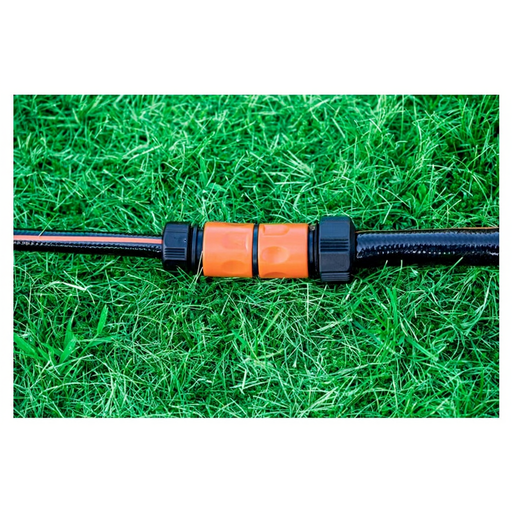
Why it suits this user: This 2-way connector is a good choice if you want to join two existing garden hoses to create a longer run.
Its design is made for joining two hose ends, reducing the risk of accidentally buying a 3-way splitter when you simply need to extend a hose.
Compact dimensions of around 5.2 cm and a weight of approximately 20 g, according to the product details.
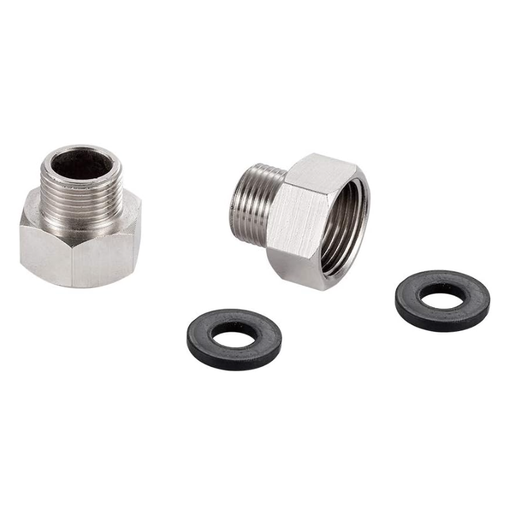
Why it suits this user: This adapter set is designed for anyone who needs to adapt fixed threaded connections on water pipes, taps or appliances.
The G3/8 and G1/2 thread sizes are clearly specified, making it easier to check compatibility before installation.
Two stainless steel metal adapters with two sealing rings; rated for up to 16 bar according to the product details.
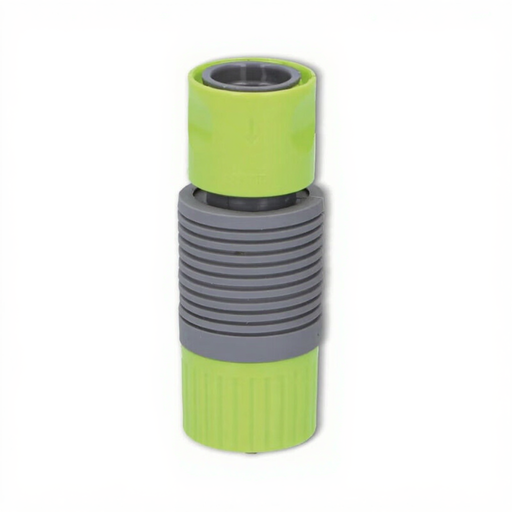
Why it suits this user: This compact connector is designed for use with different fittings on sprinklers, spray nozzles, pressure washers and irrigation systems.
The integrated water-stop valve is designed to limit water flow when disconnecting. The 360-degree swivel joint allows the hose to move more freely.
Tool-free installation according to the product description, plus a lightweight polymer housing.
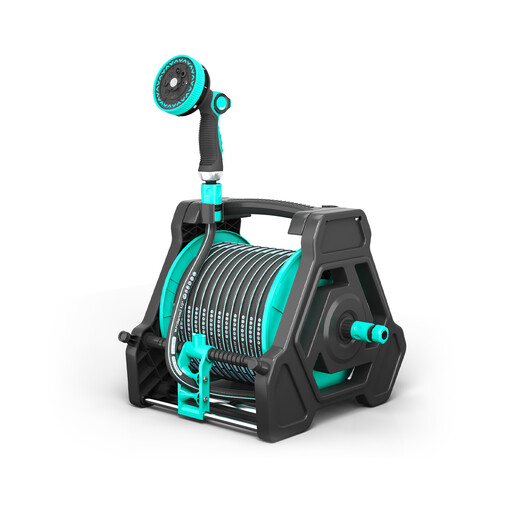
Why it suits this user: This set includes a 30 m hose, a 2 m connecting hose, a spray gun and two tap connectors for gardening and cleaning tasks.
The hose length and included connectors are clearly listed, so you can check the contents against your needs before buying.
Wall-mountable, removable reel design and a 30 m main hose, according to the product details.
Other components, such as the BLACK+DECKER Coupling 3-Way 1pc, may be useful if you need to split a hose in three directions. For fixed water connections, the FLEXIBLE HOSE INOX 150CM, made from stainless steel and PVC, is another option, provided its length, diameter and connection ends suit your existing installation.
We’ve put together a complete, regularly updated list of products that meet these strict selection criteria and fully comply with the safety regulations applicable in the EU.
It depends on the hose diameter and the push-fit system used. Check the hose’s connection size and make sure it is compatible with any existing nozzles, sprinklers or tap connectors. For threaded connections, the male and female threads and the size in inches must match.
Use a suitable sealing ring, clean the contact surfaces and avoid overtightening threaded connections. With push-fit couplings, make sure the hose is fully clicked into place. After installation, test the connection at low water pressure first.
Its lifespan depends on the material, UV exposure, frost, water pressure and mechanical strain. If you won’t be using a connector for a while, store it somewhere dry and frost-free. Regular visual checks can help you spot wear early.