
Lieferung heute & morgen

Qualitätsgarantie

Willkommens-Angebote freischalten: KOSTENLOSE Lieferung | Bis zu 80 % RABATT | Kostenlose 30-Tage-JoyPlus-Testphase
App herunterladen
The right garden lighting can make paths visible, highlight borders or create a pleasant atmosphere on the patio. In practice, however, unclear product specifications and unsuitable installation locations often lead to poor purchases. So before you buy, it's worth taking a close look at the IP rating, power supply and the intended use.
The term "waterproof" alone doesn't tell you much. What really matters is the specific IP rating. With an IP65 light, the first digit indicates protection against dust, and the second indicates protection against water jets from various directions. However, this does not mean the light is suitable for submersion.
A waterproof outdoor light with IP65 can, for example, be suitable for rain, snow and garden watering, but must not be left lying in water. IP44, on the other hand, offers less protection and should not be installed in areas where strong water jets or standing water regularly occur.
A solar garden light needs a well-lit location. Trees, house walls or seasonally dense foliage can reduce charging performance. Stated charging and lighting durations usually apply under suitable conditions. In winter or after several overcast days, the actual operating time may be shorter.
Solar lights are therefore particularly suitable for decorative accents in borders and along paths. For reliably planned lighting of a driveway, patio or house wall, a mains connection is often a better choice.
A smart garden light is not automatically compatible with every app or voice assistant. Before buying, you should check whether Wi-Fi, Matter, Bluetooth Mesh or an additional gateway is required. Your home Wi-Fi also plays a role: some Wi-Fi lights require a 2.4 GHz network.
With extension lights, you also need to check whether a base module is necessary. An additional garden light may not technically work on its own if it is explicitly sold as an extension.
With every LED garden light, the IP rating should be considered for the entire product, not just the light housing.
Solar, battery and mains operation each have different use profiles. Solar lights need daylight, while battery-operated string lights can be used flexibly on a balcony, patio or in the garden. Mains-operated lights deliver predictable performance, but require professional installation for a fixed connection.
For brightness, lumens are more meaningful than wattage. A 7 W LED light can give off different amounts of light depending on its design and optics. A garden spotlight with an adjustable beam angle is suitable for trees, facades or walls; a garden path light, on the other hand, should shine as evenly downwards as possible without causing glare.
Before buying, you should decide whether you want a ground spike light, wall mounting, ceiling mounting or a freestanding light. Warm white light around 3000 K appears more subdued, while 6500 K looks noticeably cooler. An RGB garden light offers coloured scenes, but does not automatically replace functional orientation lighting.
With smart home products, app support, voice control, schedules, groups and motion sensors are important selection points. Matter can make integration into several compatible systems easier, but requires a suitable control environment.
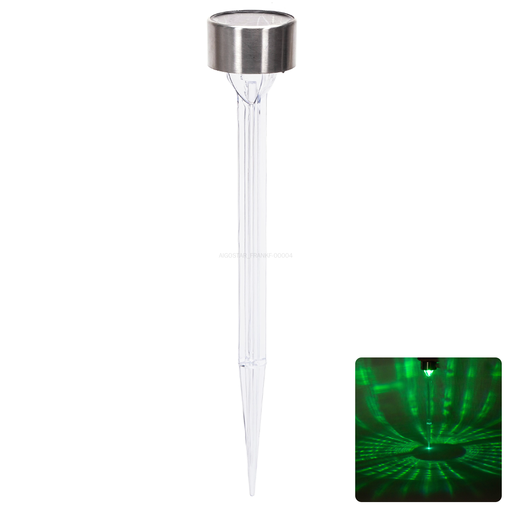
Why this product fits the profile: The solar ground spike light can be placed in soft soil or grass without a direct mains connection, making it ideal for decorative accents along paths and borders.
The technical specifications state a charging time of 4 to 6 hours, a stated lighting duration of 8 to 12 hours and IP44. This makes it easier to realistically assess the suitable location.
RGB light, integrated battery, solar panel and ground installation without fixed wiring.
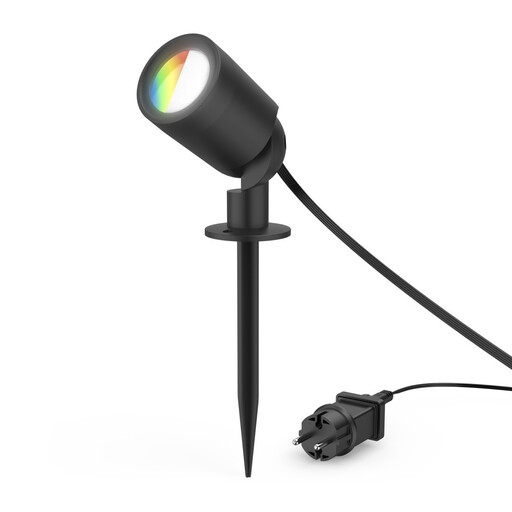
Why this product fits the profile: The mains-powered WLAN garden spotlight is designed for users who want to combine app, voice and Matter control with an adjustable orientation.
The light specifies IP65, 220 V and a necessary connection to a 2.4 GHz Wi-Fi network. These details make the IP rating and installation requirements clear.
16 million colours, stepless dimming, adjustable light head, plus Matter, app and voice control.
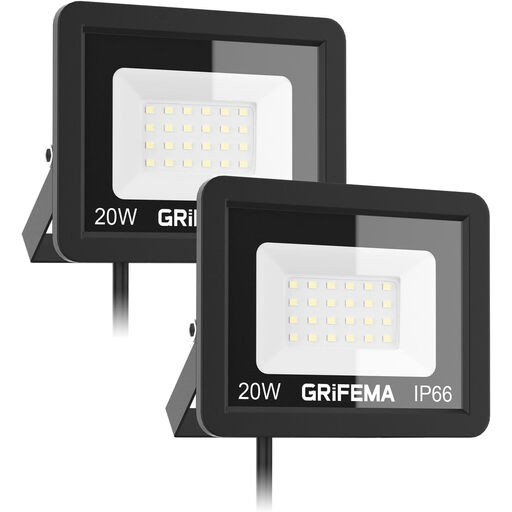
Why this product fits the profile: Two adjustable floodlights with 6500 K are ideal for driveways, garages, courtyards or work areas where a high light output is needed.
IP66 and the adjustable 180-degree bracket are clearly specified. As no plug is included, the connection and installation must be planned before purchase.
2200 lm combined, 6500 K, two lights and flexible wall, ceiling or ground installation.
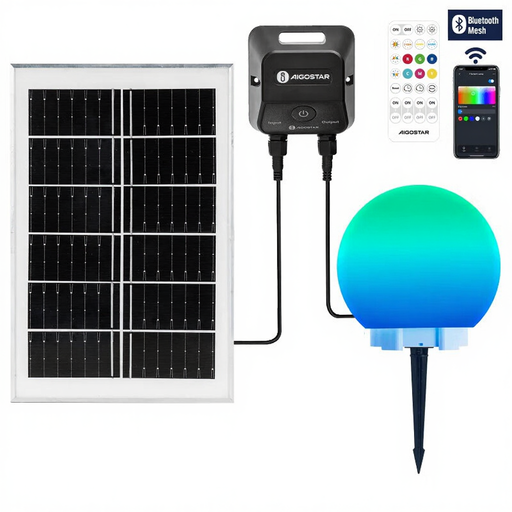
Why this product fits the profile: The combination of solar power and Bluetooth Mesh is interesting for larger garden areas where several lights are to be grouped and controlled via an app.
The specifications mention Bluetooth Mesh, solar and lithium battery, as well as IP54/IP44. The location should therefore be protected from standing water and be sufficiently sunny.
RGB+CCT from 2700 to 6500 K, grouping via app and automatic charging without a mains cable.
We have put together a complete, regularly updated list of products that fully meet these strict selection criteria and the safety regulations in force in the EU.
For many unprotected outdoor areas, IP65 is a suitable benchmark, provided the light is not submerged. IP44 can be sufficient for sheltered spots. What matters are the installation location, water exposure and the IP rating of cables and power supplies.
The solar panel should be kept free of shade, leaves and dirt. Shorter days and less direct sunlight can extend charging time and reduce lighting duration. For safety-critical areas, a mains-powered outdoor light is more predictable.
The consumption depends on the power input and the daily operating time. A light with 7 W running for five hours a day uses a calculated 35 Wh per day. With RGB lights, the brightness and selected colour can affect the actual consumption.