
Lieferung heute & morgen

Qualitätsgarantie

Willkommens-Angebote freischalten: KOSTENLOSE Lieferung | Bis zu 80 % RABATT | Kostenlose 30-Tage-JoyPlus-Testphase
App herunterladen
Garden lighting can illuminate pathways, highlight flowerbeds or add an atmospheric touch to patios and façades. The choice ranges from solar garden lights and LED garden lighting to smart Wi-Fi garden lights. However, technical specifications and product images do not always make it clear whether a light is suitable for its intended use.
As a Joybuy Product Recommendation Officer, I therefore identify the most important buying criteria and match specific models to suitable use cases. This helps avoid common purchasing mistakes – such as choosing a decorative light that is not designed to withstand prolonged exposure to rain, or a garden spotlight for a location without a suitable power supply.
The protection rating is specified using an IP code. The first digit indicates protection against foreign objects and dust, while the second indicates protection against water. IP44, for example, protects against solid foreign objects measuring 1 millimetre or more and against splashing water. This is often sufficient for sheltered areas, balconies or decorative solar ground lights, but it does not replace protection against sustained water jets or immersion.
IP65 garden lighting is dust-tight and protected against water jets from various directions. IP66 provides a higher level of protection against powerful water jets. Nevertheless, no outdoor light should be submerged. Cables, connectors and power supplies must also be suitable for outdoor use and properly protected.
LED outdoor floodlights can be extremely bright, yet feel uncomfortably cool in a seating area. In addition to wattage, the key factors are the colour temperature in Kelvin, luminous flux in lumens and beam angle.
Solar garden lights require direct, or at least sufficiently long, exposure to sunlight. Shade from walls, trees or roofing reduces charging performance. Specifications such as “4 to 6 hours charging time” and “8 to 12 hours lighting duration” are technical product details that depend on the weather, season, orientation and battery condition.
For winter in Germany, mains-powered lights or easily accessible rechargeable systems are often more predictable. With solar ground lights, you should also check whether the ground stake will sit securely in soft soil and whether the light is regularly exposed to potential damage from lawnmowers or garden tools.
First, identify the intended location: a covered wall, open lawn, flowerbed, pathway or façade area. An outdoor wall light with IP44, for example, is suitable for a sheltered entrance area when professionally installed. For freestanding garden spotlights in an exposed location, IP65 or IP66 may be the more suitable choice.
With 220- to 240-volt lights, the electrical installation is critical. Permanently connected outdoor lighting should be installed in Germany by a qualified electrician in accordance with applicable local regulations. If a light does not come with a plug, you must clarify how it will be connected before purchasing.
Solar and battery-powered models offer greater flexibility. However, batteries, battery compartments and solar panels need to be checked regularly. Also confirm whether the package includes a ground stake, wall bracket or base plate.
Smart garden lighting can offer app control, dimming, schedules and voice commands. It is important to check whether the system supports your existing network. According to the product specifications, the Hama garden light works with Matter, Wi-Fi and, among others, Apple Home, Google Home, Samsung SmartThings, Amazon Alexa, Home Assistant and Smart Life. A 2.4 GHz Wi-Fi network is required for setup.
An extension spotlight cannot automatically be used on its own. The Hama extension model requires the matching base light and, according to the manufacturer, can be connected to up to three additional spotlights.
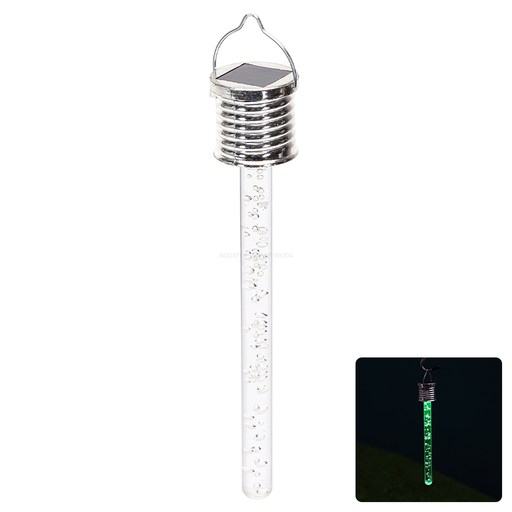
Why This Fits Their Persona: Ideal for beginners who want to add colourful accents to a balcony, patio or small garden without cables or permanent installation.
The product specifications explicitly state IP44 protection and a location with direct sunlight. This makes it easier to plan its use realistically before purchase.
RGB lighting, ground stake, amorphous solar panel and, according to the product data, 4–6 hours charging time with up to 8–12 hours of illumination.
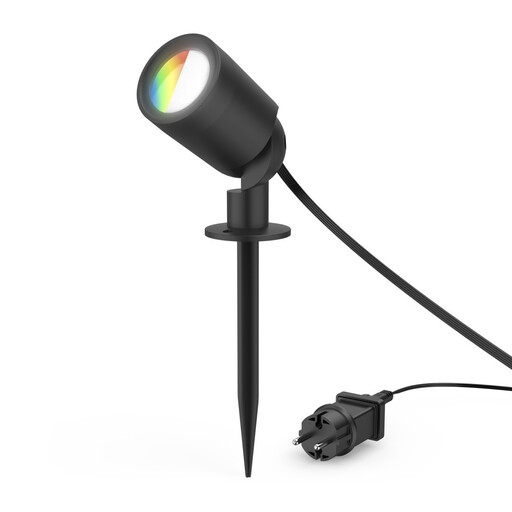
Why This Fits Their Persona: Suitable for users who want to manage colour temperature, brightness and schedules via an app or voice control.
The specifications list Matter compatibility, 2.4 GHz Wi-Fi and IP65 protection. This makes the system requirements and protection rating clear before installation.
16 million colours, stepless dimming, adjustable beam angle and installation using either a ground stake or base.
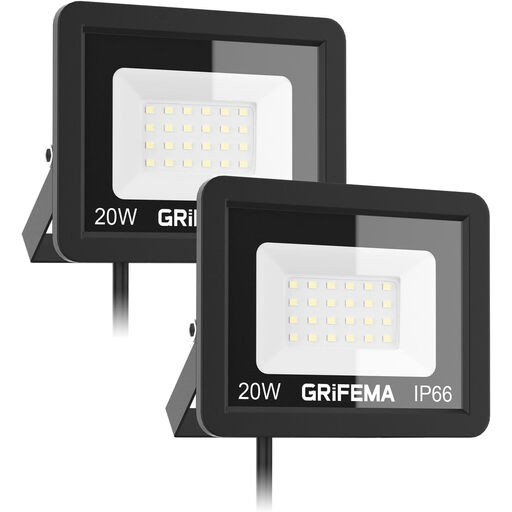
Why This Fits Their Persona: Designed for large courtyards, garage driveways, work areas or outdoor spaces that require bright, functional illumination.
The product data specifies a combined luminous flux of 2,200 lumens, 6,500 Kelvin and IP66 protection. This allows the bright, cool-white lighting effect to be assessed against the intended location.
Two spotlights, 180-degree adjustable brackets and IP66 protection. The connection is made without a supplied plug and must therefore be planned accordingly.
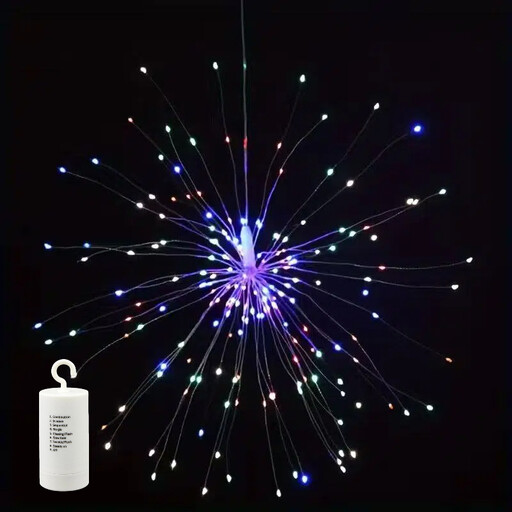
Why This Fits Their Persona: Ideal for seasonal decoration on patios, balconies or in gardens when a battery-powered system without permanent electrical installation is preferred.
The IP44 protection rating is clearly specified. The model is therefore designed for splashing water, not immersion or prolonged exposure to extreme, unprotected conditions.
90 coloured LEDs, eight lighting functions, a memory function and 30 hanging points. Four AA batteries are not included.
We have compiled a current selection of products that take these selection criteria and the relevant safety requirements for Germany into account.
That depends on the installation location. IP44 may be sufficient for sheltered outdoor areas. For freestanding lights or garden spotlights in exposed locations, IP65 or IP66 is often more appropriate. Also check the cable, power supply and connection point.
Running costs depend on wattage, daily operating time and the electricity tariff. The simple calculation is: Wattage ÷ 1,000 × operating hours × electricity price. A 10-watt model running for five hours a day consumes 0.05 kilowatt-hours per day. Solar lights incur no direct electricity costs during operation, although batteries and rechargeable cells are consumable components.
Lifespan varies depending on the LED module, electronics, heat dissipation and operating conditions. Any specific manufacturer claim should always be compared with actual usage. With integrated LEDs, the light source often cannot be replaced separately. That is why warranty terms, protection rating and accessible installation are all relevant when choosing a model.