
Lieferung heute & morgen

Qualitätsgarantie

Willkommens-Angebote freischalten: KOSTENLOSE Lieferung | Bis zu 80 % RABATT | Kostenlose 30-Tage-JoyPlus-Testphase
App herunterladen
Well-planned garden lighting transforms gardens, patios, and balconies into atmospheric retreats. However, the market is flooded with products whose marketing promises often don't hold up to reality. Misleading claims about water resistance or inflated expectations for the battery life of solar lights frequently lead to disappointment and unnecessary expense.
This guide will help you understand the crucial technical features and avoid common purchasing pitfalls. This way, you can find a lighting solution that not only looks great but also functions reliably for the long term.
Before you make a decision, you should familiarise yourself with the most common problems that occur with low-quality garden lighting.
To avoid the problems mentioned above, you should check three core technical aspects before buying. These are the primary determinants of the longevity and functionality of your new garden lighting.
The IP (Ingress Protection) rating is a two-digit code that indicates how well an electrical device is protected against the ingress of foreign objects (first digit) and water (second digit). For outdoor lighting, the following values are relevant:
The choice of power source depends on the location and your personal preferences.
Modern garden lighting offers much more than just switching on and off.
Based on the criteria above, we have identified some products that are suitable for specific application scenarios.
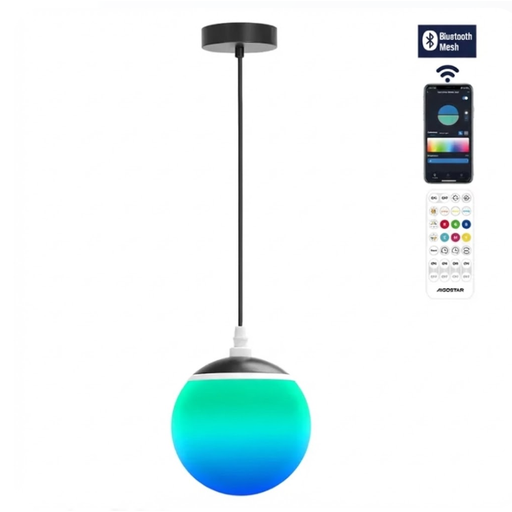
Why This Fits Their Persona: Ideal for users who want to combine smart technology with sustainability. The split design allows for lighting shady areas like covered patios or gazebos, while the solar panel is optimally placed in the sun. The control via Bluetooth Mesh is modern and stable.
Solves the problem of inefficient solar lights with its separate, high-performance panel. The IP65 rating ensures true weather resistance, and the Bluetooth Mesh control goes far beyond simple "smart" remotes.
Flexible installation thanks to the separate panel and light. Comprehensive app control (RGBCCT, schedules, grouping) via Bluetooth Mesh.
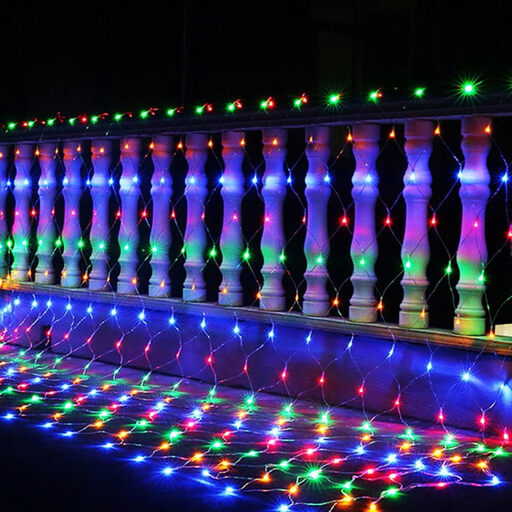
Why This Fits Their Persona: Perfect for quick and easy decoration of balcony railings, hedges, or walls. The net format ensures even light distribution without the hassle of wrapping individual strands. Ideal for quickly setting up atmospheric patio lighting.
The product description clearly states that the adapter must be kept dry, transparently communicating the limits of its IP44 rating. The 8 different lighting modes offer more variety than a simple on/off function.
Very simple and fast installation for large-area, uniform lighting. Versatile design options with 8 adjustable light modes.
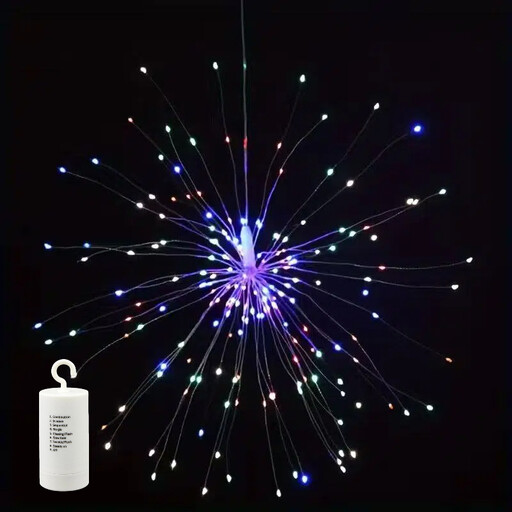
Why This Fits Their Persona: This battery-powered light is the perfect choice for temporary decorations. Whether for a garden party, a birthday, or as a festive accent for Christmas, its eye-catching firework design is a showstopper and can be hung anywhere thanks to its battery operation.
As a purely battery-operated product, there are no false promises regarding solar efficiency. The IP44 rating is sufficient for typical, temporary use in good weather and is not advertised as fully waterproof.
Maximum flexibility due to battery operation—no cables or outlets needed. The striking "starburst" design serves as a decorative highlight.
We've compiled a complete, up-to-date list of products that fully meet these strict selection criteria and UK safety regulations.
The runtime of solar lights in winter depends heavily on the quality of the solar panel, the battery capacity, and the number of daylight hours. On short, cloudy days, charging time is limited. Models with high-efficiency monocrystalline panels and large batteries (e.g., over 4000 mAh) achieve better results. With smart models, the brightness can be reduced to extend the runtime during the darker months.
These codes define the degree of protection against water. IP44 means "protection against splashing water from all directions." Such lights can withstand light rain but are not suitable for locations where they are exposed to heavy rain or a garden hose. IP65 means "protection against jet water." These lights are much more robust and can withstand heavy rain or cleaning with a garden hose, making them the safe choice for unprotected areas in the garden.
Yes, that is one of the main advantages of modern systems. Technologies like Bluetooth Mesh allow you to connect a large number of lights (often over 100) in a single network. Using a smartphone app, you can then group these lights to turn them on and off simultaneously, change their colour, or set schedules for the entire group. This also works over long distances in the garden, as each light relays the signal to the next.