
Lieferung heute & morgen

Qualitätsgarantie

Willkommens-Angebote freischalten: KOSTENLOSE Lieferung | Bis zu 80 % RABATT | Kostenlose 30-Tage-JoyPlus-Testphase
App herunterladen
The right garden lighting can make paths visible, highlight flowerbeds or create a pleasant ambience on your patio and driveway. However, design and light colour are not the only things that matter when choosing. Many disappointing purchases are caused by unclear information about weather resistance, an unsuitable power supply or insufficient brightness for the intended area.
The following points will help homeowners, garden owners and tenants with outdoor space assess marketing claims objectively.
The term waterproof garden lamps is often used as a blanket description. However, the specific IP rating is what matters:
For open, unprotected areas, solar lights with IP44 should therefore be assessed differently from a garden floodlight with IP66. Even with a high IP rating, cable connections, sockets and mounting points must be properly protected against moisture.
Solar garden lights need sufficient direct daylight. Shade from trees, house walls or canopies reduces charging capacity. Claims such as “8 to 12 hours of illumination” therefore depend on sunlight, the time of year, battery condition and location.
A solar light is particularly suitable for decorative accents and short paths. For consistently high brightness on a driveway or in areas where security is important, a wired outdoor light or powerful garden floodlight is often more predictable.
RGB garden lights can add colourful accents, but they do not always replace uniform pathway lighting. Neutral white or warm white light sources are generally more practical for steps, entrances and work areas. Also check whether the light is dimmable, which colour temperature options are available and whether an app or additional bridge is required.
Brightness is described for different products in lumens, watts or, in some cases for solar lights, only by the LED output. Lumens are more useful than watts for direct comparisons because they indicate the amount of light emitted. Decorative spike lights with only a few milliwatts create a visible accent, but do not provide broad illumination.
A garden floodlight with a total output of 2200 lumens needs to be planned differently from several solar ground lights providing decorative illumination.
Solar lights are usually simply pushed into soft soil. This makes installation easier, but requires stable ground and a sunny location. With spike lights, do not force the spike into compacted soil, as this could damage the housing or connection.
Wired LED garden lighting requires a suitable power supply. Wall and façade lights operating at 220–240 volts must be installed by a qualified electrician. Smart outdoor lighting may also require an app, Wi-Fi, Bluetooth Mesh or a hub. These components should be checked in the product description.
Plastic is lightweight and sufficient for many decorative solar lights. Metal or aluminium housings can offer greater mechanical stability for larger lights. Solar products should also specify the battery type, such as Ni-MH or lithium.
Clean solar panels regularly with a soft, damp cloth. Do not use abrasive cleaning products. At the end of their service life, batteries and lights should be disposed of as the appropriate battery or electrical waste in accordance with local requirements.
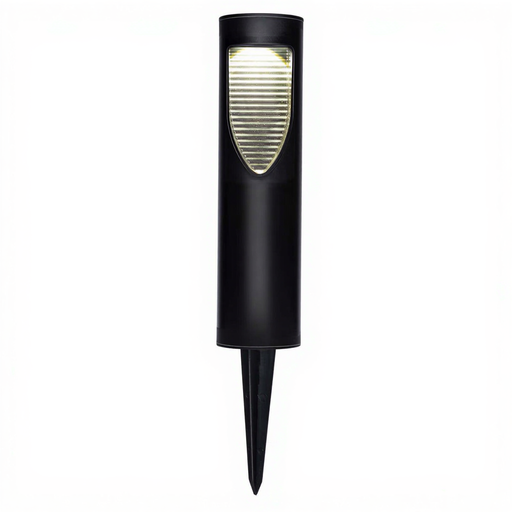
Why this product suits this profile: This freestanding solar light does not require a fixed electrical installation and is designed for simple accents along paths, in flowerbeds or on a patio.
The product details specify solar power, an integrated 600 mAh Ni-MH battery and an IP44 rating. This makes it possible to assess charging and weather-protection requirements before purchase.
Warm white SMD LED light, automatic activation at dusk and a height of 31 cm.
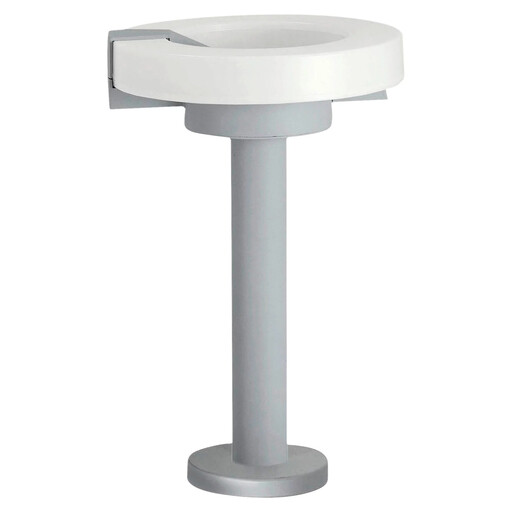
Why this product suits this profile: This bollard light is intended for paths, lawns and driveways, combining a sturdy housing with a higher IP rating.
The IP65 rating is more specific than the general term “weather-resistant”. A glass diffuser and sturdy base plate are also specified.
3000 Kelvin, 470 lumens and an E27 socket according to the product description; the integrated LED module is specified as non-dimmable.
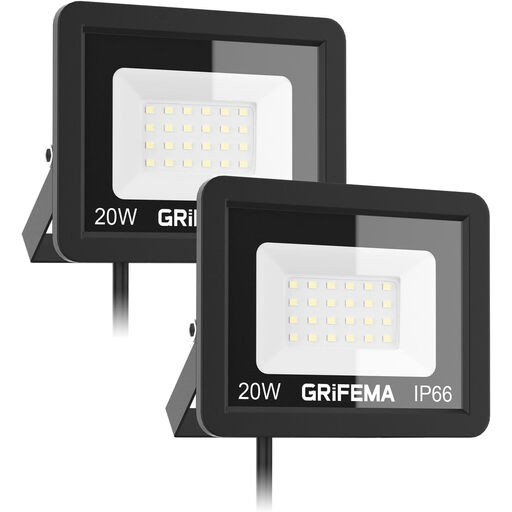
Why this product suits this profile: This set of two is aimed at users who want to illuminate gardens, garages, courtyards or work areas with a higher light output.
The total output of 2200 lumens and IP66 rating clearly specify both light output and protection level. However, the lights require a power source; the set is described as being supplied without a plug.
20 watts per floodlight, 6500 Kelvin and a bracket adjustable through 180 degrees.
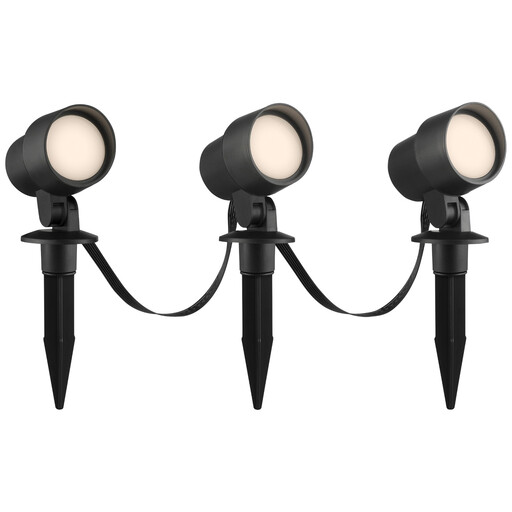
Why this product suits this profile: This set is suitable for users who want to control several areas via an app or voice assistant and switch between CCT and RGB lighting.
Tuya Smart compatibility, dimming, RGB and adjustable colour temperature are all expressly specified. Before purchasing, check whether the transformer and power connection are included.
Three spike lights, app and voice control, plus IP44 protection for outdoor use.
We have put together a complete, regularly updated list of products that fully meet these strict selection criteria and the safety regulations applicable in the EU.
This depends on the light coverage, spacing and the level of brightness you want. Decorative solar ground lights are often installed at shorter intervals. For safe visibility, steps, bends and uneven surfaces should be visible as evenly as possible, rather than illuminated only in isolated spots.
The service life depends on the LED module, battery, switching cycles, temperature and weather conditions. Some products, for example, specify a nominal LED lifespan of 15,000 hours. This figure does not automatically describe the service life of the entire light. With integrated LEDs, the complete light usually needs to be replaced if a fault occurs.
Solar lights do not use mains electricity while operating, but their run time depends on the amount of daylight available. Mains-powered LED lights generally have low power consumption, but incur ongoing costs when used for longer periods. Timers, motion sensors or smart schedules can limit the operating time. The key factors are the stated wattage, daily operating time and number of lights installed.