
Lieferung heute & morgen

Qualitätsgarantie

Willkommens-Angebote freischalten: KOSTENLOSE Lieferung | Bis zu 80 % RABATT | Kostenlose 30-Tage-JoyPlus-Testphase
App herunterladen
The right garden lighting can help you find your way, illuminate areas where you like to spend time or create decorative accents. In practice, however, a few common buying mistakes can lead to unnecessary costs: a solar light is placed in the shade, a decorative lamp is unsuitable for prolonged exposure to rain, or a smart garden light cannot be connected to your existing system.
This guide explains which technical details matter when choosing garden lights, LED spotlights, solar lights and outdoor wall lights. You’ll then find a selection to suit different needs.
The IP rating describes how well a light is protected against dust and water. IP44 includes protection against splashing water from different directions. However, a light with this rating must not be submerged in water. IP65 means the light is dust-tight and protected against water jets. Even an IP65 garden light is not suitable for prolonged submersion.
IP44 may be sufficient for covered patios, balconies or seasonal decorations. For freestanding lights, garden spotlights and areas with irrigation systems, the specific installation location is what matters.
Solar lights in the garden need a spot that receives direct sunlight. Charging may be significantly less effective under trees, against a north-facing wall or beside tall buildings. Claims such as ‘up to 8 to 12 hours’ depend on the charge level, time of year, shade and battery age.
Before you buy, check:
Smart garden lighting needs more than just an app. Check the Wi-Fi band it uses, whether a hub is required and which platforms it supports. Some Wi-Fi garden lights only work with 2.4 GHz networks. For Matter lights, check that your existing smart home system supports Matter and whether you need any additional components for the controls you want to use.
First, consider where you’ll use the light. Outdoor wall lights are often a good choice for entrances and covered outdoor areas. Garden spotlights with ground spikes are suitable for lawns, flowerbeds and trees. Position path lights so they illuminate the walkway without shining into your eyes.
The mounting surface must be stable. A ground spike will sit differently in loose soil than in compacted ground. A 220-volt light must be installed by a qualified electrician in accordance with the product instructions and local regulations.
Colour temperature is measured in kelvins:
Brightness is measured in lumens and energy consumption in watts. An integrated 11 W LED with 950 lumens is used differently from a small solar light with an output of just a few milliwatts. Dimming, beam angle and adjustable joints all affect how precisely you can direct the light.
Mains-powered LED garden lighting offers predictable operating times, but requires a suitable power supply. Solar lights work without a fixed electrical connection, but are more dependent on the weather and their location. Battery-powered decorative lights can be placed wherever you like, but you’ll need to factor in battery replacement and storage outside the season.
Also check cable lengths, connection types, whether ground spikes are included and how the lights can be secured safely.
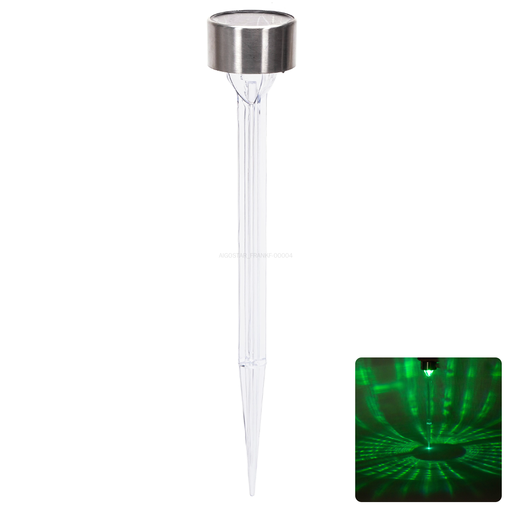
Why this product suits this need: This solar light pushes straight into soft ground and doesn’t need a fixed power connection. It’s suitable for paths, flowerbeds and small lawns that receive direct sunlight.
The specifications include charging time, battery capacity and IP44 rating. This makes it easier to compare the intended location with the actual conditions before you buy.
RGB lighting, automatic on/off function and a stated lighting time of up to 8 to 12 hours.
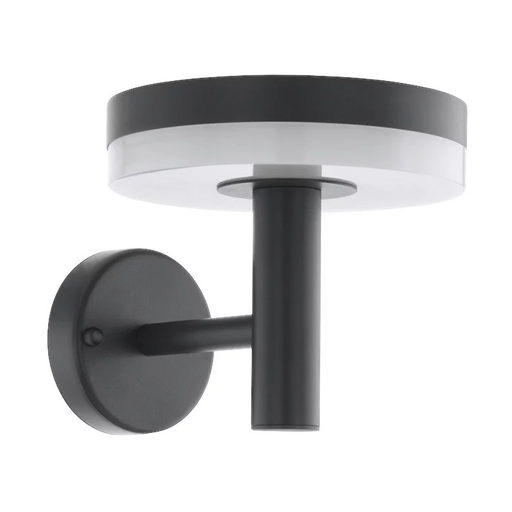
Why this product suits this need: The integrated LED unit and metal and plastic casing make this light a good fit for entrances, patios and outdoor spaces with clean architectural lines.
The figures for 950 lumens, 11 W and 3,000 K give you a clear idea of the light output and colour temperature before installation. Outdoor electrical connections should be installed by a qualified professional.
Warm white light at 3,000 K, 950 lumens and an anthracite finish with a white diffuser.
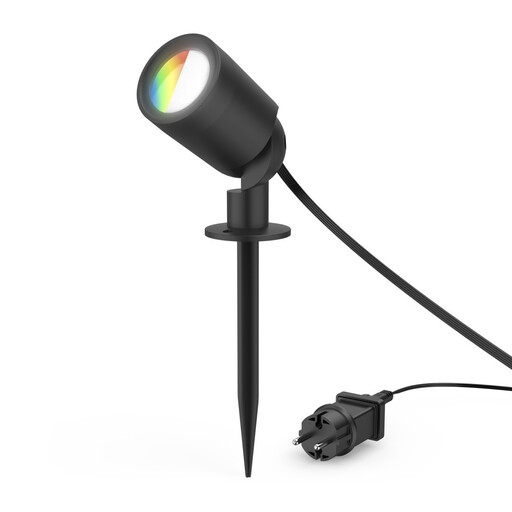
Why this product suits this need: For anyone looking to illuminate trees, façades or paths precisely and integrate the controls into a compatible smart home system.
Check that Matter support, 2.4 GHz Wi-Fi and the listed platforms are compatible with your system before you buy. IP65 does not protect against submersion.
7 W LED, stepless dimming, 16 million colours, adjustable beam angle and mounting with a ground spike or base.
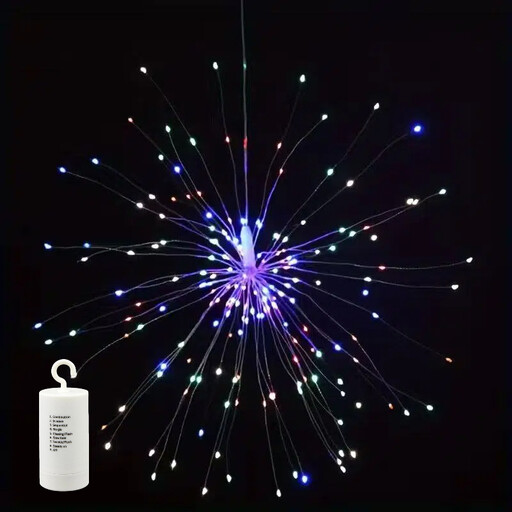
Why this product suits this need: With 90 coloured LEDs, this battery-powered decorative light is ideal for garden parties, patios and seasonal outdoor displays where there’s no fixed power connection.
The IP44 rating is clearly stated, and it’s clear that the light runs on four AA batteries. It isn’t described as fully waterproof, so it’s not suitable for prolonged exposure to the elements without shelter.
90 coloured LEDs, eight lighting modes, a memory function and 30 hanging points, with an overall height of 77 cm.
We’ve put together a complete, regularly updated list of products that meet these strict selection criteria and fully comply with the safety regulations in force in the EU.
Before installation, check cables, connectors and casings for visible damage. Mains-powered outdoor lights must only be used with the specified voltage. Disconnect the power supply before cleaning or carrying out maintenance. A soft, dry cloth is usually all you need to clean a solar panel. Harsh cleaning products can damage surfaces and seals.
For decorative battery-powered lights, it’s best to remove the batteries if you won’t be using them for a long time. Keep small parts and batteries out of the reach of young children. Dispose of electrical appliances and batteries in accordance with local regulations.
Path lights or low-positioned garden spotlights with controlled light distribution are suitable for paths. They should be stable, provide enough visibility and cause as little glare as possible. Solar lights can be used if the location receives several hours of direct sunlight.
Actual lifespan depends on operating time, heat dissipation, moisture, the power supply and the design. With integrated LEDs, bear in mind that the LED module cannot be replaced by the user in some models. Lifespan claims should therefore be considered alongside warranty information and the installation environment.
Energy use depends on wattage, daily operating time and brightness. A dimmable LED garden light can be run at reduced power. Schedules, motion sensors and automatic shut-off help prevent unnecessary running time. Wi-Fi lights also have a small standby power consumption for communication.