For sharing family videos from a garden office, an Ethernet connection to the office is the obvious choice if you can run a cable. Without one, the wireless node still needs a reliable connection to your home network from its chosen location. An outdoor node is only suitable if the device, mounting location and power supply are designed for it. If you’re sharing through an online service, consider your internet connection separately from your Wi-Fi.
Who is this solution for?
Families with a separate garden office
If you want to watch or share videos there, first work out how the connection between your home and garden office will be made. heise online and the F.A.Z. Kaufkompass highlight the importance of a strong connection between mesh nodes.
Homes with an outdoor installation
If a node needs to be installed outside the building, key factors to consider include the exact location, the stated operating environment and the power supply.
Families with an existing mesh network
If you want to keep your existing home network, look for a compatible node and the right operating mode for your system.
What should you look for when buying?
Ethernet backhaul
A good fit if: you can run a suitable cable to the garden office and connect the node there.
Consider: planning the cable route and entry point; you’ll still need Wi-Fi between the node and your device. heise online recommends a wired connection wherever possible.
Wireless mesh
A good fit if: you can’t run a cable and the planned node location still has a reliable connection to the upstream node.
Consider: the building layout and location affect the connection between nodes, so don’t place a wireless node right at the edge of Wi-Fi coverage.
| What matters |
What to check before buying |
Who should pay particular attention? |
| Connection between home and office |
Check the cable route and connections, or the signal at the wireless node’s actual location. For the wirelessly connected Deco X50-Outdoor, TP-Link gives a maximum distance of 15 m from the upstream Deco unit as a product-specific guideline. |
If I want to transfer videos between home and office, the node itself needs a reliable connection to the home network. Around 36% of consumers prioritise the backhaul connection between the buildings. |
| Suitability of the mounting location |
Decide whether the location is indoors, sheltered outdoors or exposed; check that the specific model’s protection rating, mounting options and power supply are suitable. |
If you need to mount the node outdoors, make sure the device and its power supply are suitable for the actual location. Around 29% of consumers prioritise suitability for outdoor installation. |
| Compatibility with your home network |
Check your existing mesh system and router model. For the exact setup, confirm compatibility and, if necessary, whether it supports LAN bridge or access point mode. |
If I want to keep using my existing network, the additional node needs to be compatible. Around 21% of consumers prioritise expanding their existing mesh network. |
| Internet upload speed when sharing |
Check whether you’re sharing videos locally over your home network or through an online service. For online sharing, investigate your internet connection and Wi-Fi separately. |
If you’re sharing videos through an online service, you’ll want to distinguish an internet connection bottleneck from a Wi-Fi problem. Around 14% of consumers prioritise sharing via online services. |
Common buying and planning mistakes
-
Assuming the advertised maximum Wi-Fi speed is what you’ll get in the garden office
Manufacturers’ specifications and the connection over a specific distance through parts of a building aren’t the same thing.
First, check the connection between the nodes and the signal where you’ll be working. Only compare specifications for the exact model.
-
Buying an outdoor node without checking how it connects
Connection options and power supplies vary by model. FRITZ! describes the FRITZ!Repeater 1610 Outdoor’s outdoor setup as a LAN bridge; eero requires at least PoE+ according to 802.3at for the Outdoor 7.
Before buying, check the backhaul connection, power supply and what’s included with the specific model.
Depending on the model, you may need a suitable cable route or a PoE+ power supply.
-
Trying to fix a slow internet upload with a new mesh system
Sharing through an online service also relies on your internet connection; a better Wi-Fi connection won’t change the speed of your broadband package.
Check your internet connection and Wi-Fi separately before replacing your network equipment.
Relevant brands and product ranges to consider
TP-Link
The Deco X50-Outdoor is worth considering as an outdoor node, particularly if you already have a Deco network or are planning an Ethernet backhaul.
- TP-Link lists an IP65 rating, PoE or AC power and compatibility with other Deco models for this device.
- When using it as a wireless satellite, take the connection to the upstream Deco unit at the specific location into account. Advertised coverage areas and data rates are no substitute for checking the signal in your garden office.
FRITZ!
The FRITZ!Repeater 1610 Outdoor could extend a FRITZ! Mesh network at a suitable, sheltered outdoor location.
- FRITZ! lists an IP54 rating and PoE+ for this model, and describes its outdoor setup as a LAN bridge with a network connection.
- Don’t plan to use the outdoor connection as a wireless extension across the gap between buildings.
ASUS
The ZenWiFi BD4 Outdoor is an AiMesh option for an outdoor location, particularly if you already have compatible ASUS equipment.
- For this specific model, ASUS lists an IP65 rating, AiMesh node and access point modes, and two 2.5 Gbit/s ports.
- The stated Wi-Fi speeds are theoretical manufacturer figures, not measurements of the connection between your home and garden office.
eero
The Outdoor 7 is designed as a weather-resistant addition to an existing eero network.
- eero lists an IP66 rating, a 2.5 Gbit/s Ethernet port and a required PoE+ connection according to 802.3at.
- According to eero, this Wi-Fi 7 model uses the 2.4 and 5 GHz bands, not 6 GHz. Power supply bundles vary.
Joybuy products for your garden office
These products include indoor mesh systems and an access point listed for indoor/outdoor use. Before choosing, check whether an indoor node at the required location will be enough or whether you need a device designed for the specific outdoor installation.
 No image available
TP-Link Deco BE22, mesh Wi-Fi 7 system (2-pack)
An indoor option for a location where a mesh node can be used in a dry interior space; don’t use it as an outdoor node.
Dual-band; two units; Gigabit Ethernet.
View at Joybuy
 No image available
Ubiquiti UniFi U6 Mesh WiFi 6 Indoor/Outdoor Access Point
For a location where an access point listed for indoor/outdoor use may be suitable; check the specific wireless setup for outdoor installation in advance.
Wi-Fi 6; 6 spatial streams; PoE adapter included according to the product name. For the outdoor installation described, position the LED side upwards and use the specified wall or pole mounting.
View at Joybuy
 No image available
TP-Link Deco M4, AC1200 mesh Wi-Fi system (1-pack)
A possible indoor option if you can run a cable to the node location and a single additional node is suitable for your existing Deco network. Not listed for outdoor installation.
Dual-band; Gigabit ports.
View at Joybuy
 No image available
TP-Link Deco X1500, AX1500 Wi-Fi 6 mesh system (2-pack)
Consider this indoor mesh system if you need several units to connect to your garden office. The description says to protect it from water and extreme temperatures.
Dual-band; two units; Gigabit ports.
View at Joybuy
 No image available
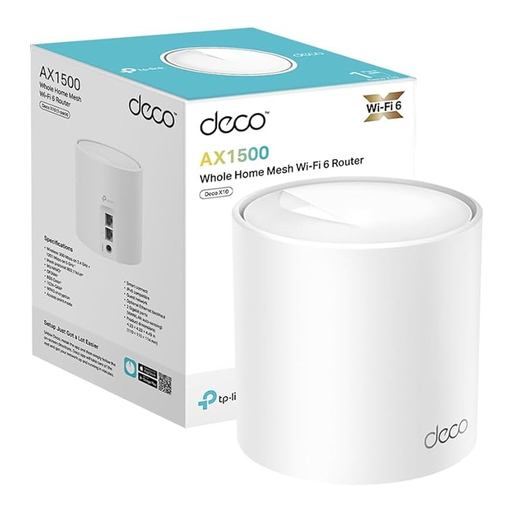
TP-Link Deco X10, AX1500 Wi-Fi 6 mesh unit (1-pack)
Consider this as an additional unit for an existing Deco mesh if an indoor node is all you need.
Dual-band; two Gigabit ports.
View at Joybuy
Frequently asked questions
Do I need a complete mesh system?
Not necessarily. First, check whether an extension that’s compatible with your existing network can reach the location you need. FRITZ! describes a LAN bridge for connecting a repeater to its mesh; TP-Link lists the Deco X50-Outdoor as an extension to an existing Deco network.
Where should I put a wirelessly connected node?
Place it where it still has a reliable connection to the upstream node, rather than right at the edge of Wi-Fi coverage. For the wirelessly connected Deco X50-Outdoor, TP-Link recommends a maximum distance of 15 m from the upstream Deco unit. This product-specific guideline doesn’t apply to every mesh system.
What extra equipment might I need for installation?
It depends on the model and how you connect it. eero requires at least a PoE+ power supply according to 802.3at for the Outdoor 7; eero says not every bundle includes a weatherproof adapter. If you’re using a wired connection, you’ll also need to plan the cable route and a suitable power supply.


