
Lieferung heute & morgen

Qualitätsgarantie

Willkommens-Angebote freischalten: KOSTENLOSE Lieferung | Bis zu 80 % RABATT | Kostenlose 30-Tage-JoyPlus-Testphase
App herunterladen
A garden saw needs to be more than just sharp. What really matters is whether it suits the diameter of the branches, the working height, and how often you’ll use it. Hobby gardeners often reach for a folding saw, while landscapers and homeowners with thicker branches tend to prefer an electric garden saw or mini chainsaw.
However, when buying, a few typical marketing claims can lead to poor decisions:
You can narrow down the choice by thinking about the work area first:
For a hand saw used on branches, blade length is an important guide. The folding saws in our range, for example, have blade lengths of 7 inches or 190 mm. A longer blade can help with larger branches, but needs enough room to manoeuvre.
A coarse tooth pattern can cut through wood and branches quickly, while a finer pattern allows more controlled cuts. For garden work, rust-resistant or hardened steel blades are a good idea. The material specification should be concrete, such as SK5 carbon steel, bi-metal or hardened steel.
With an electric garden saw, buyers should pay attention to voltage, battery capacity and compatibility. The FLORA GUARD mini chainsaw, according to product details, works with a 21-volt battery, delivers a stated power of up to 600 W and comes with two 3000 mAh batteries plus charger. The chain speed is given by the manufacturer as around 1.6 to 1.8 feet per second.
The SeeSii set includes two 4000 mAh batteries and claims a running time of up to 100 minutes. In practice, such runtime figures depend on factors including wood type, branch thickness, chain sharpness and pauses. So check whether spare batteries are available and whether the batteries are compatible with tools you already own.
A cordless chainsaw carries a higher risk of injury than a manual garden saw. Before use, the chain and guide bar must be correctly fitted and tensioned. According to the product description, the FLORA GUARD requires manual chain lubrication; chain oil is not included in the box. You’ll need to supply the oil separately before first use.
Also look out for:
For higher branches, a safe stance on the ground is preferable. A telescopic pole should not tempt you to overload the saw sideways or use it from an unstable body position.
The recommendations below differ in terms of drive, reach, features and maintenance requirements. The details are based on the respective product descriptions.
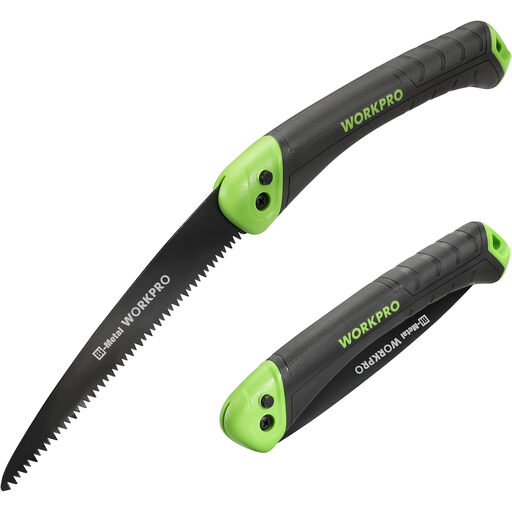
Why this product fits the profile: This manual folding saw needs neither battery nor charger, making it ideal for garden maintenance, camping and the odd cut on wood and branches.
The bi-metal construction is clearly stated. A locking mechanism and the folding design address the risk of an unsecured blade during transport.
Adjustable cutting angle, 230 mm length when folded and a TPR grip with non-slip surface.
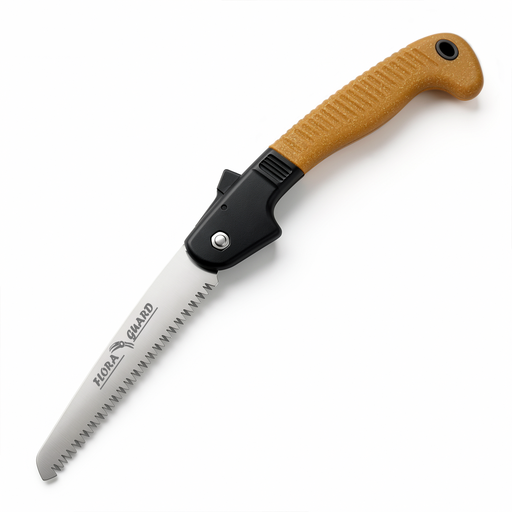
Why this product fits the profile: This tree saw combines a 7-inch blade made from hardened SK5 steel with a compact folding design for garden, bushcraft and outdoor use.
The material and blade length are clearly stated. The safety lock prevents the blade from staying open unintentionally during storage.
Hardened SK5 carbon steel blade, cork-TPR grip and 3D tooth pattern for wood and branches.
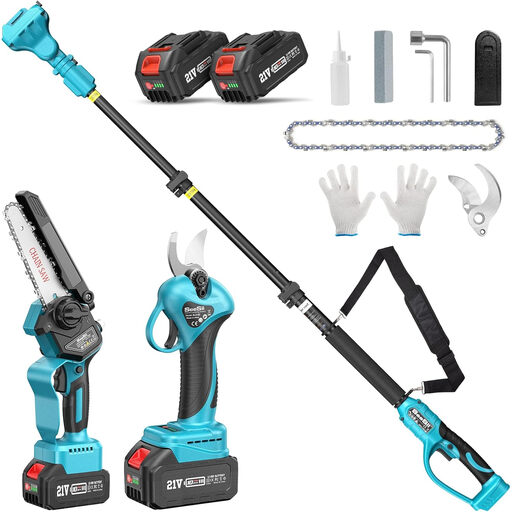
Why this product fits the profile: The set combines a mini chainsaw, electric secateurs, loppers and a telescopic pole for a range of garden maintenance tasks.
Tool-free chain tensioning, safety locks and a 30 ml oil tank make key operation and maintenance points clear.
Two 4000 mAh batteries, telescopic range from 1.49 to 2.74 m and a stated maximum reach of 4.57 m including your height.
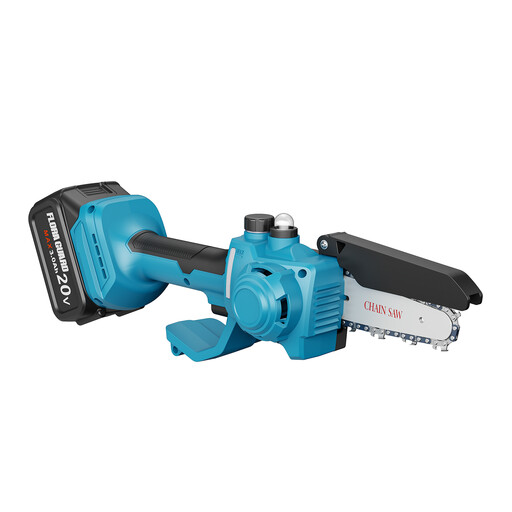
Why this product fits the profile: This compact cordless chainsaw is aimed at users who want to tackle several branches or pieces of wood and already use Makita-compatible batteries.
The product data states guide bar length, chain speed, battery format and the need for manual lubrication. Chain oil must be bought separately.
Brushless motor, 6-inch guide bar and two 3000 mAh Makita-compatible batteries with charger.
We’ve put together a full, regularly updated list of products that fully meet these strict selection criteria and the safety regulations in force in the EU.
For individual thicker branches, a robust pruning saw with a coarse tooth pattern is often enough. For many cuts, a mini chainsaw can reduce the workload. What matters here is the actual branch diameter, the guide bar length and safe handling. The manufacturer’s stated maximum cutting thickness should not be exceeded.
The lifespan depends on blade quality, wood type, dirt and storage. Resin and moisture should be removed after each use. The blade should be stored dry, and the lock should be checked regularly for a secure hold. If the teeth become blunt or damaged, it’s worth replacing the blade, provided the model allows for a replaceable blade.
Beyond the purchase price, there are costs for electricity, chain oil, replacement chains and possibly spare batteries. A manual garden saw needs no chain oil and can be more economical for occasional cuts. With regular use, you should check whether replacement chains and compatible batteries are available, and what maintenance intervals are specified in the instruction manual.