
Lieferung heute & morgen

Qualitätsgarantie

Willkommens-Angebote freischalten: KOSTENLOSE Lieferung | Bis zu 80 % RABATT | Kostenlose 30-Tage-JoyPlus-Testphase
App herunterladen
Solar lights for the garden promise effortless and atmospheric lighting without electricity costs or complex wiring. Yet, the reality is often different: lights that fail after the first rainfall, an illumination time that barely lasts past dusk, or materials that turn brittle after just one season. Before you make a decision, it's crucial to understand the most common pitfalls that can lead to disappointment.
This guide focuses on the objective features that distinguish a reliable solar light from a useless one. We'll shine a light on the three most common buying mistakes:
To make an informed choice, let technical specifications—not marketing promises—be your guide. Three parameters are essential for the longevity and functionality of your solar garden lighting.
The IP (Ingress Protection) rating is a standardised measure of an enclosure's protection against the ingress of foreign objects and water. For outdoor use, two ratings are particularly relevant:
The illumination time depends directly on the battery's capacity (measured in milliampere-hours, mAh) and the solar panel's performance. A large battery is useless if the panel is too small or inefficient to fully charge it on an average sunny day. Look for a balanced ratio. Models with larger, polycrystalline or monocrystalline solar panels generally offer higher charging efficiency, which is crucial, especially in spring and autumn. This is a key factor for reliable patio lighting or for solar lights on a balcony.
The colour of the light significantly influences the mood. Warm white light (typically below 3300 Kelvin) creates a cosy and inviting atmosphere, ideal for seating areas and as outdoor decorative lights. Cool white light (above 5300 Kelvin) has a more modern, brighter feel and is well-suited for illuminating pathways. Many models, especially modern outdoor solar string lights, also offer various lighting modes such as flashing, dimming, or flickering to create specific accents.
Based on these objective criteria, we have identified several products that represent a considered choice for specific use cases.
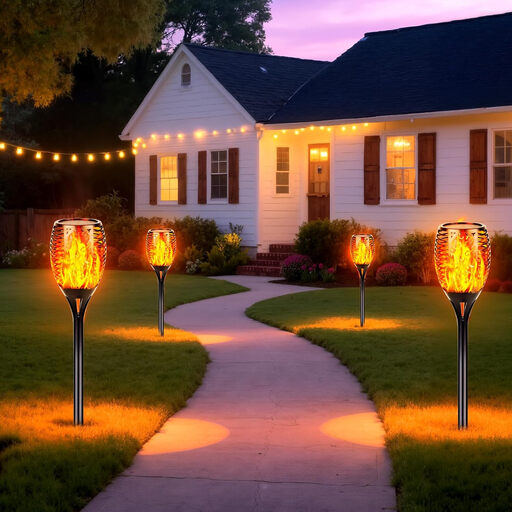
Why This Fits Their Persona: Ideal for users who want to create a dynamic and warm atmosphere. The realistic flame effect of these solar garden torches is perfect for marking pathways or creating a cosy ambience on the patio.
With an IP65 rating, this model is protected against water jets, thus avoiding the trap of inadequate water resistance. It is designed for year-round use.
The dancing flame effect, created by 96 LEDs, provides a particularly authentic look. The automatic on/off function offers added convenience.

Why This Fits Their Persona: Suitable for users looking for a robust and reliable set of solar string lights for permanent outdoor use. The combination of solid construction and high battery capacity makes it a dependable choice.
With a 1200mAh lithium battery and a specified charging time of 4-6 hours for up to 12 hours of light, it provides clear and verifiable performance data, countering the pitfall of unrealistic runtime claims.
The IP65 rating ensures high weather resistance. Eight different lighting functions offer creative flexibility for garden or patio lighting.

Why This Fits Their Persona: This 2-pack is a flexible solution for renters or owners of smaller outdoor spaces. The pliable copper wire can be easily wrapped around balcony railings, plants, or draped in jars to create a cosy atmosphere.
Despite its accessible price point, this set offers IP65 certification. This helps avoid the material and manufacturing lottery that often leads to quick failures in cheaper alternatives.
The set includes two separate 8-metre string lights, allowing for versatile decoration in different locations. The memory function remembers the last selected lighting mode.
We have compiled a complete, up-to-date list of products that fully meet these strict selection criteria and rigorous safety standards.
The illumination time of solar lights is reduced in winter due to shorter days and the lower angle of the sun. Models with high-efficiency solar panels and large-capacity batteries (e.g., over 1000 mAh) perform better in these conditions. A realistic expectation for most models is a few hours of light per night in winter, whereas in summer, 8 hours or more can be achieved.
The IP rating indicates how well a light is protected against the ingress of dust and water. The first digit represents protection against foreign objects (dust), and the second represents protection against water. For garden use, IP44 (protection against splashing water) is the minimum. For greater reliability, especially in heavy rain or snow, an IP65 rating (protection against water jets) is recommended.
Yes, minimal maintenance is key to ensuring their function. The most important task is to regularly wipe the solar panel with a soft cloth to remove dust, pollen, leaves, or snow. A clean surface is crucial for maximum energy absorption and, consequently, a long illumination time. You should also occasionally check that the lights are still securely anchored in the ground.