
Lieferung heute & morgen

Qualitätsgarantie

Willkommens-Angebote freischalten: KOSTENLOSE Lieferung | Bis zu 80 % RABATT | Kostenlose 30-Tage-JoyPlus-Testphase
App herunterladen
By the Joybuy Product Recommendation Officer, August 28, 2026
Solar lights for the garden promise simple, cost-effective, and atmospheric lighting with no wires and no electricity bill. But the reality is often quite different: after just a few weeks, the lights are dim, flickering, or fail completely after the first heavy rain. Many buyers feel misled by exaggerated advertising claims.
This guide shows you what really matters. We'll highlight the most common pitfalls and explain the crucial technical features, so you can make an informed decision for your outdoor lighting—whether it's for a balcony, a patio, or your entire garden.
Before diving into product selection, it's helpful to understand the typical flaws that lead to a bad purchase. Often, it's the subtle details in the product description that determine durability and performance.
To avoid these pitfalls, you should carefully examine three technical specifications. These provide reliable indicators of a solar light's quality and suitability for your needs.
The IP (Ingress Protection) rating indicates how well an electrical device is protected against the ingress of foreign objects and water.
The battery is the heart of every solar light. Pay attention to its type and capacity:
Not all solar panels are created equal. The type of panel determines how effectively sunlight is converted into energy, especially on less sunny days.
Instead of a one-size-fits-all recommendation, we have selected products for different needs and locations. Each pick takes the quality criteria mentioned above into account.
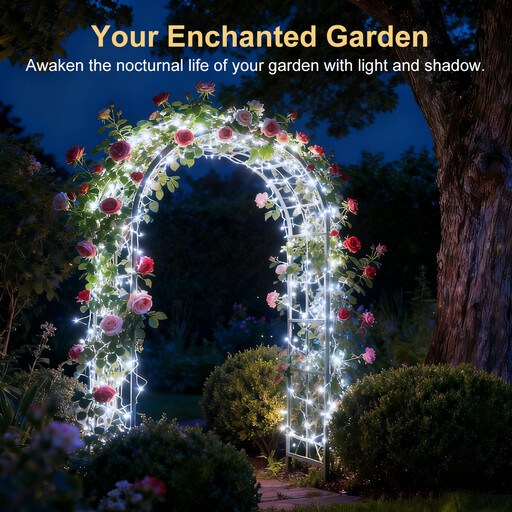
Why This Fits Their Persona: Ideal for users looking for flexible and hassle-free outdoor solar decor. Perfect for effortlessly decorating railings on a solar-lit balcony, shrubs, or vases with an atmospheric outdoor solar string light.
With an IP65 rating, this string light is protected against heavy rain, thus avoiding the pitfall of poor waterproofing that renders many decorative lights useless.
The flexible copper wire can be easily bent into any desired shape. Eight different lighting modes with a memory function offer creative versatility.
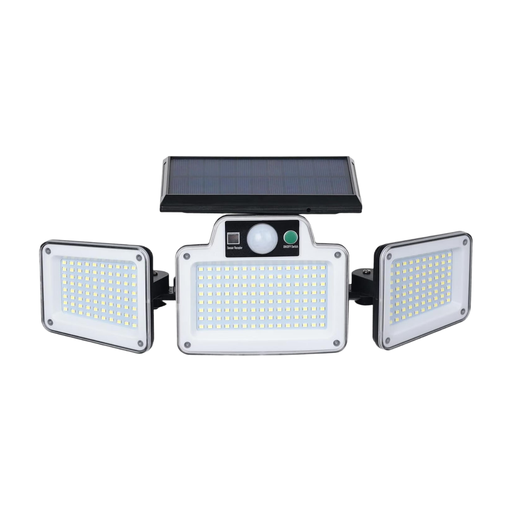
Why This Fits Their Persona: For homeowners who need reliable and bright solar garden lighting for driveways, garages, or dark corners of the garden. The focus here is clearly on functionality and security.
This model avoids the low-performance trap with a separate, large solar panel that ensures efficient charging of the 2400mAh battery. The IP65 rating also guarantees weather protection.
Three adjustable heads and 280 LEDs allow for wide and targeted illumination. The motion sensor with three modes and a remote control offers flexible settings for security and convenience.
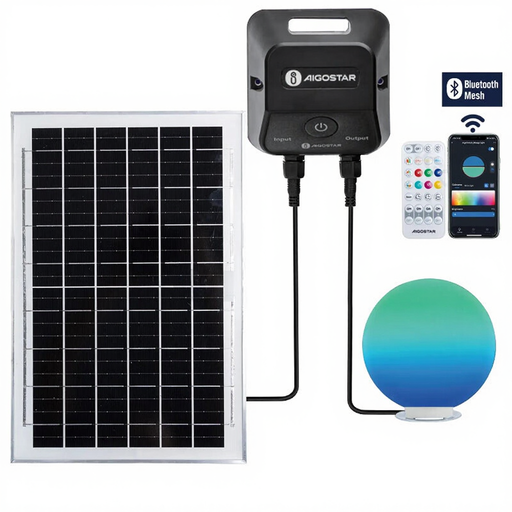
Why This Fits Their Persona: For tech enthusiasts who want to intelligently control their solar patio lighting or garden illumination. Ideal for creating lighting scenes with color changes and dimming functions via an app.
This premium model relies on high-quality components: a large monocrystalline solar panel (12W) and an extremely powerful 8000mAh LiFePO4 battery. This refutes the assumption that solar lights are always dim and short-lived.
Control via Bluetooth Mesh allows for networking over 200 devices. The RGBCCT function permits a free choice of colors and color temperatures (2700K-6500K). According to the manufacturer, the runtime is up to 24 hours.
We have compiled a complete, up-to-date list of products that fully meet these strict selection criteria and safety standards.
The lifespan depends on the quality of the components. The LEDs themselves often have a lifespan of 15,000 hours or more. The critical factor is the battery. High-quality Lithium-Ion or LiFePO4 batteries typically last 2-4 years before their capacity noticeably decreases. Inexpensive NiMH batteries often need to be replaced after just 1-2 years.
Yes, but with reduced performance. Modern solar lights, especially those with monocrystalline panels, can charge even in diffuse light. However, the runtime will be shorter in winter than in summer. Models with large, efficient panels and high-capacity batteries are better suited for year-round use.
That depends on the IP rating. Lights rated IP65 or higher are designed for year-round outdoor use and do not need to be brought inside. Models with a lower rating (e.g., IP44) should be stored in a sheltered location during heavy frost or continuous rain to extend their lifespan. It can also be a good idea to turn the lights off during winter when not in use to preserve the battery.