
Lieferung heute & morgen

Qualitätsgarantie

Willkommens-Angebote freischalten: KOSTENLOSE Lieferung | Bis zu 80 % RABATT | Kostenlose 30-Tage-JoyPlus-Testphase
App herunterladen
Solar lights for the garden promise a simple and energy-efficient way to illuminate paths, accentuate patios, and provide more security—all without laying cables or incurring electricity costs. But the reality is often different: lights that fail after the first heavy rain, a disappointingly short illumination time, or materials that become brittle after one season.
To help you with your selection, we'll highlight the most common pitfalls and explain which technical features really matter. This will enable you to make an informed decision that suits your needs.
To separate the wheat from the chaff, you should check three core technical parameters. These provide objective information about the quality and longevity of a solar lamp.
The IP (Ingress Protection) rating is an international standard that classifies the suitability of electrical devices for various environmental conditions. For outdoor solar lights, two values are particularly relevant:
The performance of a solar lamp is determined by the interplay between the solar panel and the battery.
Modern solar garden lighting offers various modes for different purposes. Consider which function you need:
Here are some recommendations tailored to different user profiles that take the above criteria into account.
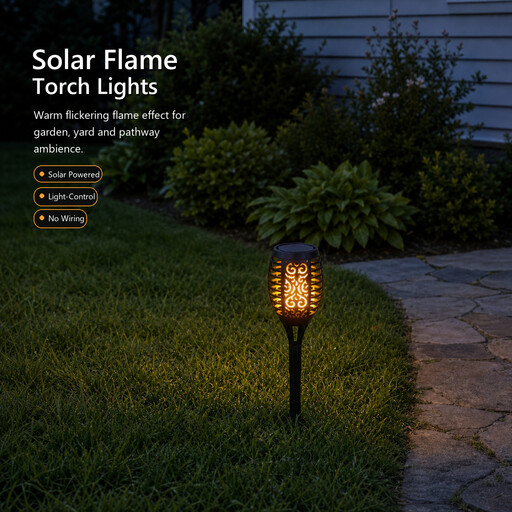
Why This Fits Their Persona: Ideal for users who want to create an atmospheric and decorative ambiance on the patio, in flower beds, or for garden parties. The realistic flame effect provides a warm atmosphere without fire hazards or installation.
With an IP65 waterproof rating, this model is explicitly protected against water jets, making it far more robust against rain than many purely decorative lights with a lower protection class.
Comes in a practical 4-pack for a uniform garden design. The automatic on/off function via a dusk-to-dawn sensor ensures convenient operation.
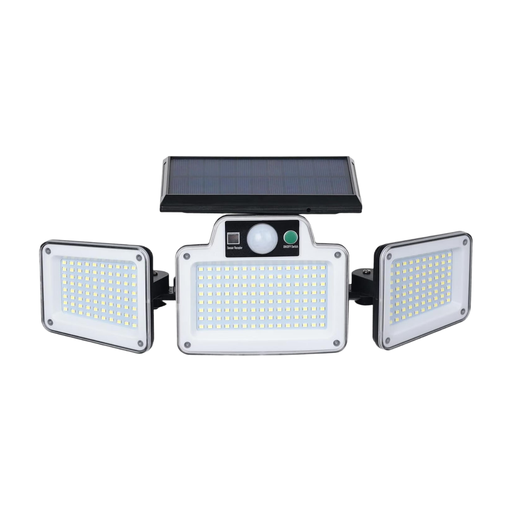
Why This Fits Their Persona: Perfect for homeowners who need bright, reliable lighting for driveways, garages, and dark corners to increase security. The separate solar panel allows for optimal alignment with the sun, regardless of where the light is mounted.
This model addresses the problem of insufficient brightness with 280 LEDs and a 2400mAh battery. The three operating modes, controllable via remote, ensure needs-based and efficient light output.
Three flexibly adjustable light heads allow for precise illumination. Its function as a solar spotlight with a motion detector enhances security while saving energy.
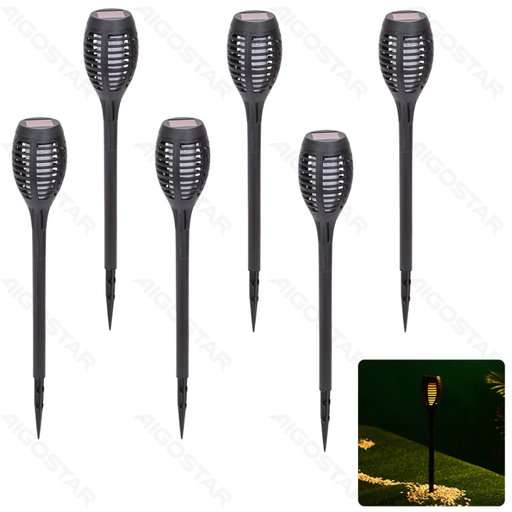
Why This Fits Their Persona: Ideal for anyone looking to provide continuous, subtle lighting for garden paths, borders, or lawn areas. The 6-pack allows for cost-effective and uniform design over longer distances.
This set addresses the problem of short runtimes by being designed for a reliable 8-12 hours of operation on a full charge. The specified LED lifespan of 15,000 hours (according to Aigostar) indicates durable components.
The warm white light (2700K) provides pleasant, glare-free path lighting. Delivery as a 6-pack is practical and economical for outfitting paths and flower beds.
We have compiled a complete, up-to-date list of products that fully meet these strict selection criteria and safety standards.
The lifespan depends on two main components. The LED garden lights themselves are very durable and can last for 15,000 to 50,000 operating hours. The limiting factor is usually the rechargeable battery. Depending on its quality and the number of charge cycles, it has a lifespan of about one to three years. On some models, the battery can be easily replaced, which extends the service life of the entire light.
Yes, but with limitations. The shorter days and lower position of the sun in winter mean that the solar panel can absorb less energy. Consequently, the illumination time at night will be shorter. For year-round use, models with highly efficient, large solar panels and high-capacity batteries are preferable. A mode with a motion detector is particularly useful in winter, as the light only uses its full power when needed, thus saving energy.
The IP (Ingress Protection) code indicates how well an enclosure is protected against the ingress of foreign objects (first digit) and water (second digit). For outdoor solar lights, these are the most important levels: