
Lieferung heute & morgen

Qualitätsgarantie

Willkommens-Angebote freischalten: KOSTENLOSE Lieferung | Bis zu 80 % RABATT | Kostenlose 30-Tage-JoyPlus-Testphase
App herunterladen
Garden solar lights don’t need a mains connection and can usually be installed without tools. However, not every light will provide the right illumination. The key factors are where you’ll use it, how well it can charge, its IP rating and its light colour – not just an eye-catching design or a high number of hours on the packaging.
Claims such as “up to 8–12 hours” assume plenty of sunshine and a fully charged battery. In the shade, in cloudy weather or during winter, the actual run time may be shorter. Wherever possible, position your solar light where the panel will receive several hours of direct sunlight.
The IP44 rating indicates protection against solid objects larger than 1 millimetre and splashes of water from different directions. It doesn’t mean a light can be left standing in water or submerged. For paths, flower beds and lawns, it’s also important to make sure the light is firmly secured in the ground and won’t be damaged by waterlogging or frost.
RGB solar lights and lights with a bubble-stick design create colourful or decorative accents. For steps, driveways and frequently used paths, a clearly visible position, good light distribution and a suitable light colour matter more. Warm white solar lights tend to create a softer feel in seating areas, while more neutral or cooler light colours can bring out edges and contours more clearly.
Before you buy, check the stated IP rating and the permitted operating temperature. For example, several available products are listed as IP44 for outdoor use, with an operating temperature range of -10 °C to 50 °C. These lights are designed to withstand splashes, but should not be submerged in water.
Solar path lights and plug-in solar lights need a suitable surface. A ground stake can be pushed into soft soil or a lawn, but hard, stony ground can make installation difficult. For recessed solar ground lights, also check that the design is intended for flush installation.
Check these three related specifications:
A larger battery capacity alone doesn’t guarantee a longer run time. Panel size, light output, temperature and shade can all affect performance. Clean the solar panel regularly with a soft, damp cloth. Abrasive cleaners can damage its surface.
Colour temperature is measured in kelvins. 2700 K gives a warm white light, while 6500 K is a noticeably cooler shade of white. RGB solar lights cycle through different colours and are best suited to decorative areas.
Depending on the model, smart solar lights with Bluetooth Mesh and app controls may let you adjust brightness, set schedules, change colours or group lights together. Check the range, whether a hub is needed and compatibility with the app you plan to use. Smart controls are especially useful if you want to manage several lights together.
The models below vary in their light colour, design, controls and technical specifications. We’ve matched them to particular uses without claiming they represent an overall ranking.

Why this product suits this use: This compact plug-in solar light is designed for paths, driveways and lawn edges, with no cable connection needed. Its black housing and 34 cm height help it blend discreetly into existing garden spaces.
Automatic activation at dusk means less hands-on control. The built-in solar panel charges the specified AAA battery during the day, but the light should still be placed in direct sunlight.
Two LEDs, a height of 34 cm and a weight of 402 g according to the product details; easy to install using the ground stake.
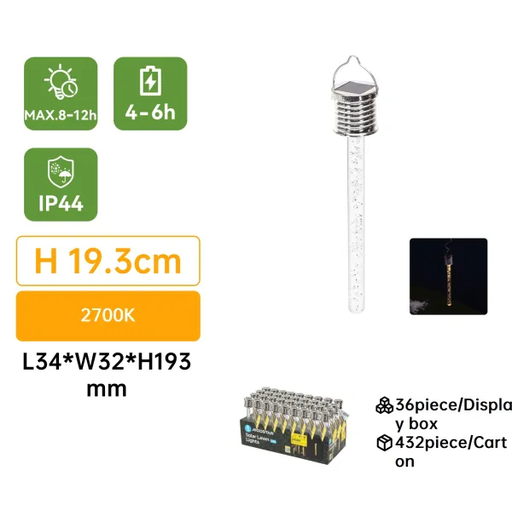
Why this product suits this use: The warm white light at 2700 K is well suited to patios, flower beds and decorative seating areas where you want a softer glow.
The specified colour temperature gives you a clear idea of the light’s effect. The IP44 rating indicates protection against splashes, not suitability for submersion.
Warm white at 2700 K, 40 mAh NiMH battery, stated charging time of 4–6 hours and light duration of 8–12 hours under suitable conditions.
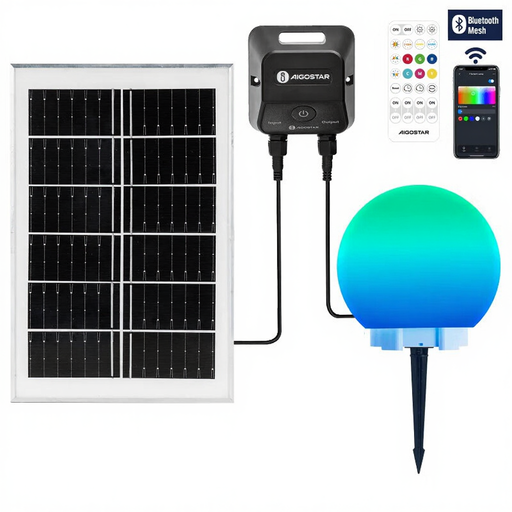
Why this product suits this use: This model is for buyers who want to group several smart solar lights using the AigoSmart app, set schedules or switch between coloured and white light.
The specifications include Bluetooth Mesh, app controls and a range of 2700–6500 K. Before buying, check whether you’ll need a hub and whether the range will cover your garden.
RGB+CCT light, app controls, grouping via Bluetooth Mesh and stated IP54/IP44 ratings.
We’ve put together a complete, regularly updated list of products that meet these strict selection criteria and the applicable EU safety regulations.
Where possible, point the solar panel upwards and place it somewhere unshaded where it will get several hours of direct sunlight. Trees, walls and covered areas can reduce charging performance. Push ground stakes into soft, stable soil; if the ground is very hard, don’t try to force them in.
Their lifespan depends on the battery, materials, charging conditions and maintenance. Product claims such as 8–12 hours of light refer to suitable conditions. Batteries may lose capacity after extended use. They can only be replaced if the product is designed for this and its safety instructions allow it.
When switched on, solar lights draw their power from the battery charged during the day. They don’t need a mains connection. So they don’t incur running costs from mains electricity, although you may later need to pay for replacement batteries or a new light.