
Lieferung heute & morgen

Qualitätsgarantie

Willkommens-Angebote freischalten: KOSTENLOSE Lieferung | Bis zu 80 % RABATT | Kostenlose 30-Tage-JoyPlus-Testphase
App herunterladen
By the Joybuy Product Recommendation OfficerPublished August 28, 2026
Solar lights for the garden promise a simple and cost-effective way to illuminate paths, accentuate flowerbeds, and enhance security—all without the hassle of wiring or electricity bills. However, the market is flooded with products whose real-world performance often fails to match the promises on the packaging. Before you invest, it's crucial to understand the common pitfalls to avoid disappointment.
Many buyers report lights that lose their brightness after just a few weeks, fail to survive the first heavy downpour, or have a battery life that barely lasts for a short summer evening. These problems can often be traced back to three core issues:
To make an informed decision, you should check three technical specifications. These are the primary determinants of the performance and longevity of your solar-powered garden lighting.
The IP (Ingress Protection) rating indicates how well an electrical device is protected against the entry of foreign objects (first digit) and water (second digit). For outdoor use, the following values are relevant:
The performance of a solar light depends directly on the quality of its solar panel and the capacity of its battery.
The lighting effect is determined by two values:
Instead of making a one-size-fits-all recommendation, we have selected models tailored to specific use cases and requirements.
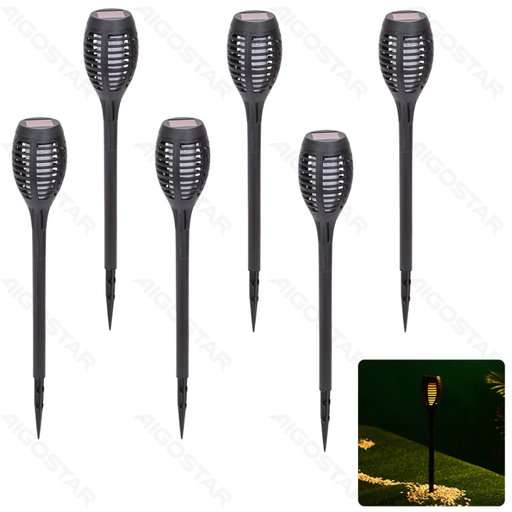
Why This Fits Their Persona: Ideal for garden owners looking to create an atmospheric setting on a tight budget. The 6-pack allows for designing paths or flowerbeds with a warm, flickering light reminiscent of torches.
The product states a realistic runtime of 8–12 hours after a 4–6 hour charge. Its IP44 certification is sufficient and honestly declared for its purpose as a decorative solar ground stake for flowerbeds or along patios.
Warm white flame effect (2700K) for a welcoming atmosphere; convenient set of six lights for uniform garden design.
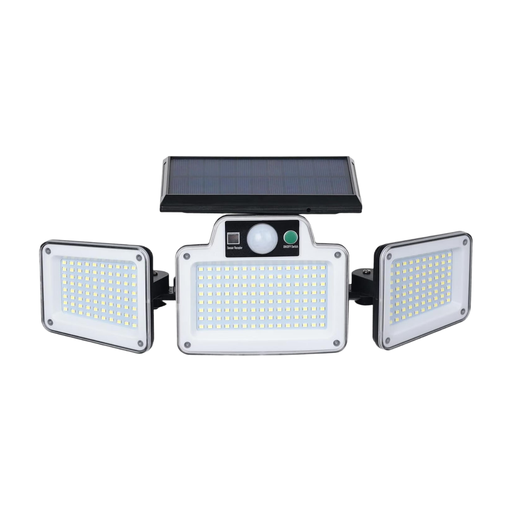
Why This Fits Their Persona: Perfect for anyone needing to reliably illuminate dark areas like driveways, garages, or home entrances. The motion sensor activates the bright light only when needed, which saves energy and acts as a deterrent.
This floodlight delivers high brightness suitable for security purposes with its 280 LEDs. The IP65 rating ensures functionality in all weather. The separate solar panel with a long cable allows for optimal sun exposure, even if the light itself is mounted in a shaded area.
Three adjustable light heads for wide coverage; three operating modes (including constant-on and sensor mode) selectable via remote control.
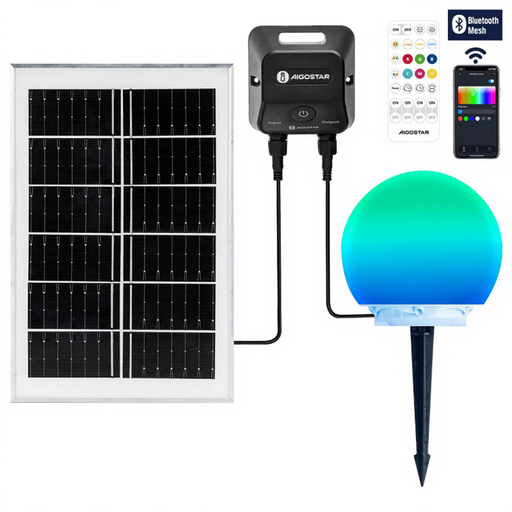
Why This Fits Their Persona: For users who want full control and custom lighting scenes. With Bluetooth-Mesh technology, over 200 lights can be controlled simultaneously via a smartphone app to implement complex and dynamic lighting concepts in the garden.
This model goes far beyond basic functions. Its RGBCCT (full-colour and tunable white light) technology and app control offer precise customisation that standard lights lack. The IP65 rating and monocrystalline panel ensure the longevity of its advanced technology.
Control brightness, colour (RGB), and colour temperature (2700K–6500K) via app; link multiple lights for synchronised effects.
We have compiled a complete, real-time list of products that fully satisfy these strict selection criteria and UK safety regulations.
The lifespan of a solar light is determined by two components. The LEDs themselves have a very long life, often between 15,000 and 30,000 operating hours. The limiting factor is usually the battery. Depending on its quality and usage patterns, its capacity will noticeably decrease after about 2 to 4 years. On some models, the battery can be replaced, which extends the life of the entire unit.
Yes, but with reduced performance. Modern solar garden lights, especially those with high-efficiency monocrystalline panels, can also charge in diffuse light. However, the charging power is lower than in direct sunlight. This results in a shorter runtime at night during winter and on overcast days. Models with large batteries and efficient panels have a clear advantage here.