
Lieferung heute & morgen

Qualitätsgarantie

Willkommens-Angebote freischalten: KOSTENLOSE Lieferung | Bis zu 80 % RABATT | Kostenlose 30-Tage-JoyPlus-Testphase
App herunterladen
Garden solar lights should work without a mains connection, be easy to position and provide reliable light after dark. In practice, though, how well they perform depends largely on their location, IP rating and battery capacity. If you focus only on design or the stated run time, you could end up with a light that barely charges in the shade or isn’t suitable for the conditions where you plan to use it.
Claims such as ‘8 to 12 hours’ are based on suitable charging conditions. A small solar panel needs as much direct sunlight as possible during the day. Under trees, against a north-facing wall or in areas that are always shaded, it may store less energy. Before buying, check that the solar panel has a clear view of the sky and won’t be blocked by buildings or plants.
IP44 solar lights are protected against solid objects larger than 1 millimetre and splashing water from different directions. This doesn’t mean they can be left in water or exposed to heavy rain for long periods. They can be used on lawns, in flower beds and along paths if installed appropriately, but shouldn’t be placed in hollows where water collects.
RGB solar lights, flame-effect lights and warm-white solar lights are mainly designed to create atmosphere. Their low power consumption makes them suitable for decorative use, but they won’t necessarily provide enough light for steps, driveways or work areas. For safe visibility, brightness, beam angle and the position of the light matter more than the number of lights alone.
A clearly stated IP rating is important for outdoor use. IP44 is suitable for many sheltered garden areas and paths, provided the lights aren’t standing in water. Products with a higher IP rating may be more suitable for locations exposed to harsher conditions. You should also check the stated operating temperature range. Some of the models featured here are designed for -10 °C to 50 °C.
A stated charging time of around 4 to 6 hours refers to suitable conditions. Actual run time depends on the season, weather, orientation and shade. The models featured here are listed as providing 8 to 12 hours of light, depending on the version. Built-in Ni-MH batteries shouldn’t be opened or replaced with just any battery.
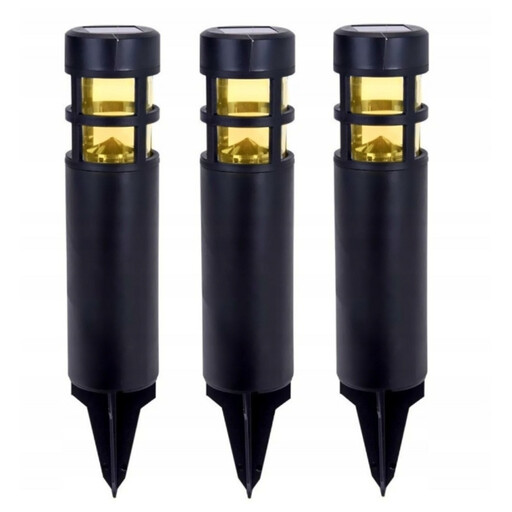
Why this product suits this need: This three-piece set is a simple choice for small paths, flower beds or a balcony. Position the lights in direct sunlight and they’ll switch on automatically at dusk.
The clearly stated number of lights makes planning easier and helps you avoid expecting a few individual lights to cover a longer stretch.
Three lights, cordless placement and automatic on/off in suitable sunlight.
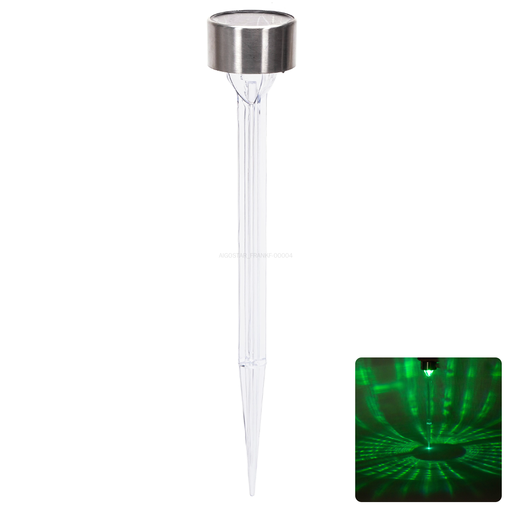
Why this product suits this need: This RGB version combines a sleek look with changing colours, making it suitable for garden paths, lawns and decorative accents.
The specifications include charging time, run time, IP44 rating and operating temperature, rather than focusing solely on decorative appeal.
RGB lighting, ground-spike installation, a Ni-MH battery, and stated charging and run times of 4–6 hours and 8–12 hours respectively.
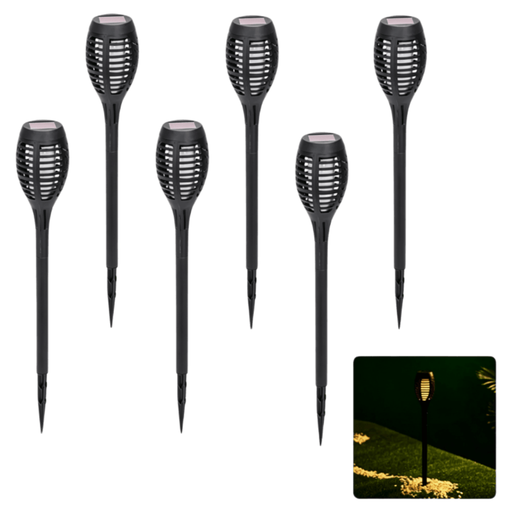
Why this product suits this need: This six-piece set is suitable for longer paths, borders or larger lawns. The flame effect and 2700 K warm-white light are designed for decorative evening lighting.
The product specifications clearly state the IP44 rating, making it clear that the lights shouldn’t be placed in water or used in conditions beyond the protection offered by that rating.
Six lights, 2700 K, stated charging and run times of 4–6 hours and 8–12 hours respectively, and a flame-light effect.
We’ve put together a comprehensive, regularly updated list of products that meet these strict selection criteria and fully comply with the safety regulations in force in the EU.
Solar lights with ground spikes should be placed in soft soil or a lawn. The spike isn’t designed to be driven into hard ground. Before using the lights for the first time, it’s a good idea to charge them fully, following the manufacturer’s instructions. Clean the solar panel regularly with a soft cloth, as dust and dirt can reduce the amount of light it absorbs.
Batteries and electronic components should be taken to the appropriate collection points when replaced or at the end of their useful life. Don’t continue using or open damaged lights.
Many models have a stated charging time of around 4 to 6 hours in suitable sunlight. Charging may be less effective in winter or cloudy weather, so a clear, sunny position matters more than the solar panel’s rated output alone.
IP44 solar lights are designed for many sheltered outdoor areas, including paths, flower beds and patios. They can withstand splashing water, but shouldn’t be left in puddles, submerged or used outside the stated temperature range.
They don’t need mains electricity during normal use, as the built-in battery charges from the solar panel during the day. Actual run time depends on sunlight, battery condition, temperature and shade.