
Lieferung heute & morgen

Qualitätsgarantie

Willkommens-Angebote freischalten: KOSTENLOSE Lieferung | Bis zu 80 % RABATT | Kostenlose 30-Tage-JoyPlus-Testphase
App herunterladen
Garden solar lights promise an easy way to illuminate outdoor spaces without mains electricity. But unclear information about brightness, battery life and weather resistance often leads to the wrong purchase. If you focus only on a high wattage or an attractive product photo, you may not spot important differences until after installation.
These three pitfalls are particularly common:
Light colour is measured in kelvins:
You should also check whether the light gives off a focused beam or illuminates a wider area. Lumen figures are more useful than wattage alone when making this comparison. If no lumen figure is provided, don’t assume the light will be powerful enough for practical illumination.
A solar panel needs as much direct sunlight as possible. Trees, house walls, balcony railings and canopies can all reduce its charging performance. If you choose a solar light with a ground spike, you can move it around as needed, as long as the ground is soft enough.
Check the following:
A separate solar panel can be an advantage with a solar floodlight, as you can position the light and panel independently. This is particularly useful on house walls, car ports or in shady parts of the garden.
A solar ground light or solar path light should be firmly secured in the ground. A short ground spike may be less suitable if you need to move the light regularly or the soil is loose. Lightweight stake lights are practical for lawns and flowerbeds; for hard surfaces, consider screw-fixed or freestanding options.
The IP rating describes protection against dust and water. IP44 is suitable for many sheltered outdoor areas and protection against splashing water. IP65 also protects against water jets from different directions, while IP67 includes temporary immersion under specified conditions. However, the IP rating is no substitute for correct installation: check the cables, housing and solar panel regularly for damage.

Why this product suits you: This compact stake light is ideal if you’re looking for a straightforward way to light your garden without mains electricity and want to mark paths or flowerbeds with pools of light.
The product description specifies two LEDs, an integrated solar cell and a ground spike. This makes its intended use as an orientation and decorative light clearer than vague claims about brightness.
Two LEDs, automatic lighting and a stated size of 6,5 × 34 cm. The ground spike makes it easy to install in soft soil without using many tools.

Why this product suits you: This cool white solar path light is for anyone who prefers a clearly defined light colour and detailed specifications for paths or lawns.
The product specifications state a charging time of 4 to 6 hours, a lighting duration of 8 to 12 hours and an IP44 rating. This helps you assess the light realistically as an orientation light suitable for areas exposed to splashing water.
6500 K, polycrystalline silicon solar panel, NiMH battery and a stated LED lifespan of 15.000 hours. The ground spike makes it easier to position the light in soft ground.
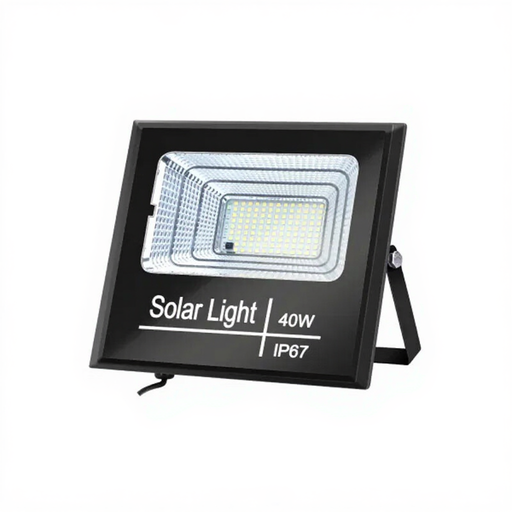
Why this product suits you: This model has a separate solar panel and is designed for larger outdoor areas, house walls, driveways or places where the installation point gets limited direct sunlight.
The separate panel means its position doesn’t depend on the direction of the light housing. The IP67 rating is designed for more exposed outdoor areas, but you should still follow the installation instructions and check the permitted temperature range.
10.000-mAh battery, separate solar panel, stated running time of up to 12 hours and IP67 rating. The power rating is 40 W; no lumen figure is provided in the available specifications.
We’ve put together a complete, regularly updated list of products that meet these strict selection criteria and fully comply with the safety regulations in force in the EU.
For reliable performance, point the solar panel south or in the direction that gets the most sunlight. Avoid placing it under trees or right next to tall walls. Before using the light for the first time, we recommend charging it fully according to the manufacturer’s instructions.
Clean the panel regularly with a soft, damp cloth. Harsh or abrasive cleaning products can damage the surface. Don’t continue using the light if it has been exposed to frost, has visible cracks or has a swollen battery. Once removed, batteries and electronic components should be disposed of through the appropriate collection schemes.
Lighting duration depends on sunlight, the time of year, shade, battery capacity and temperature. Manufacturer claims such as 8 to 12 hours are guidelines based on suitable charging conditions. In winter or after several overcast days, the running time may be shorter.
That depends on the IP rating. IP44 protects against splashing water and is suitable for many sheltered outdoor areas. IP65 or IP67 offers greater protection against water, but doesn’t replace proper installation or regular checks for damage.
They don’t need mains electricity during normal operation. The solar panel charges the built-in battery during the day, so ongoing costs mainly come from replacement batteries, maintenance and replacing faulty components.