
Lieferung heute & morgen

Qualitätsgarantie

Willkommens-Angebote freischalten: KOSTENLOSE Lieferung | Bis zu 80 % RABATT | Kostenlose 30-Tage-JoyPlus-Testphase
App herunterladen
Solar lights promise an easy and cost-effective way to bathe your garden, balcony, or patio in an atmospheric glow. With no wiring required and no extra electricity costs, they create a cosy ambience. However, the market is flooded with products whose real-world performance often fails to match the promises on the packaging. As a Joybuy Product Recommendation Officer, I'm here to help you recognise the typical pitfalls and make an informed choice.
Many buyers experience disappointment after just a short time. The lights are dimmer than expected, fail after the first rainfall, or their runtime barely lasts for a short evening. These problems can often be traced back to three core issues.
warm white might actually emit a cold, bluish light that does little to create a cosy atmosphere. Brightness (lumens) is also rarely stated transparently, leading to lower-than-expected luminosity.To avoid a bad purchase, don't be swayed by marketing promises. Instead, focus on verifiable technical specifications. Three features are particularly important.
The IP (Ingress Protection) rating indicates how well a device is protected against the ingress of foreign objects and water. For solar balcony lighting on a sheltered wall, IP44 (protection against splashing water from all directions) may be sufficient. For freestanding patio lighting or solar lights placed directly in the garden and fully exposed to the elements, a higher protection rating is recommended.
The performance of a solar light depends directly on its ability to store and release solar energy. Pay attention to the battery capacity, specified in milliampere-hours (mAh). A higher mAh value generally means a longer runtime. The size and efficiency of the solar panel are equally crucial. Larger, monocrystalline panels charge more effectively, even on cloudy days, than small, amorphous panels.
Consider the atmosphere you want to create.
colour-changing) offers colourful lights and is a great choice for outdoor party lighting or as a decorative accent.Many models, especially outdoor solar string lights, also offer various lighting modes (e.g., flashing, dimming, steady on), which allow for additional creative freedom.
Here are some recommendations tailored to different needs and locations.
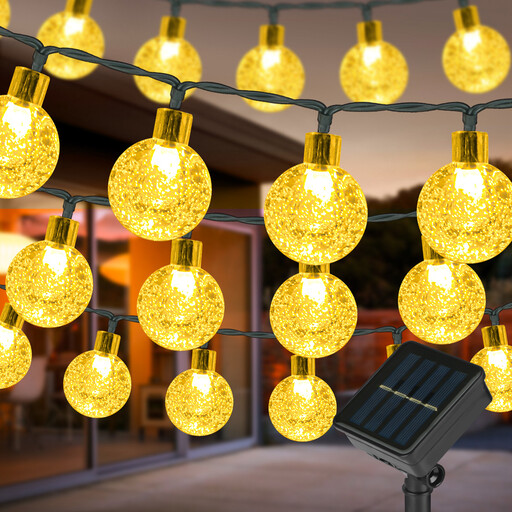
Why it's a great fit: Ideal for users seeking reliable and atmospheric warm white lighting for their patio or balcony. The 7-metre string with 50 LEDs creates an inviting and cosy environment.
The IP65 certification ensures the string lights can withstand heavy rain, not just splashes. The high-efficiency solar panel provides a reliable runtime of 8-14 hours in good conditions, thus avoiding the trap of unrealistic performance claims.
Eight different lighting modes (from steady on to a gentle glow) allow for flexible customisation of the atmosphere. The installation is tool-free.
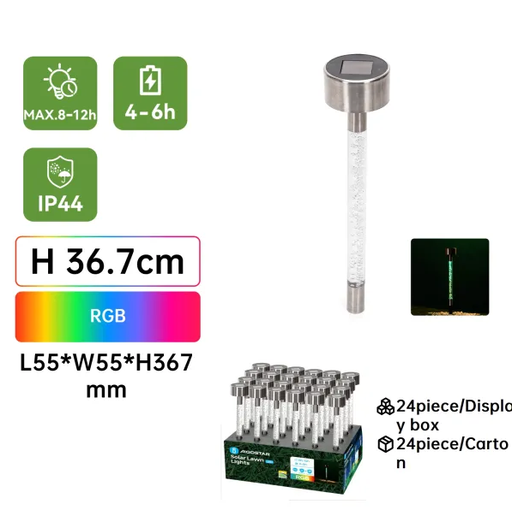
Why it's a great fit: Perfect for anyone wanting to add targeted, colourful points of light as garden decor in flowerbeds, along paths, or on the lawn. The automatic colour-changing feature creates a vibrant look.
The product description is transparent about its power (0.006 W) and battery capacity (40mAh). This sets realistic expectations for brightness and runtime, preventing disappointment over poor light quality.
Installation is incredibly simple: just push the ground spike into the soil. No tools or expertise are required. The light is rated IP44, suitable for standard outdoor use.
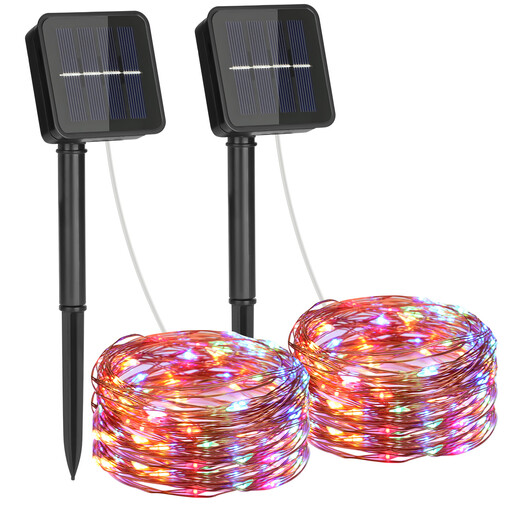
Why it's a great fit: This set of two 12-metre-long, colourful string lights is ideal for large-scale outdoor party lighting. The flexible copper wire can be easily wrapped around trees, railings, or fences.
With an IP65 rating, this string light is robust enough to handle unexpected rain during a garden party. The memory function saves the last selected mode, so you don't have to reset it every evening—a practical detail that prevents frustration.
The set includes two separate string lights for maximum flexibility. The thin copper wire is barely visible during the day, creating the impression of floating lights at night.
We have compiled a complete, up-to-date list of products that fully meet these strict selection criteria and relevant safety standards.
The lifespan of a solar light depends on two main components: the LED and the battery. The LEDs themselves often have a very long life of 15,000 hours or more. The battery is the main consumable component and typically lasts one to three years, depending on quality and usage. On some models, the battery can be replaced. Regularly cleaning the solar panel to remove dust and dirt significantly contributes to its longevity and efficiency.
Yes, modern solar panels can generate energy even in diffused light, such as on cloudy days or in winter. However, the charging performance is significantly lower than in direct sunlight. This results in a noticeably shorter runtime in the evenings. To maximise performance, the solar panel should always be placed in the sunniest spot in your garden or on your balcony, free from shadows cast by trees or buildings.
Installation is usually straightforward. The most important factor is the positioning of the solar panel. It needs to receive as much direct sunlight as possible during the day. The string light itself can be placed in shadier areas, for example, under an eave or in a tree. Before first use, make sure the switch on the solar module is set to "ON" so the battery can charge during the day and the light can turn on automatically at dusk.