
Lieferung heute & morgen

Qualitätsgarantie

Willkommens-Angebote freischalten: KOSTENLOSE Lieferung | Bis zu 80 % RABATT | Kostenlose 30-Tage-JoyPlus-Testphase
App herunterladen
Solar lights promise simple and atmospheric garden lighting with no electricity costs or installation hassle. But the market is flooded with products whose performance often falls short of their promises. Many buyers are quickly disappointed by dim light, short runtimes, or weather-related failures.
This guide shows you which critical features to look for and helps you avoid the most common pitfalls when buying solar garden lights. This way, you can invest in a solution that will reliably illuminate your outdoor space for the long term.
Before we dive into the technical details, let's look at the three main reasons why many solar lights fail to meet expectations.
To avoid these disappointments, you should check three technical parameters before buying. These are the key determinants of the longevity and functionality of your power-free garden lighting.
The IP (Ingress Protection) rating indicates how well an electrical device is protected against the ingress of foreign objects (first digit) and water (second digit). For outdoor use, this is an indispensable quality feature.
The combination of the battery and solar panel is the heart of every solar light.
Modern solar lights offer more than just a dusk-to-dawn sensor. Depending on your needs, you can choose between different control types.
Instead of a one-size-fits-all recommendation, we present models tailored to specific user profiles that meet the quality criteria mentioned above.
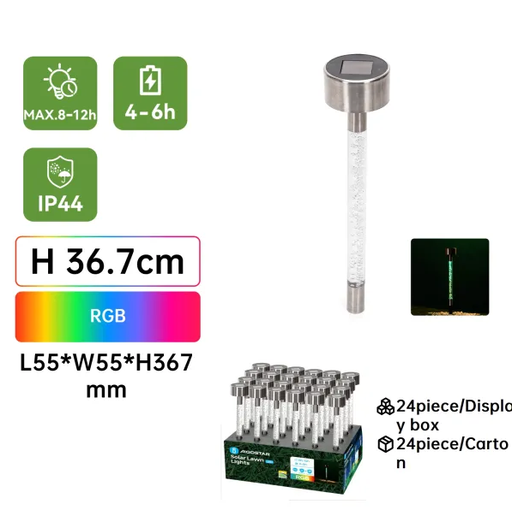
Why This Fits Their Persona: Ideal for users who want to add decorative colour accents to flowerbeds, balconies, or along pathways on a small budget. The installation is incredibly simple and requires no technical expertise.
With a clear specification of the IP44 rating, it sidesteps the trap of inadequate weather resistance. The light is designed for typical garden weather conditions. The focus is on decorative RGB light, which prevents false expectations of high brightness.
Automatic colour change for atmospheric effects. Simple installation as a solar ground stake light. Also available in a warm white (2700K) version.
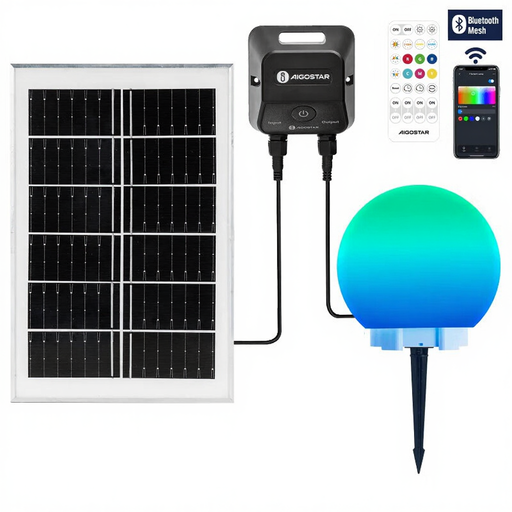
Why This Fits Their Persona: Perfect for users who want full control over their garden lighting. The app allows for creating custom light scenes, from functional white light for pathways to colourful party effects on the patio.
This solar in-ground light avoids the trap of disappointing light colour. Thanks to RGBCCT technology, the user can precisely adjust the light colour and brightness. The Bluetooth Mesh function is a concrete technical feature, not a vague marketing buzzword.
Control up to 200 devices via Bluetooth Mesh. Adjustable colour temperature (2700K–6500K) and full RGB colour palette. Schedules and groupings possible via the app.
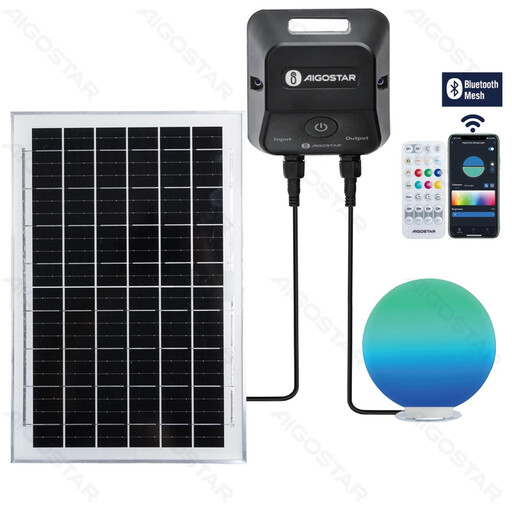
Why This Fits Their Persona: For anyone needing functional and powerful lighting for driveways, large garden areas, or dark corners. This model combines high brightness with extreme durability and smart control.
This model directly counters the pitfalls of low brightness and short runtime. At 350 lumens, it provides genuine, useful light. The large 8 Ah battery and efficient monocrystalline panel ensure operation even in less-than-optimal weather. The IP65 certification guarantees maximum weather resistance.
High light output (350 lm) for functional illumination. Very robust construction with IP65 protection. Large battery (8 Ah) and efficient 10W solar panel for reliable performance.
We have compiled a complete, up-to-date list of products that fully meet these strict selection criteria and safety requirements.
The lifespan of a solar light depends on two main components: the LED and the battery. The LEDs themselves often have a stated lifespan of 15,000 hours or more. The replaceable battery is the real consumable part and typically lasts 1 to 3 years, depending on the type (e.g., Ni-MH, Lithium-ion) and intensity of use. Regularly cleaning the solar panel of dirt and leaves is crucial to maximize charging performance and thus the lifespan of the entire system.
Yes, but with reduced performance. Modern solar panels, especially monocrystalline ones, can generate energy even in diffuse light. However, the charging power is significantly lower on cloudy days or during the short winter days. This results in a shorter runtime at night. Models with large, efficient panels and high battery capacity are better suited for year-round use than simple decorative lights.
That depends on the technology. While some systems require Wi-Fi, many modern models, like the Aigostar smart solar lights featured here, use Bluetooth Mesh technology. The lights connect to each other, forming their own network. You only need to be within Bluetooth range of a single light with your smartphone to control the entire group. Therefore, a garden-wide Wi-Fi signal is not necessary.