
Lieferung heute & morgen

Qualitätsgarantie

Willkommens-Angebote freischalten: KOSTENLOSE Lieferung | Bis zu 80 % RABATT | Kostenlose 30-Tage-JoyPlus-Testphase
App herunterladen
By a Joybuy Product Recommendation Officer Published August 28, 2026
Solar garden lights promise simple, atmospheric lighting without electricity costs or complex wiring. But the selection is vast, and not every product lives up to its advertising claims. Many buyers are disappointed when the lights lose their brightness after a short time or fail to survive the first autumn storm. This guide will show you which critical features to look for to find durable and functional garden solar lights.
Before you make a decision, it's important to know the typical shortcomings that often only become apparent after the purchase.
To avoid a bad buy, you should focus on objective technical data. These three factors are crucial for the performance and longevity of your solar outdoor lights.
The combination of the battery and solar panel is the heart of every LED solar light.
The IP rating (Ingress Protection) indicates how well an electrical device is protected against the ingress of foreign objects and water. For garden use, an IP44 rating is an established minimum standard. The first digit (4) stands for protection against solid foreign objects larger than 1 mm, and the second digit (4) for protection against splashing water from all directions. Lights with this rating are sufficiently protected for most locations in the garden, on the terrace, or on the balcony.
The lighting atmosphere is largely determined by the light colour, which is measured in Kelvin (K).
Instead of making a one-size-fits-all recommendation, we have selected models that suit different use cases.
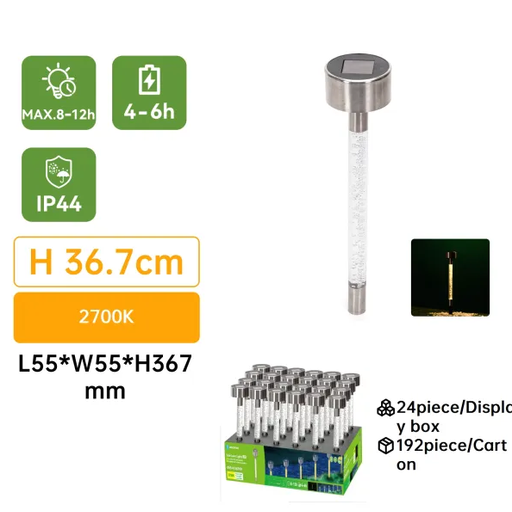
Why This Fits Their Persona: Ideal for users who want to create a cosy atmosphere in flowerbeds or along paths without much effort. Its simple handling as a solar ground stake and warm white light make it a straightforward entry-level product.
The light has a clear IP44 certification for weather protection. The amorphous silicon panel ensures it charges even on less sunny days, providing a realistic runtime for decorative purposes.
Generates a pleasant, warm white light at 2700 K. The decorative bubble design adds a visual accent even when turned off.
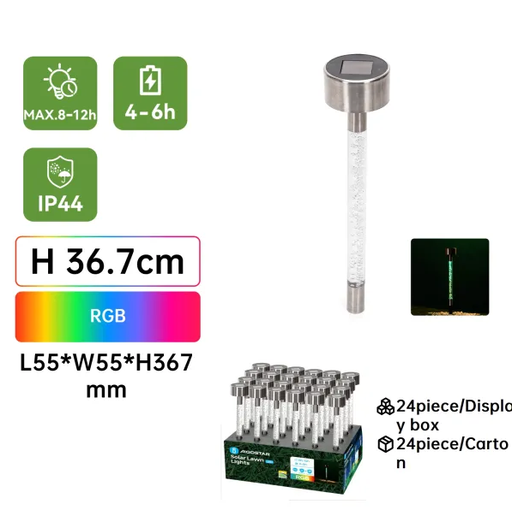
Why This Fits Their Persona: Perfect for anyone who wants to add colourful accents and flexibly design their garden's atmosphere. Ideal for parties, special occasions, or for highlighting specific plants and objects.
This model combines the fun of colour-changing solar lights with the reliability of an IP44 rating. The light quality doesn't disappoint, as the RGB effect is clearly designed for decorative accents rather than brightness.
Offers an RGB colour-changing function for dynamic and individualised lighting moods. Installation as a ground stake is simple and flexible.
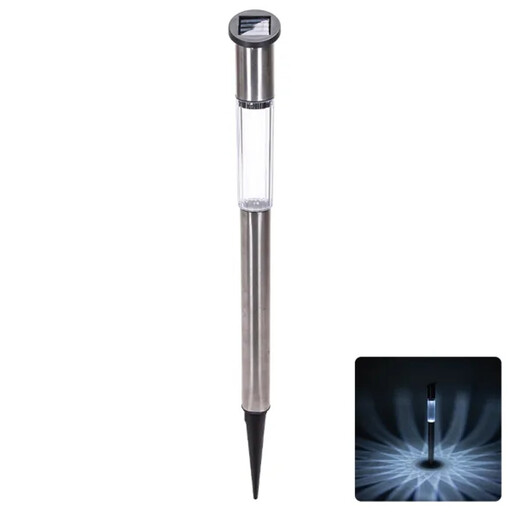
Why This Fits Their Persona: For users where functionality is the priority. This light provides orientation and safety along garden paths, driveways, or steps, where clear visibility is more important than a cosy atmosphere.
The light colour is clearly declared as a functional cool white at 6500 K, which prevents disappointment in light quality. The polycrystalline silicon panel ensures more efficient charging and thus a more reliable runtime.
Provides bright, clear light for path orientation. The stainless steel-look design is robust and blends unobtrusively into modern garden designs.
We have compiled a complete, up-to-date list of products that fully meet these strict selection criteria and all applicable safety regulations.
The lifespan of a solar light depends on several components. The LEDs themselves often have a stated lifespan of 15,000 hours or more. However, the critical component is the battery, whose charging capacity diminishes after about 1 to 3 years and may need to be replaced. The durability of the housing is determined by the material and the IP rating.
The most common causes are: