
Lieferung heute & morgen

Qualitätsgarantie

Willkommens-Angebote freischalten: KOSTENLOSE Lieferung | Bis zu 80 % RABATT | Kostenlose 30-Tage-JoyPlus-Testphase
App herunterladen
Garden solar lights offer a cordless way to illuminate paths, lawns, flower beds and balconies. They’re usually quick to install: push the stake into soft soil, position the solar panel in the sun and let the automatic dusk sensor do the rest. However, models can vary considerably in light colour, IP rating, battery capacity and design.
If you look only at a decorative product photo or the stated running time, you may miss important details. Three common misconceptions are particularly likely when buying solar garden lights:
For garden paths and flower beds, it’s worth choosing weatherproof solar lights with a stated IP rating. IP44 protects the light against splashing water from various directions. Even so, don’t place it in a dip where rainwater collects, or leave it submerged for long periods.
Also check the stated temperature range. For some Aigostar models, it’s -10 °C to 50 °C. This is a technical operating range, but it doesn’t guarantee consistent light output in all weather conditions.
A solar panel needs as much direct sunlight as possible. Trees, house walls, balcony railings and densely planted flower beds can all significantly affect charging. Product details should therefore include the charging time, battery type and running time.
For selected models, the charging time is around 4 to 6 hours in suitable conditions, while the stated lighting time is 8 to 12 hours. Treat these figures as a guide. Clean the panel regularly with a soft cloth and avoid abrasive cleaning products.
Warm white solar lights at 2700 K produce a soft, yellow-toned glow and are often a good fit for seating areas, patios and decorative flower beds. Cool white at 6500 K looks much more neutral to bluish and can be useful for finding your way along paths.
RGB solar lights, or solar lights with colour-changing effects, are better suited to decorative accents. They aren’t a substitute for bright security or task lighting. Check the height and diameter, too: a slim ground stake can fit neatly into a flower bed, but may be less noticeable or stable on an open lawn.
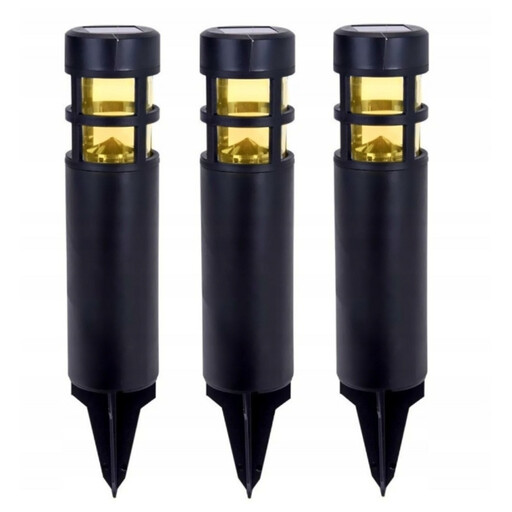
Why this product suits this type of buyer: This set of three is ideal if you want to light several points along a path, the edge of a flower bed or a small patio with matching lights.
The pack size is clearly stated, making it easier to work out how many you need instead of assuming the contents from a photo of a single product.
Three lights, solar-powered operation, automatic activation at dusk and easy installation with no mains connection needed.
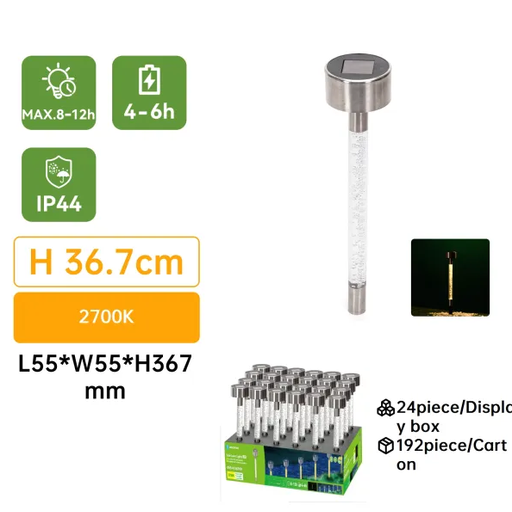
Why this product suits this type of buyer: The specified 2700 K light colour and the technical details on the battery, charging time and IP rating make it easier to choose the right light for a patio, lawn or flower bed.
The product details specify IP44, a charging time of 4 to 6 hours, a running time of 8 to 12 hours and an operating temperature range of -10 °C to 50 °C.
Warm white light at 2700 K, a Ni-MH battery, ground-spike installation and a stated LED lifespan of up to 15,000 hours.
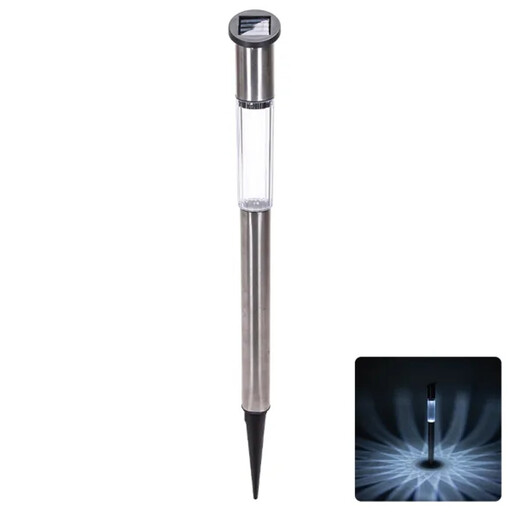
Why this product suits this type of buyer: The cool white light at 6500 K may suit longer stretches of path, property boundaries or outdoor areas used regularly, provided decorative lighting is enough to help you find your way.
The light colour is clearly specified as 6500 K, so you don’t have to rely on vague descriptions such as “bright” or “white”.
6500 K, Ra≥70, IP44, a NiMH battery, and stated charging and lighting times of 4 to 6 and 8 to 12 hours respectively.
We’ve put together a complete, regularly updated list of products that meet these strict selection criteria and fully comply with the safety regulations in force in the EU.
Choose a spot that gets as much direct sunlight as possible. The solar panel should face upwards and be clear of shade from branches, buildings or tall plants. Only push solar ground lights and solar stake lights into soft soil. If the ground is hard, making a pilot hole first can help prevent damage to the stake.
It depends on the panel, battery, time of year, location and how clean the panel is. The models mentioned are stated to run for around 8 to 12 hours in suitable conditions. In winter, shorter days and the lower position of the sun can reduce charging performance.
Solar lights don’t need to be connected to the mains while they’re in use, so they don’t add to your electricity bills. However, you may need to factor in the cost of replacement batteries and the effort involved in cleaning and disposing of electronic components. Choose RGB solar lights and LED solar garden lights for their practical use, not just their decorative effect.